
Relative humidity and dew point are both key measurements that indicate moisture in the air, but they serve different purposes. Relative humidity tells you how close the air is to being saturated at a given temperature, while dew point indicates the temperature at which moisture condenses. Understanding these terms can enhance your indoor comfort and air quality. If you want to optimize your living space, there’s more valuable information waiting for you.

Get health and wellness essentials delivered free with Prime
- Fast, free delivery on millions of items
- Prime Video, Amazon Music and more included
- Member-only deals all year
Key Takeaways
- Relative humidity measures moisture relative to temperature, while dew point indicates the absolute temperature at which saturation occurs.
- Dew point provides a consistent measure of moisture content, unaffected by temperature changes, making it more reliable than relative humidity.
- High dew points signal increased moisture, leading to discomfort and potential health issues like mold growth.
- Understanding the relationship between relative humidity and dew point helps optimize indoor air quality and comfort levels.
- Accurate measurement tools like dew point meters and hygrometers eliminate guesswork in assessing moisture levels.
digital hygrometer with dew point measurement
As an affiliate, we earn on qualifying purchases.
As an affiliate, we earn on qualifying purchases.
What Is Relative Humidity?

Relative humidity is a measure of how much moisture is in the air compared to the maximum amount it can hold at a given temperature. Understanding this concept is essential for maintaining good indoor air quality. When relative humidity levels are too high or too low, it can lead to discomfort and health issues, like mold growth or respiratory problems. That’s where HVAC systems come into play. They help regulate humidity levels, ensuring your indoor environment remains comfortable and safe. By monitoring and adjusting the relative humidity, you can improve your indoor air quality, making your space healthier. Additionally, AI technologies are increasingly utilized to optimize HVAC systems for better humidity control. The best gelato shops in coastal areas also benefit from managing humidity, as high moisture can affect the quality of frozen desserts. Moreover, understanding the essential gear for preppers can help you become more self-sufficient in maintaining a comfortable living environment. Pay attention to your HVAC system’s performance, as it directly impacts how well you manage humidity levels in your home or office. Furthermore, implementing on-page SEO strategies can help you enhance your online content related to indoor air quality. Additionally, using smart gear can enhance your ability to monitor and control humidity levels during outdoor adventures.
indoor humidity monitor with temperature display
As an affiliate, we earn on qualifying purchases.
As an affiliate, we earn on qualifying purchases.
What Is Dew Point?

Dew point is the temperature at which air becomes saturated with moisture, leading to condensation. Understanding dew point is essential for evaluating comfort levels and predicting weather conditions. You’ll find that measuring dew point can help you make better decisions about your indoor environment. Additionally, color accuracy plays a significant role in creating a comfortable visual environment when using projectors. For caregivers, maintaining a comfortable indoor climate is crucial as it can significantly impact the well-being of the seniors in their care. Monitoring indoor humidity levels can further enhance the overall comfort and health of the living space. Keeping an eye on ventilation systems is also important to ensure optimal air quality and humidity control. Moreover, a healthy indoor environment can be achieved with the right tools, such as air purifiers, which help in maintaining air quality.
Definition and Importance
Have you ever wondered why understanding dew point is crucial for predicting weather conditions? Dew point represents the temperature at which air becomes saturated with moisture, leading to condensation. Knowing this can help you in various ways:
- Comfort Level: It influences how humid or dry the air feels, affecting your psychological effects, especially during hot weather.
- Weather Predictions: It provides insights into potential rainfall, frost, and fog, aiding in planning outdoor activities.
- Historical Variations: Analyzing past dew point data helps you understand climate trends and shifts over time.
In short, grasping the dew point enhances your awareness of atmospheric conditions, making it an essential aspect of weather forecasting.
Measurement Techniques
When it comes to measuring dew point, various techniques can provide accurate readings of moisture in the air. One popular method involves using dew point meters, which directly measure the temperature at which air becomes saturated. These devices give you a clear indication of moisture levels, helping you make informed decisions. Additionally, maintaining a comfortable sleep environment is crucial for overall well-being, as studies suggest that ideal humidity levels can improve sleep quality. Another common approach is utilizing humidity sensors, which can calculate dew point based on relative humidity and temperature readings. By regularly checking these readings, you can maintain ideal conditions in your environment. Additionally, embracing smart appliances in your kitchen can enhance your ability to control humidity levels effectively. Understanding the role of necessary cookies can also help you optimize your online experience when researching these techniques. Incorporating regular checkups into your routine can help you monitor environmental conditions more effectively. Whether you’re measuring for comfort or process control, choosing the right measurement technique is essential for accurate dew point assessment. Understanding these methods will help you avoid guesswork and manage humidity effectively. Additionally, implementing eco-friendly practices in your environment can also contribute to better overall air quality and comfort.
Effects on Comfort
Understanding dew point is essential for your comfort, as it directly influences how humid or muggy the air feels. A higher dew point means more moisture in the air, which can affect your indoor air quality and overall well-being. Here are three key effects of dew point on your comfort:
- Humidity Levels: A high dew point can make it hard to cool down, leading to discomfort.
- Health Impacts: Excess moisture can promote mold growth, affecting your indoor air quality and health.
- Seasonal Variations: Different seasons bring varying dew points, meaning you may need to adjust your indoor environment for ideal comfort.
smart humidity controller for HVAC systems
As an affiliate, we earn on qualifying purchases.
As an affiliate, we earn on qualifying purchases.
The Relationship Between Relative Humidity and Dew Point

Relative humidity and dew point are closely related concepts that help you grasp the moisture content in the air. Understanding their relationship can improve indoor air quality and adapt to seasonal variations. By utilizing proper clean-home systems, you can effectively manage humidity levels and enhance overall comfort in your living space. Additionally, maintaining a balance between these two metrics can lead to a more calm home environment, reducing stress and enhancing your daily living experience. Furthermore, keeping in mind that better indoor air quality should be achievable without fear or hype is essential for informed decision-making. The use of energy-efficient cloud servers can also support efforts to create a more sustainable and secure living environment. Furthermore, enjoying a high-protein breakfast can provide the energy needed to tackle daily tasks and maintain a comfortable atmosphere.
| Relative Humidity (%) | Dew Point (°F) | Comfort Level |
|---|---|---|
| 30 | 20 | Dry |
| 50 | 40 | Comfortable |
| 70 | 60 | Humid |
| 90 | 80 | Uncomfortable |
When relative humidity is high, the dew point rises, indicating more moisture in the air. Conversely, a low relative humidity means a lower dew point, suggesting drier conditions. By knowing this relationship, you can better manage your indoor environment throughout the year.
dehumidifier for mold prevention
As an affiliate, we earn on qualifying purchases.
As an affiliate, we earn on qualifying purchases.
Why Understanding These Terms Matters

Understanding relative humidity and dew point is vital for grasping how moisture affects your environment. These concepts have practical applications in everything from weather forecasting to home comfort, and they also play a role in your health. By knowing these terms, you can make informed decisions that impact your daily life and well-being. Additionally, maintaining an optimal home office environment can enhance your productivity and overall comfort. Understanding how humidity affects cycling can also help you prepare for outdoor adventures and ensure a more enjoyable ride. For instance, using at-home beauty technology can help you manage skin hydration levels effectively.
Defining Key Concepts
While you might think of humidity as just a measure of how muggy it feels outside, grasping the distinction between relative humidity and dew point is essential for anyone interested in weather patterns or indoor comfort. Understanding these terms can considerably influence your comfort and well-being. Here’s why it matters:
- Psychology of Comfort: Knowing the right humidity levels helps you feel more at ease in your environment.
- Accurate Forecasting: Differentiating these concepts allows better interpretation of historical weather data, enhancing your ability to predict conditions.
- Health Implications: Understanding humidity can prevent issues like mold growth and respiratory problems linked to poor indoor air quality.
Practical Applications
Knowing how relative humidity and dew point interact can greatly enhance your everyday life, especially when it comes to comfort and health. By understanding these concepts, you can optimize indoor air quality in your home, ensuring a pleasant environment. High humidity can lead to mold growth, while low humidity can cause dry skin and respiratory issues. In industrial processes, controlling humidity levels is vital for product quality and equipment longevity. For instance, certain manufacturing operations require specific humidity ranges to prevent defects. By applying your knowledge of relative humidity and dew point, you can make informed decisions that improve both your personal comfort and workplace efficiency. This awareness is key to maintaining a healthy atmosphere, whether at home or in your career.
Health Implications
When it comes to your health, grasping the differences between relative humidity and dew point can make a significant difference in how you feel daily. Understanding these terms helps you manage indoor air quality, which directly impacts your well-being. Here’s why it matters:
- Allergic Reactions: High humidity can encourage mold and dust mites, leading to increased allergic reactions.
- Comfort Levels: Knowing the dew point helps you adjust your environment for ideal comfort, preventing overheating or chills.
- Respiratory Health: Proper humidity levels can minimize respiratory issues by keeping airways moist and reducing irritants.
How to Measure Relative Humidity and Dew Point

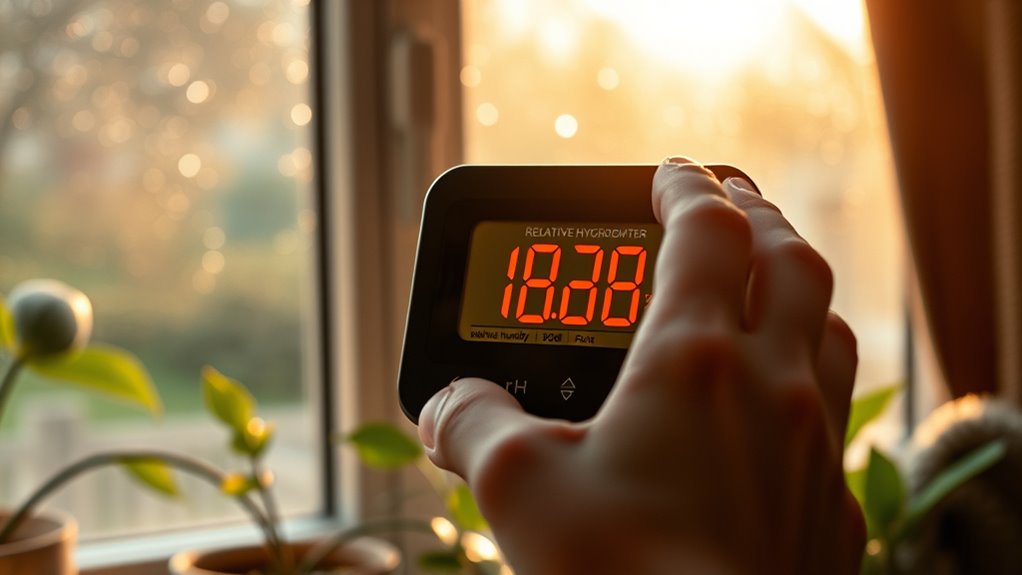
To measure relative humidity and dew point accurately, you’ll need a few essential tools, such as a hygrometer or a psychrometer. A hygrometer can give you a quick reading of humidity levels, while a psychrometer consists of two thermometers—one dry and one wet—to calculate humidity and dew point through evaporation. For more precise measurements, consider using dew point meters, which provide direct readings of the dew point temperature. You can also refer to psychrometric charts to visualize the relationship between temperature, humidity, and dew point, helping you understand the conditions better. By using these tools, you’ll ensure you’re getting reliable data for your specific environment, making it easier to analyze humidity and dew point accurately.
Practical Applications in Daily Life
Understanding relative humidity and dew point can considerably enhance your daily life, especially when it comes to comfort and health. By being aware of these concepts, you can improve your surroundings and make better choices. Here are three practical applications:
- Indoor Air Quality: Monitoring humidity helps maintain ideal levels, reducing allergens and improving overall air quality in your home.
- Comfort: Understanding dew point allows you to adjust your thermostat effectively, ensuring you stay comfortable year-round without wasting energy.
- Agricultural Practices: Farmers can use dew point data to make informed decisions about irrigation and pest control, leading to healthier crops and improved yields.
Frequently Asked Questions
How Do Temperature Changes Affect Relative Humidity and Dew Point?
Temperature fluctuations directly impact both relative humidity and dew point. As the temperature rises, the air can hold more moisture, reducing relative humidity if moisture content stays constant. Conversely, when temperatures drop, the air’s capacity to hold moisture decreases, potentially increasing relative humidity. Dew point, on the other hand, represents the temperature at which air becomes saturated; it remains constant regardless of temperature changes, reflecting the actual moisture content in the air.
Can Relative Humidity and Dew Point Be the Same Value?
Yes, relative humidity and dew point can be the same value, particularly when the air is saturated. For instance, when relative humidity hits 100%, the dew point matches the air temperature. This humidity correlation is crucial for understanding weather patterns. In a dew point comparison, if it’s 70°F, that means the air can’t hold any more moisture without condensing. Knowing this helps you gauge comfort levels and predict rain.
What Instruments Are Best for Measuring These Values Accurately?
To measure relative humidity and dew point accurately, you should consider using digital hygrometers or dew point hygrometers. Digital hygrometers offer quick readings and are easy to use, while dew point hygrometers provide precise dew point calculations. Both types can help you track moisture levels effectively. If you want reliable data, look for hygrometers with high accuracy and calibration options to guarantee you’re getting the best measurements possible.
How Do Weather Forecasts Utilize Relative Humidity and Dew Point?
Did you know that a 70% relative humidity often feels much warmer than it actually is? Weather forecasts use relative humidity and dew point to predict comfort levels, impacting your daily plans. High humidity can lead to discomfort and even affect your mood, highlighting its psychological impact. Historical variations show how humidity levels have changed over time, helping forecasters provide more accurate predictions and better understand weather patterns in your area.
Does Altitude Influence Relative Humidity and Dew Point Readings?
Yes, altitude does influence relative humidity and dew point readings. As you gain elevation, the air pressure decreases, which can lead to lower humidity levels. This altitude effect means you might face measurement challenges, as the same absolute moisture content can result in varying relative humidity percentages. So, when you’re at higher altitudes, remember that the air feels drier, even if the actual moisture content hasn’t changed markedly.
Conclusion
Now that you understand relative humidity and dew point, picture yourself stepping outside on a warm summer day. The air feels thick and heavy, wrapping around you like a damp blanket—that’s high humidity. But when the temperature drops, and you see tiny beads of water on the grass, that’s dew point at work. By grasping these concepts, you can better anticipate the weather and stay comfortable, whether you’re lounging on the porch or planning your next outdoor adventure.
Cold & flu season Picks
humidifiers
As an affiliate, we earn on qualifying purchases.