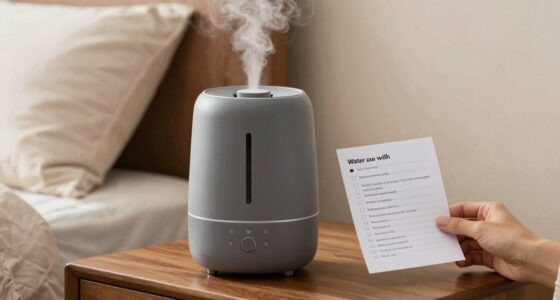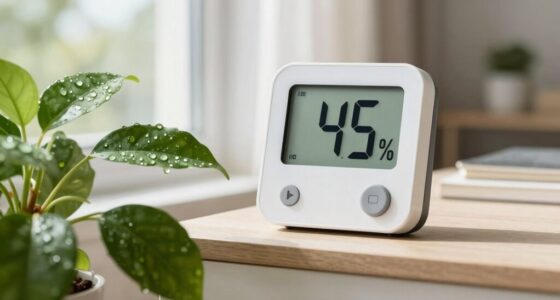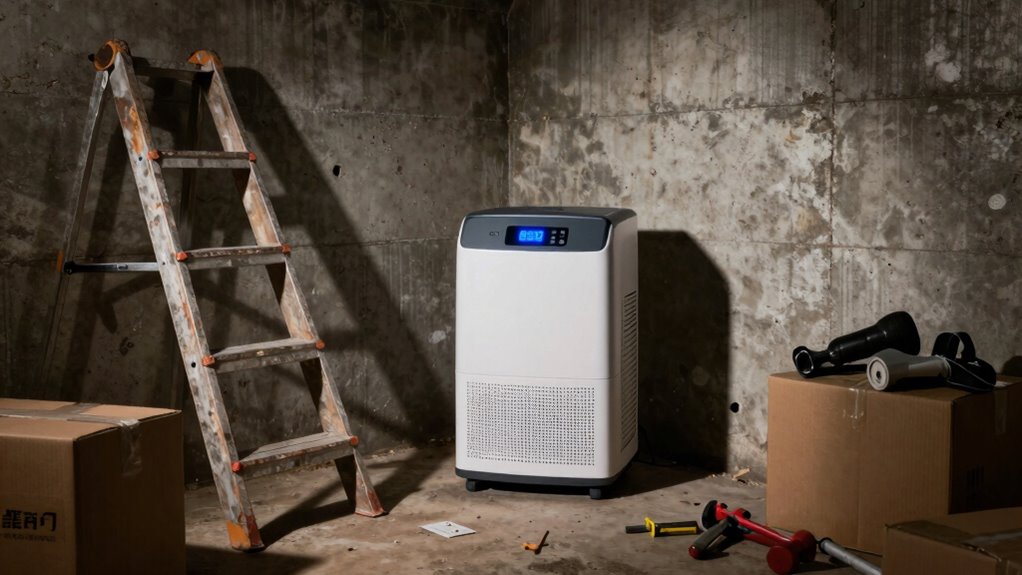

Many people get basement dehumidifier sizing wrong because they rely solely on square footage, which isn’t enough. Factors like insulation, water leaks, ventilation, and climate play a big role in moisture levels. An undersized unit won’t control humidity effectively, leading to dampness and mold, while an oversized one wastes energy and makes noise. Proper sizing requires considering your specific basement conditions—keep going to discover how to choose the right unit for your space.

Get health and wellness essentials delivered free — and shop member deals
- Fast, free delivery on millions of items
- Access to Prime Big Deal Days deals on October 6–7
- Prime Video, Amazon Music and more included
Key Takeaways
- Many rely solely on square footage, ignoring actual moisture load and basement conditions.
- Inaccurate assessments of insulation, leaks, and water sources lead to incorrect sizing.
- Lack of understanding of climate and ventilation impacts causes misjudgment of dehumidifier needs.
- Oversimplified sizing methods ignore real-world factors affecting moisture levels and unit performance.
- Users often underestimate the importance of precise measurement and proper evaluation of basement environment.
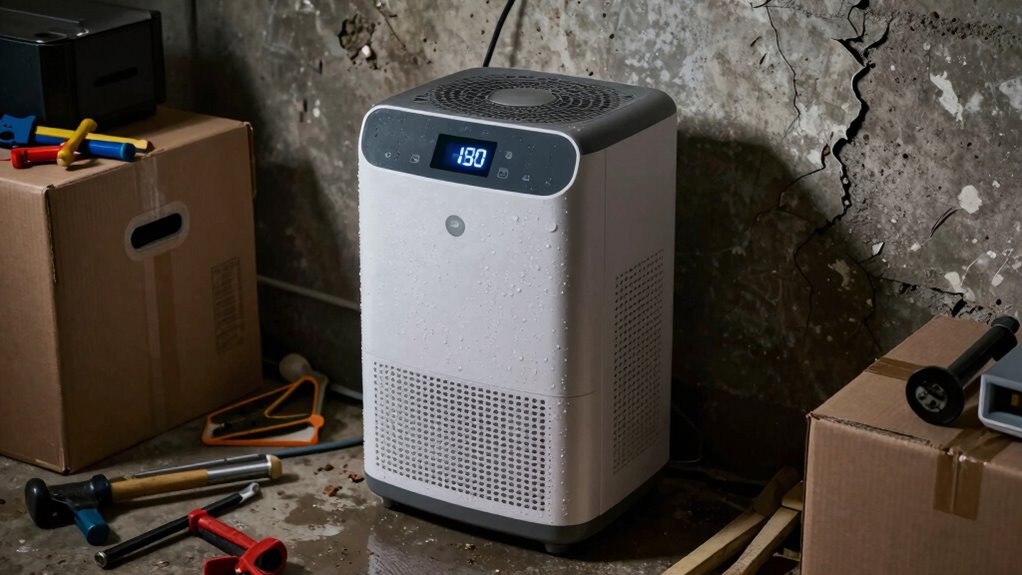
Choosing the right size of a basement dehumidifier is vital to effectively control moisture without wasting energy. When you pick a unit that’s too small, it won’t remove enough humidity, leading to persistent dampness, mold growth, and possible structural damage. Conversely, selecting a dehumidifier that’s too large can cause unnecessary energy consumption and increased noise levels, making it uncomfortable to stay in your basement. Many people underestimate how significant accurate sizing is, which often results in ineffective performance and higher utility bills.
One common mistake is relying solely on square footage to determine the size of the dehumidifier. While size is a factor, the actual moisture load—affected by factors like basement temperature, ventilation, and the presence of water sources—is equally vital. If your basement has poor insulation or leaks, it might require a more powerful unit than a simple square footage calculation suggests. Failing to account for these real-world conditions means your dehumidifier might be undersized or oversized, both of which lead to problems like inadequate moisture control or excessive energy use.
Energy efficiency is another essential aspect often overlooked. An improperly sized dehumidifier can be a major energy drain. If the unit runs constantly because it’s too small, you’ll see your electricity bills spike without achieving the desired dryness. On the other hand, a larger unit might cycle on and off frequently, which is inefficient and can wear out the compressor faster. Proper sizing ensures the dehumidifier operates at best capacity, maintaining a comfortable moisture level while conserving energy. This way, you get effective moisture control without driving up costs.
Noise levels are also a significant consideration that many homeowners ignore when sizing a dehumidifier. Larger units tend to be louder, which can be disruptive, especially if your basement is used as a living space or a home office. An undersized unit may cycle constantly, creating a low hum that’s just as annoying as a louder, larger model. Proper sizing helps balance noise levels and performance, allowing you to run the dehumidifier comfortably without disturbing your daily activities. Additionally, understanding the moisture load and how it impacts the size of the unit is crucial for long-term effectiveness. Considering the basement conditions such as insulation and leaks can also prevent over- or under- sizing the unit. Moreover, paying attention to climate factors can help you better estimate the moisture levels your dehumidifier needs to handle.
Ultimately, the most common mistake in basement dehumidifier sizing is not taking a thorough approach—considering moisture load, basement conditions, energy efficiency, and noise levels. Failing to do so means you won’t get the moisture control you need, and you’ll likely face higher energy costs and increased frustration. Proper sizing isn’t just about the size of the unit; it’s about understanding your space and choosing a model that works efficiently, quietly, and effectively over the long term.
basement dehumidifier size calculator
As an affiliate, we earn on qualifying purchases.
As an affiliate, we earn on qualifying purchases.
Frequently Asked Questions
How Do Temperature Fluctuations Affect Dehumidifier Performance?
Temperature fluctuations can considerably impact your dehumidifier’s performance, making humidity control more challenging. As temperatures rise or fall unpredictably, the dehumidifier struggles to maintain stable humidity levels, leading to less effective moisture removal. To guarantee proper humidity control, aim for temperature stability in your basement. Sudden changes can cause the dehumidifier to cycle on and off frequently, reducing efficiency and risking mold growth or dampness issues.
Can Existing Moisture Sources Impact Dehumidifier Effectiveness?
Yes, existing moisture sources can impact your dehumidifier’s effectiveness. If you don’t manage ventilation strategies and guarantee proper air circulation, moisture from leaks, condensation, or poor insulation continues to enter the space, making it harder for your dehumidifier to keep humidity levels in check. Regularly addressing these sources and improving airflow helps the dehumidifier work efficiently, maintaining a dry, healthy basement environment.
Are There Seasonal Considerations for Dehumidifier Sizing?
You should consider seasonal humidity changes when sizing your dehumidifier. During humid months, like summer, you’ll need a larger capacity to keep moisture levels in check, while winter might require less. Regular appliance maintenance guarantees peak performance year-round. Ignoring seasonal humidity fluctuations can lead to over- or under-sizing, making your dehumidifier less effective. Adjusting your approach based on seasons helps maintain a dry, comfortable basement environment.
How Often Should I Monitor Humidity Levels After Installation?
You should monitor humidity levels regularly, especially in the first few weeks after installation. Watch for humidity spikes that can indicate the dehumidifier needs recalibration. Check your device’s readings weekly and adjust settings if necessary to maintain ideal moisture levels. Proper dehumidifier calibration ensures consistent performance, preventing excess humidity or dryness which can lead to mold or damage. Consistent monitoring helps you keep your basement comfortable and safe.
What Role Does Insulation Play in Dehumidifier Efficiency?
Think of insulation like a cozy blanket for your basement; it helps your dehumidifier work smarter. Thermal insulation reduces temperature swings, making moisture easier to manage. Moisture barriers prevent damp air from entering, easing the dehumidifier’s load and boosting efficiency. Without proper insulation, your dehumidifier has to work harder, much like trying to dry a wet shirt in a cold breeze—less effective and more energy-consuming.
energy efficient basement dehumidifier
As an affiliate, we earn on qualifying purchases.
As an affiliate, we earn on qualifying purchases.
Conclusion
So, next time you pick a basement dehumidifier, remember—size it right, or prepare for a soggy, musty kingdom that even your mold spores will envy. Don’t let guesswork be your guide; otherwise, you’ll end up with a device that’s either a tiny droplet or a mighty monsoon. Either way, you’ll be the proud owner of the world’s most expensive paperweight. Good luck, brave dehumidifier daredevil—your basement’s future depends on it!
As an affiliate, we earn on qualifying purchases.
basement moisture control dehumidifier
As an affiliate, we earn on qualifying purchases.
As an affiliate, we earn on qualifying purchases.
Fall Picks
fall essentials
As an affiliate, we earn on qualifying purchases.