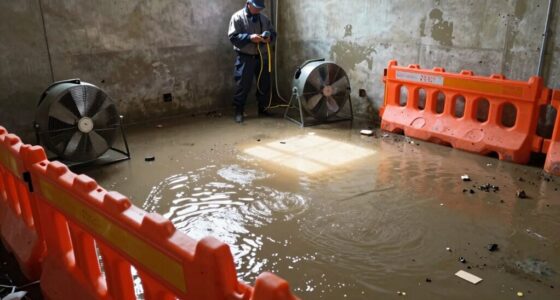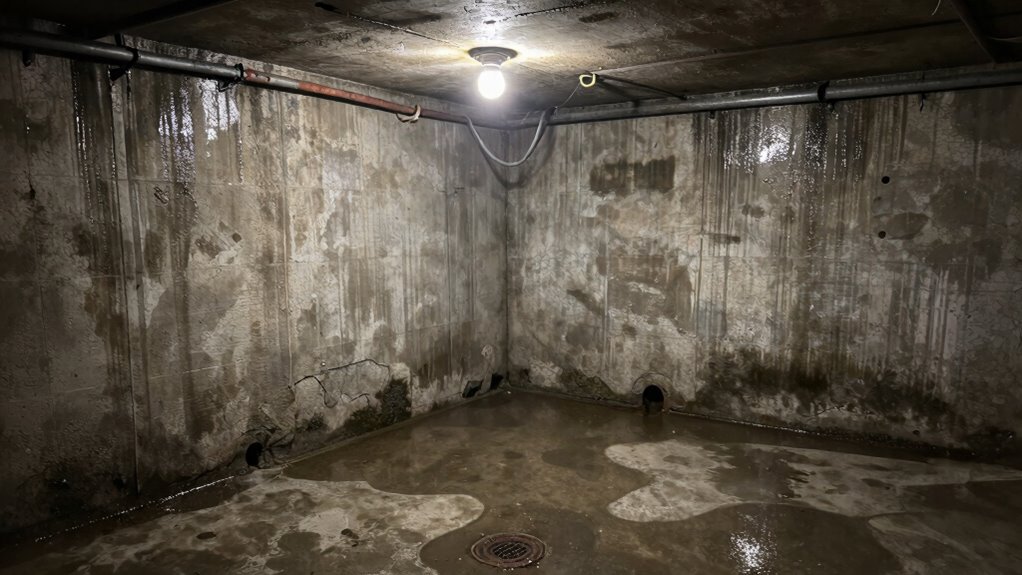

Basements are hard to keep dry because they’re below ground, which makes them naturally vulnerable to water seeping through cracks, porous walls, and gaps around pipes. The soil around your home can put pressure on the foundation, causing cracks and leaks. Moisture can hide in hidden corners or porous materials, creating damp, unsafe conditions. If you want to understand how to prevent water intrusion and keep your basement dry, there’s more to take into account.
Key Takeaways
- Basements are below ground level, making them naturally susceptible to water seepage from surrounding soil.
- Cracks in foundations and gaps around pipes create entry points for moisture.
- Porous walls and materials allow moisture penetration and hidden water accumulation.
- Hydrostatic pressure from underground water pushes moisture into the basement.
- Maintaining effective waterproofing and drainage systems is challenging over time due to soil and environmental factors.
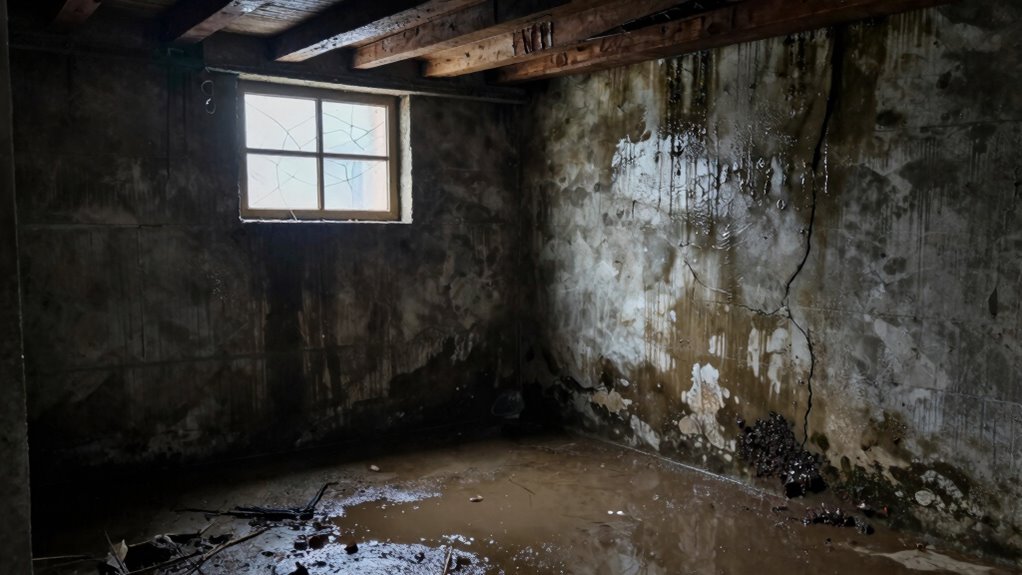
Have you ever wondered why some basements stay dry while others flood even during heavy rains? The truth is, basements are inherently vulnerable to water intrusion because of their location below ground level. Water seepage is a common problem, and it’s often caused by cracks in the foundation, gaps around pipes, or porous walls that allow moisture to penetrate. When water finds its way through these tiny openings, it can accumulate and lead to dampness, which makes your basement feel unwelcoming and unsafe. The challenge isn’t just about keeping water out; it’s also about controlling moisture inside once water begins to seep in.
Basements are vulnerable below ground; cracks and porous walls allow water to seep in and cause dampness and safety concerns.
If you don’t address water seepage promptly, it can create a perfect environment for mold to develop. Mold prevention becomes a critical concern because damp conditions provide ideal breeding grounds for mold spores. Once mold takes hold, it’s not only a health risk but also a tough problem to eliminate. That’s why sealing cracks, installing proper drainage systems, and ensuring good exterior grading are essential steps to keep water from infiltrating your basement. When water seeps in, it often lingers in hidden corners and porous materials, making it harder to detect and treat. The more moisture that remains, the greater the risk of mold growth, which can cause allergies, respiratory issues, and structural damage over time. Implementing effective drainage solutions can significantly reduce the risk of water accumulation and seepage. Additionally, understanding the hydrostatic pressure exerted by underground water can help you select appropriate waterproofing strategies. Recognizing the importance of effective waterproofing techniques is crucial for long-term protection.
Keeping your basement dry requires a proactive approach. You need to regularly inspect your foundation for cracks or signs of water intrusion. Installing sump pumps can help manage groundwater levels and divert water away from your home. Exterior waterproofing, such as applying sealants or installing drainage systems like French drains, can considerably reduce water seepage. Inside, a dehumidifier helps maintain low humidity levels, preventing residual moisture from creating mold-friendly conditions. Proper ventilation is also key, as it allows moisture to escape and keeps the air dry. Regular maintenance of your drainage systems and foundation seals is vital to stay ahead of potential issues. Incorporating moisture barriers into your waterproofing plan can further enhance your defenses against water infiltration. Furthermore, understanding the soil composition around your home can help you choose the most effective waterproofing methods.
The bottom line is that a dry basement depends on understanding how water finds its way in and taking measures to block it. Regular maintenance, effective waterproofing, and moisture control are your best defenses. When you stay vigilant and address issues early, you can prevent water seepage and mold growth, creating a safer, healthier space beneath your home.

Liquid Rubber Basement and Foundation Repair Sealant – Waterproof Concrete Sealer & Crack Filler – Flexible Coating for Indoor & Outdoor Use – Waterproofing Paint – Black, 5 Gallon
SUPERIOR FLEXIBLE SEALANT: Liquid Rubber's foundation sealer creates a permanent waterproof membrane for basement waterproofing, foundation leak repair,…
As an affiliate, we earn on qualifying purchases.
As an affiliate, we earn on qualifying purchases.
Frequently Asked Questions
Can Plants Help Dry Out a Damp Basement?
Yes, plants can help dry out a damp basement. They absorb moisture through their roots, reducing humidity levels, and improve soil drainage around the area. Incorporating moisture-loving plants like ferns or peace lilies can actively decrease dampness. However, you should also address proper ventilation and waterproofing to effectively keep your basement dry, as plants alone might not be enough for severe moisture issues.
How Long Does It Take to Waterproof a Basement?
Think of waterproofing as planting a sturdy shield around your home’s foundation. It typically takes 1 to 3 days, depending on the project’s size. You’ll focus on basement drainage and exterior sealing to block water entry. Proper preparation and quality materials speed things up, ensuring your basement stays dry. Remember, patience is key, as a well-executed process creates a lasting barrier against moisture for years to come.
Are There Eco-Friendly Waterproofing Options Available?
Yes, eco-friendly solutions are available for waterproofing your basement. You can choose sustainable materials like recycled rubber, plant-based sealants, or lime-based plasters that lessen environmental impact. These options not only keep your basement dry but also promote sustainability. By opting for eco-friendly waterproofing methods, you support greener building practices while effectively preventing moisture issues. Always consult with professionals to guarantee these solutions suit your specific basement needs.
Do All Basements Need Sump Pumps?
You might think all basements need sump pumps, but not necessarily. While sump pumps help protect against water intrusion, proper drainage solutions and insulation can do wonders. Ironically, neglecting these basics might make you believe a sump pump is the only answer. Depending on your basement’s design and local conditions, you could get away without one, but investing in good drainage and insulation always offers better long-term dryness.
What Are Signs of Hidden Water Damage?
You’ll notice signs of hidden water damage through musty odors, discolored walls, or peeling paint, indicating moisture intrusion. Look for unexplained water stains or warped flooring, which often point to hidden leaks. You might also see mold growth or a damp feeling on surfaces. These signs suggest that moisture is getting in, and addressing hidden leaks early can prevent long-term damage and maintain a dry, healthy basement environment.

VEVOR Trench Drain System with Plastic Grate, 5.9×5.1-Inch HDPE Channel Drainage for Garden, Driveway – 6 Pack
Low-profile Drain System: Dimensions of each channel: 5.9" W x 5.1" H x 39.4" L. Commercial water drainage…
As an affiliate, we earn on qualifying purchases.
As an affiliate, we earn on qualifying purchases.
Conclusion
Keeping your basement dry can feel like trying to catch water with a sieve, but don’t get discouraged. Regular maintenance, proper drainage, and sealing cracks are your best tools to fight moisture. Think of it as gardening—you need to tend to it regularly to keep everything flourishing. With patience and effort, you’ll create a dry, cozy space that feels safe and inviting, no matter how tough the challenge may seem at first.

WAYNE CDU980E 3/4 HP Submersible Sump Pump – Cast Iron & Stainless Steel, Vertical Float Switch, 5,490 GPH, 5-Year Warranty
High-Capacity 3/4 HP Motor: Pumps up to 5,490 gallons per hour for reliable basement water removal during heavy…
As an affiliate, we earn on qualifying purchases.
As an affiliate, we earn on qualifying purchases.

2500 Sq.Ft Dehumidifier for Basement with Drain Hose Max 34 Pints, VEAGASO Dehumidifiers for Home, Large Room, Bathroom, Bedroom, Three Modes, Intelligent Humidity Control, Dry Clothes, 24HR Timer
Three Smart Modes Dehumidifiers – Our dehumidifier for basements come with 3 smart modes that make choosing between…
As an affiliate, we earn on qualifying purchases.
As an affiliate, we earn on qualifying purchases.