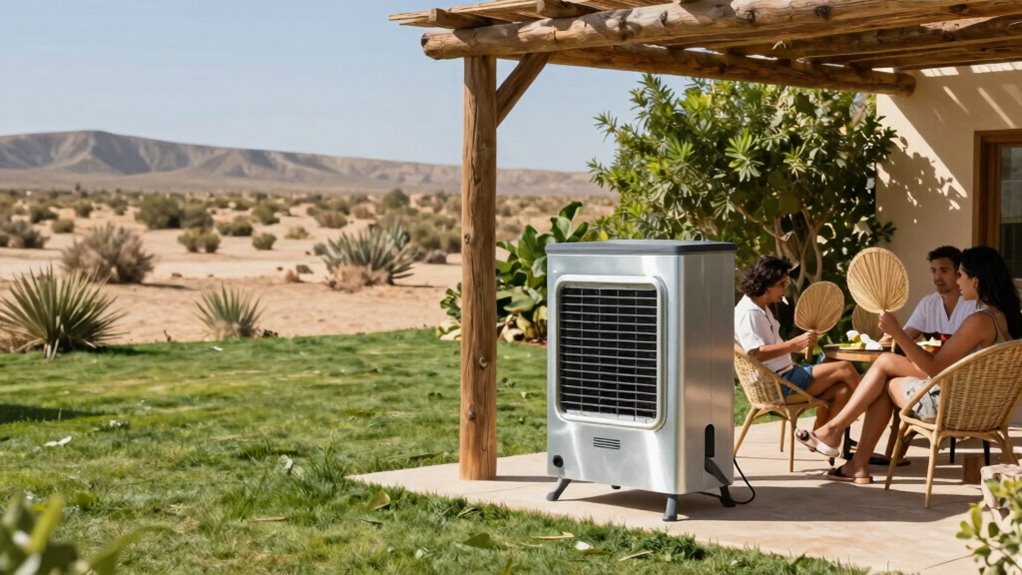

Evaporative coolers work best if you live in a dry, hot climate with low humidity, where water evaporation can efficiently cool your space. They’re cost-effective, energy-efficient, and provide fresh airflow in suitable environments. But if you’re in a humid area, their performance drops, and they won’t dehumidify effectively. To find out whether this cooling method makes sense for your situation, keep exploring the details ahead.

Get health and wellness essentials delivered free with Prime
- Fast, free delivery on millions of items
- Prime Video, Amazon Music and more included
- Member-only deals all year
Key Takeaways
- Evaporative coolers are ideal in dry, low-humidity climates for cost-effective, energy-efficient cooling.
- They are less suitable in humid regions, where high moisture reduces cooling effectiveness.
- Proper ventilation enhances performance and prevents mold or mineral buildup during operation.
- Regular maintenance and water management are essential for efficiency and longevity.
- Traditional air conditioning may be preferable in humid environments or when dehumidification is needed.
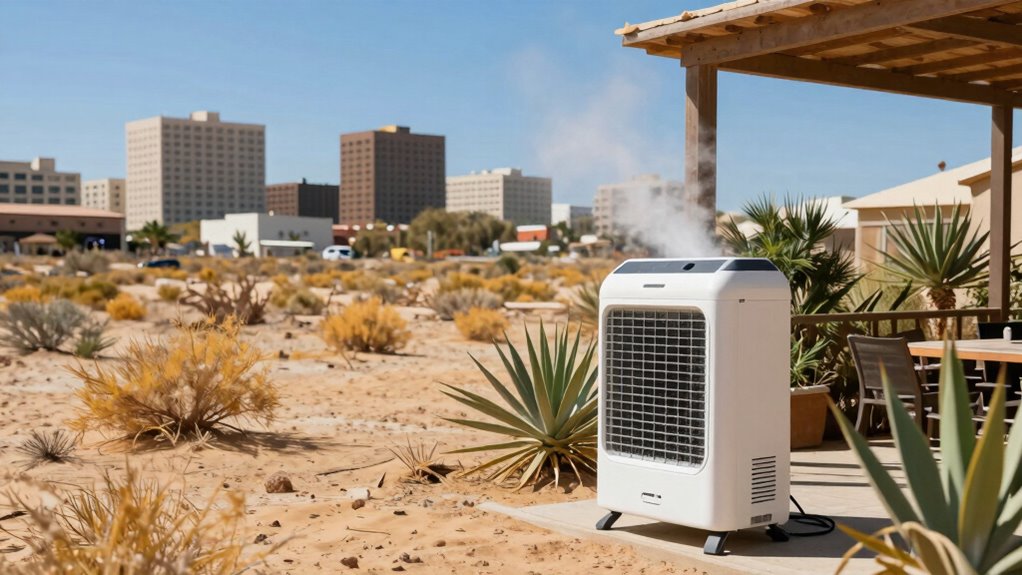
Evaporative coolers, also known as swamp coolers, can be a cost-effective way to beat the heat—if you understand when they work best. These devices use the natural process of water evaporation to lower air temperature, making them especially appealing in dry, hot climates. However, their effectiveness depends heavily on environmental conditions and your specific needs. When contemplating an evaporative cooler, you should think about their energy efficiency. Unlike traditional air conditioners that rely on refrigerants and compressors, swamp coolers use minimal electricity, which means lower energy bills. This makes them an attractive option if you’re looking to reduce energy consumption while staying comfortable. Still, their energy efficiency is contingent on the climate; in humid areas, their cooling capacity diminishes because the air already contains a high level of moisture, limiting evaporation and cooling potential.
Evaporative coolers are cost-effective, energy-efficient in dry climates, but less effective in humid conditions.
Water consumption is another critical factor to weigh. These coolers require a continuous water supply to operate, and their water usage can be significant depending on the size of the unit and the duration of use. If you’re in an area with limited water resources or face high water costs, this could be a drawback. That said, the water consumption of evaporative coolers is generally less than that of traditional air conditioning systems, which use water mainly for cooling in some designs but rely heavily on refrigerants and energy. Still, you’ll want to evaluate the water requirements against your local water availability and the environmental impact. Additionally, in dry climates, evaporative coolers tend to perform best, providing effective cooling and fresh airflow. Proper ventilation is also important to maximize their cooling efficiency and ensure fresh air circulation.
In dry climates, especially those with low humidity and high temperatures, evaporative coolers shine. They can cool indoor air effectively, provide fresh airflow, and do so with less energy. But if you live in a humid region, these devices tend to be less effective because the air already contains much moisture, preventing efficient evaporation. In such environments, traditional air conditioning might be a better choice, despite higher energy costs, since it can dehumidify and cool simultaneously. Furthermore, understanding the climate suitability for evaporative coolers can help ensure you make an informed decision. Regular maintenance, including cleaning and water tank management, is essential to prevent issues like mold and mineral buildup, which could otherwise affect their efficiency and longevity.
evaporative cooler for dry climate
As an affiliate, we earn on qualifying purchases.
As an affiliate, we earn on qualifying purchases.
Frequently Asked Questions
Are Evaporative Coolers Energy-Efficient Compared to Air Conditioners?
Evaporative coolers are generally more energy-efficient than air conditioners because they use less electricity, leading to lower power bills. You’ll notice quieter operation, with lower noise levels, making them more suitable for peaceful environments. When comparing costs, evaporative coolers tend to be more affordable upfront and in ongoing energy expenses. However, their efficiency depends on your climate—if it’s dry and hot, they work best, saving you money and energy.
How Often Do Evaporative Coolers Require Maintenance?
You’ll need to maintain your evaporative cooler regularly—typically every one to two months, especially in dry seasons. Water consumption increases with use, so keep an eye on water levels. Remember, filter replacement is essential; dirty filters impair efficiency and air quality. Ignoring these tasks can lead to mold or mineral buildup, reducing lifespan. Stay vigilant, and your cooler will serve you well through hot days, reliably and efficiently.
Can Evaporative Coolers Effectively Cool Large Spaces?
Evaporative coolers can effectively cool large spaces, especially in dry climates, making them suitable for large-scale cooling and industrial applications. They work well when you need a cost-effective, energy-efficient solution for big areas like warehouses or factories. However, their efficiency diminishes in humid conditions. You should consider their suitability based on your environment, but generally, evaporative coolers excel in industrial applications requiring significant cooling capacity.
What Are the Environmental Impacts of Using Evaporative Coolers?
Using evaporative coolers impacts the environment mainly through water consumption and your overall environmental footprint. They use a lot of water, which can be a concern in drought-prone areas, and require energy to operate, adding to greenhouse gas emissions. While they’re eco-friendlier than traditional air conditioners in some cases, you should consider local water availability and energy sources to minimize their environmental impact.
Do Evaporative Coolers Work Well in High-Humidity Climates?
Do evaporative coolers work well in high-humidity climates? Likely not, because high humidity reduces their cooling effectiveness. When the air is saturated with moisture, evaporation slows down, making these coolers less efficient at lowering temperatures. If you live in a humid area, you might find that evaporative coolers struggle to keep your space comfortable, and you may need to contemplate alternative cooling methods for better results.
As an affiliate, we earn on qualifying purchases.
Conclusion
Knowing when to use evaporative coolers can save you energy and money—especially in dry climates where they reduce indoor temperatures efficiently. Did you know that in arid regions, evaporative coolers use up to 75% less energy than traditional air conditioners? So, if you’re in a suitable climate, these coolers can be a smart, eco-friendly choice. Just remember, they don’t work well in humid areas, so choose wisely to stay comfortable and save costs.
energy-efficient evaporative cooler
As an affiliate, we earn on qualifying purchases.
As an affiliate, we earn on qualifying purchases.
As an affiliate, we earn on qualifying purchases.
Cold & flu season Picks
humidifiers
As an affiliate, we earn on qualifying purchases.