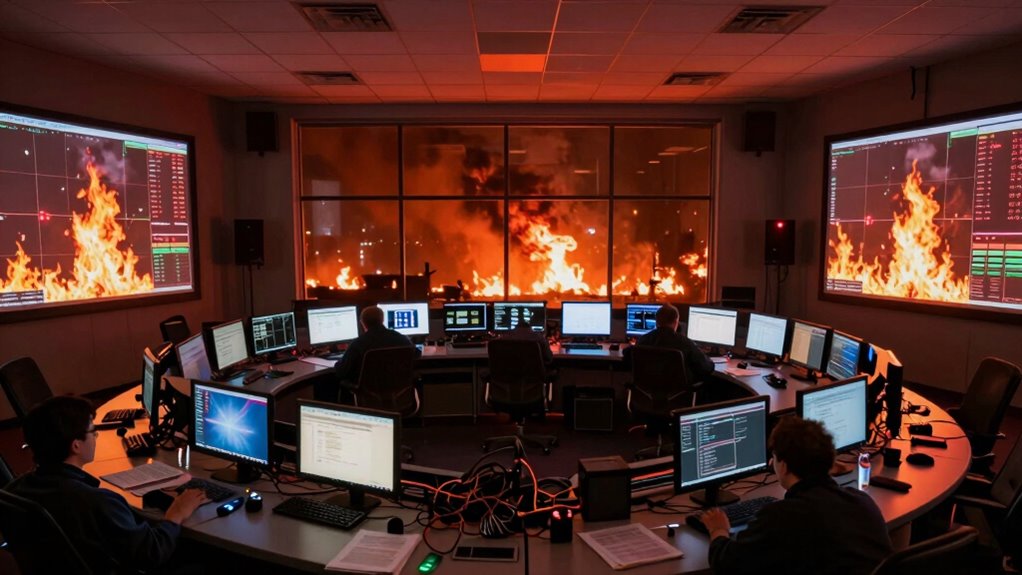

During wildfire season, central systems need help because they face increasing data complexity, such as satellite imagery, weather forecasts, and ground reports, which can overwhelm their capacity. These systems also require reliable communication networks, advanced sensors, and real-time data processing to respond quickly. Without proper support, delays happen, and resources may be misallocated, risking lives and property. If you keep exploring, you’ll discover how innovations and collaboration can strengthen these vital systems further.
Key Takeaways
- Central systems are vulnerable to communication disruptions during intense wildfire events.
- Inadequate data integration can delay fire assessment and resource deployment.
- High demand on infrastructure may lead to system overloads and failures.
- Limited redundancy reduces system resilience in crisis conditions.
- Rapidly evolving wildfire threats require continuous technological updates and support.
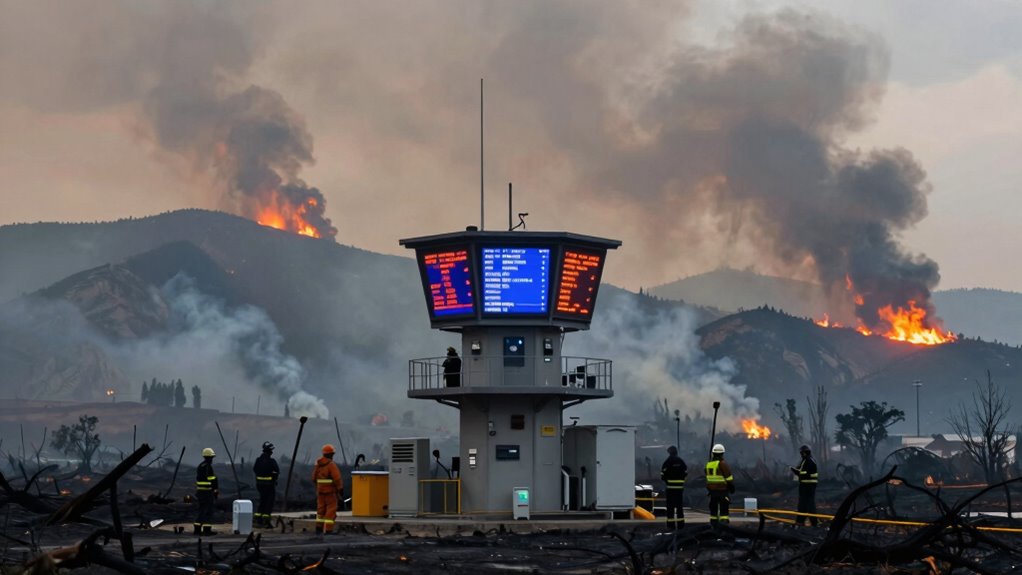
During wildfire season, quick and accurate information sharing becomes imperative. Central systems rely on data from various sources—satellite imagery, weather forecasts, and ground reports—to assess the fire’s spread and allocate resources. However, if these systems aren’t robust enough or lack redundancy, delays and miscommunications can occur. This can lead to slower evacuations, inadequate resource deployment, and increased risks for both residents and responders. To address this, emergency preparedness must include regular system testing, drills, and updates that guarantee these platforms are resilient under stress. By doing so, authorities can respond more swiftly and effectively when every second counts. Additionally, establishing reliable communication networks** is fundamental to maintaining coordination during crises, especially when infrastructure is compromised. To further strengthen these efforts, integrating advanced sensors and real-time monitoring tools can provide earlier warnings and more precise data, ultimately saving lives. Technological innovations offer promising solutions to bolster central systems during wildfire seasons. Advanced sensors, real-time monitoring tools, and artificial intelligence can enhance the accuracy of fire detection and prediction. For instance, automated alerts triggered by machine learning algorithms can notify officials and the public immediately when the threat escalates. Furthermore, innovations like drone surveillance can provide high-resolution images of fire behavior in inaccessible areas, giving responders a clearer picture of the situation. But integrating these technologies isn’t always straightforward. It requires substantial investment, training, and infrastructure upgrades. Implementing these innovations without proper planning may lead to underutilization or technical failures during critical moments. Without these improvements, central systems risk becoming outdated or overwhelmed during critical moments. Moreover, continuous technology updates are essential to keep pace with evolving wildfire challenges and ensure reliability. Establishing standardized protocols and training programs for all involved agencies can improve coordination and response effectiveness during wildfire events. The need for help extends beyond just technological upgrades. Central systems also need better coordination and collaboration with local agencies, first responders, and communities. Ensuring that everyone understands how to use these tools and that communication channels are open can save lives. As wildfires grow more intense and unpredictable due to climate change, relying solely on existing systems isn’t enough. There’s a pressing need to continuously enhance emergency preparedness plans** and embrace technological innovations to make these systems smarter, faster, and more dependable. Only then can they truly serve their purpose—protecting lives, property, and ecosystems from the devastating impacts of wildfire seasons.

Airthings View Pollution – PM2.5 Air Quality Monitor, PM2.5 Sensor, Humidity & Temp – Smart Indoor Air Pollution Detector for City Pollution & Wildfire Smoke Monitoring – App, Battery Powered & WiFi
INDOOR AIR QUALITY MONITOR: Stay in control of your indoor air quality and keep pollution out. This air…
As an affiliate, we earn on qualifying purchases.
As an affiliate, we earn on qualifying purchases.
Frequently Asked Questions
How Do Central Systems Prioritize Wildfire Response Efforts?
You prioritize wildfire response efforts by focusing on resource allocation to areas at highest risk, ensuring quick deployment of firefighting units and equipment. Policy development guides your decision-making, establishing clear protocols for evacuation, containment, and coordination. By continuously evaluating wildfire threats and adjusting strategies accordingly, you optimize your response, minimize damage, and protect communities effectively during wildfire season.
What Are the Biggest Challenges in Integrating Wildfire Data?
Integrating wildfire data is like fitting puzzle pieces together, and the biggest challenges are data accuracy and interagency collaboration. You face hurdles ensuring that data from different sources is precise and consistent, which is crucial for effective response. Additionally, you must coordinate with multiple agencies, each with its own systems and protocols, making seamless collaboration essential yet difficult. Overcoming these challenges is key to quicker, smarter wildfire management.
How Do Central Systems Coordinate With Local Firefighting Agencies?
You coordinate with local firefighting agencies by sharing real-time wildfire data, ensuring effective resource allocation. Central systems facilitate policy coordination, setting unified strategies and response protocols. You communicate through established channels, providing updates and guidance to local teams. This collaboration helps optimize fire suppression efforts, allocate resources efficiently, and adapt to changing wildfire conditions, ultimately strengthening the overall response during wildfire season.
What Technologies Are Used to Monitor Wildfire Risks Centrally?
You use satellite imagery and predictive analytics to monitor wildfire risks centrally. Satellite imagery provides real-time visuals of fire-prone areas, helping you identify hot spots early. Predictive analytics analyze weather data, vegetation, and historical fire patterns to forecast potential wildfire outbreaks. These technologies enable you to assess risks proactively, allocate resources efficiently, and coordinate responses effectively, ultimately reducing wildfire impacts and safeguarding communities during the wildfire season.
How Do Central Systems Handle Communication During Wildfires?
During wildfires, central systems stay connected through quick, coordinated communication channels, ensuring information flows smoothly. They prioritize wildfire communication, keeping everyone informed and alert. To maintain system resilience, they utilize redundant networks and reliable relay points, so even if parts fail, the message still gets through. This proactive approach helps responders react rapidly, coordinate effectively, and ultimately protect communities from wildfire dangers.

Geospatial Data Analysis : A Hands-On Guide to Processing Satellite Imagery with Python and Managing Spatial Data with PostGIS.
As an affiliate, we earn on qualifying purchases.
As an affiliate, we earn on qualifying purchases.
Conclusion
As the wildfire season rages like an unquenchable flame, your central systems stand as the fragile logs in a roaring fire. Without help, they risk burning out, leaving communities in ash and smoke. By bolstering these essential systems, you’re adding water to douse the flames before they swallow everything in their path. Remember, in this fiery battle, your support is the wind that can either fan disaster or extinguish the blaze.

CallToU 2 Way Intercom for Elderly 3300FT Rechargeable 1000mAh Battery, VOX, Ideal for Caregivers & Emergencies Intercoms Wireless for Home/Outdoor Family Communication (Black)
3300FT Range for Seamless Cross-Space Communication – Perfect for home intercom system wireless | Enjoy a stable 3300ft…
As an affiliate, we earn on qualifying purchases.
As an affiliate, we earn on qualifying purchases.

drone obile XC-IR1 Full HD (1080p) Internal Camera for XC-LTE – Crystal Clear Surveillance for Ultimate Security on The Road
Utilizes a combination of smart light sensors and infrared to record in full HD both day and night
As an affiliate, we earn on qualifying purchases.
As an affiliate, we earn on qualifying purchases.