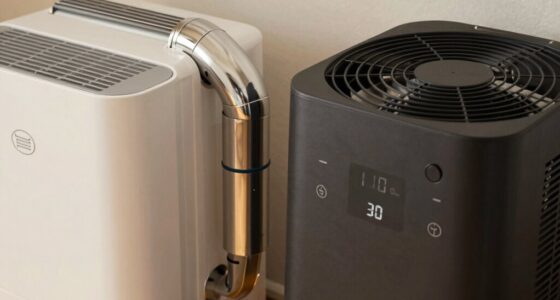
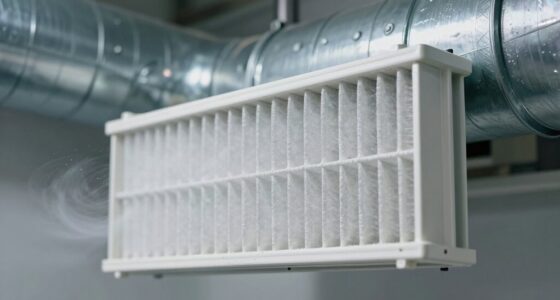
If some rooms never heat or cool properly, airflow issues are usually the cause. Closed or blocked vents restrict airflow, while leaky or poorly insulated ductwork lets conditioned air escape. An improperly balanced HVAC system or poorly placed thermostat can also lead to uneven temperatures. Addressing these problems—by ensuring vents are open, sealing ducts, or installing zoning controls—can improve overall comfort. Keep exploring to learn more about fixing these common airflow challenges.

Get health and wellness essentials delivered free with Prime
- Fast, free delivery on millions of items
- Prime Video, Amazon Music and more included
- Member-only deals all year
Key Takeaways
- Blocked or closed vents limit airflow to specific rooms, causing uneven heating or cooling.
- Leaky or poorly insulated ductwork reduces conditioned air reaching certain areas.
- Improperly balanced HVAC systems or incorrect duct sizing lead to uneven temperature distribution.
- Inaccurate thermostat placement can cause some rooms to be misread and improperly conditioned.
- Lack of zoning controls or duct modifications prevents targeted airflow adjustment for problem areas.

If some rooms in your home never seem to reach the right temperature, you’re not alone. Many homeowners face the frustrating issue of uneven heating or cooling, and often, the root cause comes down to airflow. Your HVAC system relies on proper circulation to distribute heated or cooled air evenly throughout your home. When airflow is disrupted or uneven, certain rooms can stay stubbornly warm or cold, no matter how long your system runs.
One common reason for poor airflow is blocked or closed vents. If vents are shut or partially closed in some rooms, air isn’t able to flow freely where it needs to go. This creates pressure imbalances in your ductwork, causing less air to reach those spaces. Additionally, furniture, curtains, or other objects blocking vents can considerably reduce airflow. Make sure all vents are open and unobstructed, allowing air to circulate freely. Sometimes, simply clearing the area around vents can make a big difference.
Blocked or closed vents reduce airflow and cause temperature imbalances in your home.
Leaky or poorly insulated ducts also play a major role in uneven airflow. Over time, ducts can develop leaks, cracks, or disconnections that allow conditioned air to escape before reaching its destination. This results in less air reaching certain rooms, leaving them cooler or hotter than intended. Sealing and insulating your ducts can help improve airflow and temperature consistency. In some cases, ductwork may need to be professionally repaired or replaced to guarantee efficient airflow.
Another factor to take into account is the design of your HVAC system. If your home has an outdated or improperly balanced system, some rooms may not receive enough airflow. For example, the ductwork may be unevenly sized, or the system might lack zoning controls. Installing dampers or zoning systems can help direct airflow more precisely where it’s needed, giving you better control over individual rooms’ temperatures.
Finally, airflow issues can be caused by improper thermostat placement. If your thermostat is located in a room that’s naturally warmer or cooler than the rest of your house, it might cause your system to cycle on and off prematurely or run longer than necessary. Position your thermostat in a central location away from direct sunlight, drafts, or heat sources to guarantee it accurately reflects your home’s overall temperature.
Addressing airflow problems often involves a combination of these solutions. Start with simple steps like checking vents and clearing obstructions. If issues persist, consider inspecting your ductwork or consulting an HVAC professional. Improving airflow can make a remarkable difference, helping all your rooms reach and maintain the right temperature more efficiently. Proper airflow management is essential for a comfortable and energy-efficient home.
Products Worth Considering

Levoit Core 400S-P Smart Air Purifier for Large Rooms

Philips Sonicare DiamondClean 9000 Electric Toothbrush Bundle, HX9912/72

Levoit Eleva 300X HEPA Air Purifier for Home and Bedroom
As an affiliate, we earn on qualifying purchases.
Frequently Asked Questions
How Can I Identify Poor Airflow in My Room?
You can identify poor airflow in your room by feeling for uneven temperatures or cold spots, which indicate air isn’t circulating properly. Listen for unusual noises from vents or dampers, and check if vents are blocked or closed. Use a tissue or paper to see if air is blowing strongly from vents. If airflow feels weak or inconsistent, it’s a sign you need to improve ductwork, vents, or overall ventilation.
What Are the Signs of Blocked Vents or Registers?
Blocked vents are like closed gates in a busy city, preventing warm or cool air from flowing freely. You’ll notice uneven temperatures, drafts, or rooms that stay stuffy or chilly despite your thermostat. Sometimes, vents are covered by furniture or debris, or they’re simply closed. Check for these obstructions, and keep vents open and unobstructed to guarantee proper airflow, so your entire home feels comfortable all year round.
Can Duct Leaks Cause Uneven Heating or Cooling?
Yes, duct leaks can cause uneven heating or cooling. When your ducts leak, conditioned air escapes before reaching your rooms, reducing efficiency. You might notice some areas are warmer or cooler than others, or your system runs longer than usual. Sealing leaks with duct tape or mastic can improve airflow and temperature consistency. Regular duct inspection guarantees your HVAC system delivers the proper amount of conditioned air to every room.
How Does Room Insulation Affect Airflow and Temperature?
Properly placed, powerful insulation prevents pesky temperature fluctuations, promoting consistent comfort. When your room’s insulation is in poor shape, it lets heat escape or unwanted cold sneak in, disrupting airflow and temperature balance. You’ll notice uneven heating or cooling because the conditioned air struggles to maintain the desired temperature. Upgrading or repairing insulation helps seal the space, stabilize airflow, and sustain steady, satisfying temperatures throughout your room.
Are There Easy Fixes for Uneven Airflow in a Room?
Yes, you can fix uneven airflow easily. Start by checking your vents and registers to make sure they’re open and unobstructed. Use a box fan or adjust existing vents to direct air better. Consider installing or adjusting dampers in ducts to balance airflow. Regularly clean filters and vents, as dust buildup can restrict airflow. These quick steps help improve airflow and temperature consistency in your room.
Conclusion
Think of your HVAC system as a symphony orchestra. When even one instrument is out of tune—like poor airflow—it disrupts the entire harmony. If your room struggles to heat or cool properly, it’s often a sign that airflow is off-key. Fixing these issues is like tuning the orchestra—you’ll restore balance and enjoy a comfortable space. Don’t let airflow problems be the discordant note in your home’s comfort song.