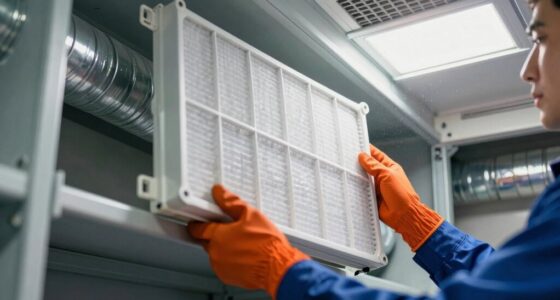
When choosing filters, you’ll find MERV 16 offers better air purification by trapping smaller particles like bacteria and smoke, making it ideal for allergy-sensitive or healthcare environments. However, it can strain your HVAC system due to higher resistance and cost more to replace. MERV 13 is a solid choice for balanced filtration and system compatibility, especially for standard systems. If you keep exploring, you’ll discover more about how to pick the best filter for your needs.
Listen free for 30 days with Audible
Thousands of audiobooks and originals — cancel anytime.
As an affiliate, we earn on qualifying purchases.
Key Takeaways
- MERV 16 filters offer superior removal of small particles like bacteria and smoke compared to MERV 13.
- MERV 13 filters provide a balance of good filtration and broader HVAC compatibility.
- MERV 16 filters are more expensive and require more frequent replacements due to higher dirt accumulation.
- Choose MERV 16 for environments with high air quality needs, like healthcare or allergen-sensitive spaces.
- Assess HVAC system capacity to ensure compatibility before purchasing higher-efficiency MERV 16 filters.

When choosing an air filtration system, understanding the differences between MERV 13 and MERV 16 filters is essential. Your shopping goals should focus not just on price or brand but on how well each filter meets your needs for air filtration efficiency and HVAC system compatibility. MERV ratings are designed to indicate a filter’s ability to trap particles, with higher numbers like 16 providing better filtration. If your priority is cleaner air — especially in environments sensitive to allergens, bacteria, or viruses — then aiming for a MERV 16 filter might be the best choice. These filters can trap smaller particles, including some bacteria and smoke, offering a higher level of air purification.
However, you need to contemplate your HVAC system’s compatibility with these higher-rated filters. Not all systems are built to handle MERV 16 filters, which tend to have higher resistance or pressure drops. If your system isn’t designed for this, installing a MERV 16 could strain your blower motor, reduce airflow, and decrease overall efficiency. Before making a purchase, consult your HVAC specifications or a professional to confirm whether your system can accommodate these more restrictive filters. If your system isn’t compatible, a MERV 13 filter may be a better fit, providing a solid level of filtration without risking damage or inefficiency. Considering HVAC system capacity can help you make a more informed decision.
Your shopping goals should also reflect your specific environment. For example, if you’re in a commercial setting, healthcare facility, or a home with allergy sufferers, investing in a MERV 16 filter makes sense for superior air quality. But if you’re more concerned with balancing filtration and system longevity, a MERV 13 filter offers a good compromise with decent filtration efficiency and easier compatibility. Think about your priorities: do you want maximum filtration regardless of potential HVAC strain, or do you prefer a balance that extends your system’s lifespan?
Finally, consider cost and maintenance. MERV 16 filters typically cost more and may need to be replaced more frequently due to higher dirt accumulation. This impacts your shopping goals by emphasizing the importance of ongoing costs and filter replacement frequency. Additionally, understanding air filtration efficiency can help you make more informed decisions aligned with your desired indoor air quality and system capacity. To weigh these factors carefully is crucial to find the filter that best aligns with your air quality goals and system capabilities.
As an affiliate, we earn on qualifying purchases.
Frequently Asked Questions
How Often Should MERV 13 and MERV 16 Filters Be Replaced?
You should replace MERV 13 filters every 90 days and MERV 16 filters every 60 days to prevent airflow restrictions and maintain ideal filter lifespan. Higher MERV ratings capture more particles, so they tend to clog faster, reducing airflow and efficiency. Regular replacements ensure your HVAC system runs smoothly, keeps indoor air clean, and prevents strain on your equipment. Check your filters monthly, especially during peak usage or high pollution periods.
Are MERV 16 Filters Suitable for Residential HVAC Systems?
Yes, MERV 16 filters can be suitable for residential HVAC systems if your system supports high-efficiency filters. They substantially improve air quality by capturing smaller particles, but you need to check filter compatibility with your system to avoid airflow issues. If your HVAC system can handle the increased resistance, a MERV 16 filter will enhance air purification, especially for allergy sufferers or those seeking cleaner indoor environments.
Do Higher MERV Ratings Impact Airflow and Energy Efficiency?
Higher MERV ratings, like MERV 16, can substantially impact airflow resistance, making it harder for your system to circulate air efficiently. This increased resistance may cause your HVAC to work harder, boosting energy consumption and potentially reducing overall efficiency. While these filters trap more particles, they can strain your system, so consider your system’s capacity before opting for the highest MERV ratings to avoid unnecessary energy costs.
Can MERV 16 Filters Block Viruses and Bacteria Effectively?
Yes, MERV 16 filters can effectively block viruses and bacteria. They excel in virus filtration by capturing tiny airborne particles, including those that carry pathogens. For bacteria removal, MERV 16 filters trap larger bacteria-sized particles, notably improving indoor air quality. If you’re aiming for high-level filtration, especially in healthcare or contaminated environments, MERV 16 provides a strong barrier against viruses and bacteria, helping you maintain a healthier space.
What Is the Cost Difference Between MERV 13 and MERV 16 Filters?
Imagine choosing between two shields: MERV 13, like a sturdy wall, and MERV 16, a nearly impenetrable fortress. MERV 16 filters cost more upfront—typically 20-50% higher—due to their advanced filtration. Over time, their longer filter lifespan offsets some costs, but maintenance remains pricier. If your goal is maximum protection, investing in MERV 16 pays off, though you’ll need to budget for the higher initial expense and ongoing upkeep.
As an affiliate, we earn on qualifying purchases.
Conclusion
When choosing between MERV 13 and MERV 16 filters, remember that MERV 16 captures 95% of particles as small as 0.3 microns, making it ideal for high-risk environments. If you’re prioritizing superior air purification, the slight difference in cost is worth it. Ultimately, your choice depends on your needs—whether for everyday comfort or maximum protection. Keep in mind, upgrading to a MERV 16 can profoundly improve indoor air quality, especially during allergy season or flu outbreaks.

LEVOIT Air Purifier for Home Allergies and Pets Hair Smokers in Bedroom, H13 True HEPA Filter, 24db Filtration System Cleaner Odor Eliminators, Remove 99.97% Dust Smoke Mold Pollen, Core 300, White
- AHAM Verified for Performance: Independently tested for air quality and efficiency
- Powerful Filtration System: 56W motor with 143 CFM CADR
- Effective for Large Rooms: Cleans 222 sq ft 4.8 times/hour
As an affiliate, we earn on qualifying purchases.
As an affiliate, we earn on qualifying purchases.
HVAC compatible high efficiency filters
As an affiliate, we earn on qualifying purchases.
As an affiliate, we earn on qualifying purchases.
College move-in / dorm season Picks
dorm essentials
As an affiliate, we earn on qualifying purchases.