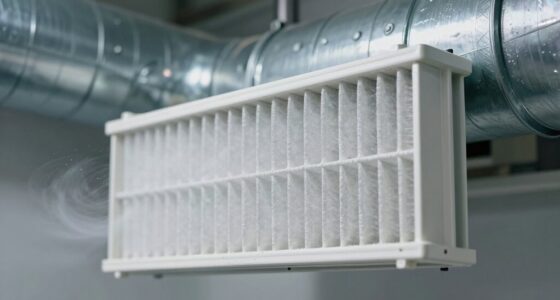
Duct leaks in your attic happen when small gaps or cracks develop in your HVAC ductwork, allowing heated or cooled air to escape into unconditioned spaces. Over time, these leaks can increase your energy bills, cause uneven temperatures, and reduce your system’s efficiency. Many leaks result from poor sealing, aging materials, or pests. Understanding how these leaks happen and how to fix them can help improve your home’s comfort and save money—keep exploring to learn more.
Open a free Amazon Business account
Business pricing, bulk buying and tax-exempt orders.
As an affiliate, we earn on qualifying purchases.
Key Takeaways
- Duct leaks occur when airtight seals in the attic ductwork break down, allowing conditioned air to escape into unconditioned attic space.
- Small gaps and cracks in duct joints or connections are common entry points for attic air infiltration.
- Age, poor installation, and household activities can cause or worsen duct leaks over time.
- Leaked attic air reduces HVAC efficiency, causes uneven indoor temperatures, and increases energy costs.
- Proper sealing with mastic or tape prevents attic air from entering ducts, improving home comfort and energy savings.
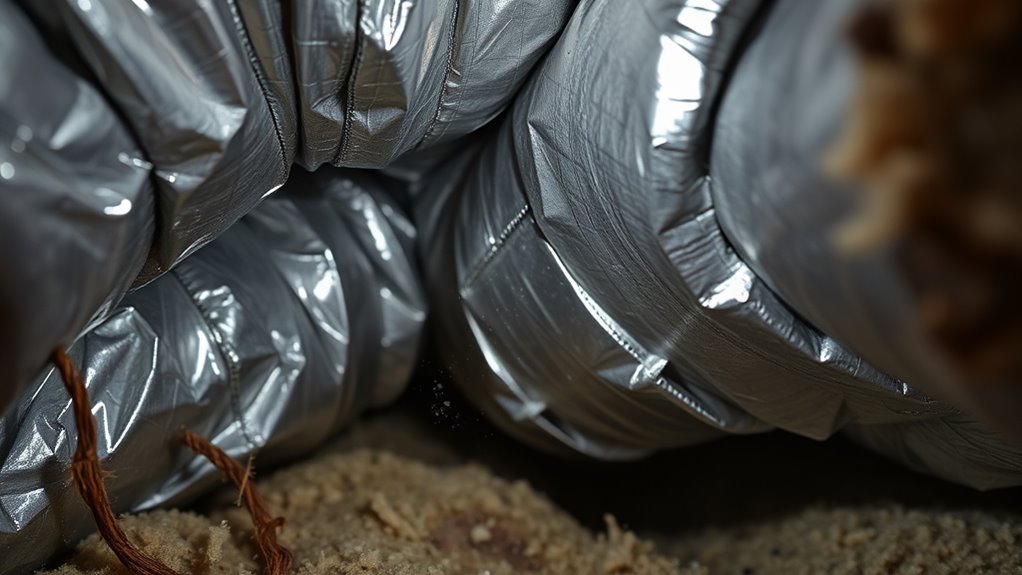
Have you ever wondered how much air leaks from your duct system? It’s a common question, especially when you start noticing uneven temperatures or rising energy bills. Duct leakage happens when the sealed pathways that carry heated or cooled air from your HVAC system to different rooms aren’t as tight as they should be. Over time, small gaps and cracks develop due to age, poor installation, or household vibrations. These tiny openings may seem insignificant, but they can cause a considerable amount of conditioned air to escape into places like your attic, basement, or crawl spaces. When air leaks into your attic, it often gets trapped and causes a cycle of energy waste and discomfort inside your home.
Your attic is a prime location for duct leaks because of its typically unconditioned space and accessibility. If your ducts run through the attic, every crack or gap in the connections can allow heated or cooled air to escape. This means your HVAC system has to work harder to maintain your desired temperature, increasing your energy consumption and utility bills. Moreover, the leakage can cause uneven heating and cooling throughout your house, leading to hot or cold spots that make you uncomfortable. It’s frustrating to spend money on energy, only to find that leaks are undoing your efforts.
Attic duct leaks cause uneven temperatures and drive up energy bills.
The reasons behind leaks are varied. Sometimes, ducts were poorly sealed during installation, leaving gaps that worsen over time. Other times, the expansion and contraction of materials cause joints to loosen, or rodents and pests chew through insulation and ductwork, creating new leaks. Regular household activities like moving furniture or renovations can also accidentally damage ducts, making them less airtight. Whatever the cause, once leaks form, they tend to grow larger if not addressed, compounding the problem and making it even harder for your HVAC system to keep up. Additionally, understanding duct sealing techniques can help homeowners take initial steps toward fixing leaks themselves or better communicate with professionals.
To combat this, you need to identify where leaks are occurring. A professional energy audit can pinpoint leaks with specialized tools, such as a duct blaster or thermal imaging cameras. Once identified, sealing these leaks with mastic sealant or metal tape can considerably improve duct integrity. Sealing leaks not only reduces wasted energy but also enhances indoor comfort and extends the lifespan of your HVAC system. Basically, understanding and fixing duct leaks is a simple yet impactful way to improve your home’s efficiency and comfort, especially in places like your attic where leaks are most common. Taking action now can save you money and prevent bigger problems down the road.
Top picks for "duct leakage attic"
As an affiliate, we earn on qualifying purchases.
Frequently Asked Questions
How Can I Detect Attic Air Leaks Myself?
You can detect attic air leaks by doing a simple inspection. Turn on your HVAC system and hold a lit incense stick or a smoke pencil near duct joints, seams, and attic penetrations. Watch for the smoke to flicker or move, indicating leaks. Also, feel for drafts with your hand around those areas. Seal any leaks you find with mastic or foil tape to improve efficiency.
What Are the Signs of Duct Leakage in My Home?
Duct leakage is like holes in a sailing ship, letting valuable conditioned air escape. You might notice uneven temperatures, higher energy bills, or stuffy rooms that just won’t cool down. If your vents seem weak or you hear whistling sounds, those are red flags. These signs point to duct leaks stealing your comfort and increasing costs, so inspecting and sealing your ducts can help restore your home’s balance.
Can Duct Sealing Improve Indoor Air Quality?
Yes, duct sealing can improve your indoor air quality by preventing dust, allergens, and pollutants from leaking through gaps in your ductwork. When ducts are airtight, your HVAC system distributes cleaner, more consistent air throughout your home. This reduces indoor air contaminants and helps maintain healthier environments. Sealing leaks also boosts energy efficiency, which means your system works better and keeps your home more comfortable overall.
How Often Should Ductwork Be Inspected for Leaks?
You should inspect your ductwork for leaks at least once every 3 to 5 years. Regular inspections help catch small leaks early, preventing energy loss and poor indoor air quality. If you notice uneven cooling or heating, higher energy bills, or dust buildup, it’s a good idea to check your ducts sooner. Professional inspections guarantee your system runs efficiently, saving you money and improving your home’s air quality.
What Are the Long-Term Cost Benefits of Sealing Ducts?
Sealing your ducts is like locking a leak in a dam—your energy bills stay low, and your system works efficiently. Over time, you’ll save hundreds on heating and cooling costs, as less conditioned air escapes. Plus, your HVAC system won’t work as hard, reducing wear and tear. These savings add up, making duct sealing a smart investment that pays off in comfort and lower expenses for years to come.
Conclusion
Now that you know how duct leakage sneaks into your attic, you’re better equipped to tackle the problem head-on. Sealing those leaks might seem like a small step, but it can make a big difference in your home’s comfort and efficiency. Don’t let hidden gaps drain your energy and money; remember, a stitch in time saves nine. Take action today to keep your cool and save on energy costs tomorrow.
Back to school Picks
back to school
As an affiliate, we earn on qualifying purchases.