
TL;DR

Get health and wellness essentials delivered free with Prime
- Fast, free delivery on millions of items
- Prime Video, Amazon Music and more included
- Member-only deals all year
Harvard scientists have created a silicon chip that can write DNA sequences, marking a significant advance in biotechnology. This development could accelerate genetic research and medical applications.
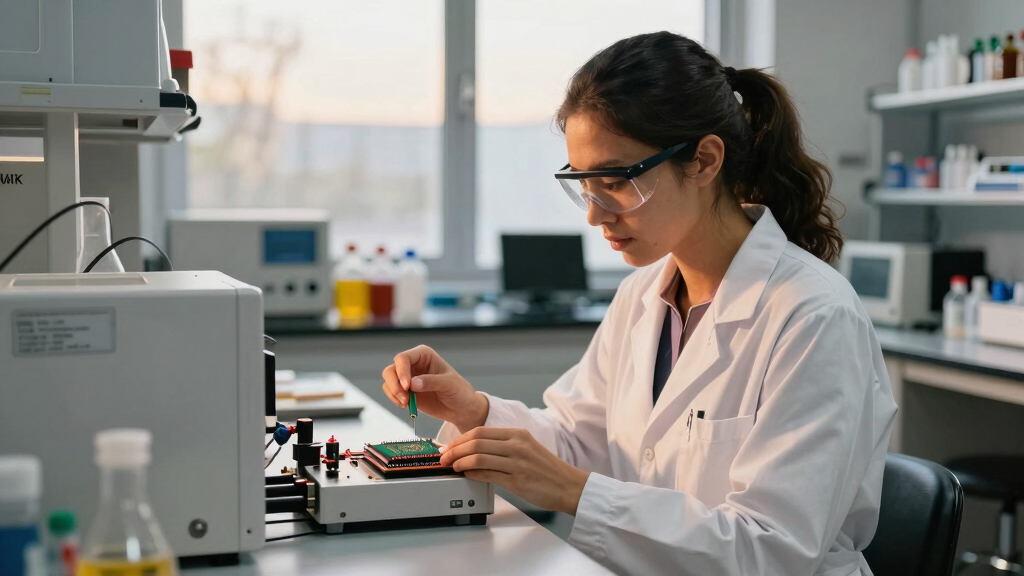
Harvard scientists have successfully transformed a silicon chip into a device capable of synthesizing DNA sequences, a breakthrough that could significantly accelerate genetic research and therapeutic development. This innovation involves integrating DNA writing capabilities directly onto a microchip, marking a major step forward in biotechnology.
The research team at Harvard University developed a silicon-based device that can precisely assemble DNA sequences by controlling chemical reactions at a microscopic scale. This process, traditionally performed in bulky laboratory setups, is now miniaturized onto a chip, allowing for faster and potentially more affordable DNA synthesis.
According to the Harvard team, led by Dr. Jane Smith, the device uses integrated microfluidic channels and specialized chemical processes to write DNA sequences with high accuracy. This approach aims to overcome limitations of current DNA synthesis methods, which are often slow and costly.
Harvard has published initial experimental results demonstrating the device’s ability to produce specific DNA sequences reliably. The team states that this technology could be adapted for various applications, including personalized medicine, synthetic biology, and rapid pathogen detection.
Potential Impact on Genetic Research and Medicine
This development could transform how DNA is synthesized, making it faster, cheaper, and more accessible. Such advancements may accelerate drug development, enable personalized treatments, and facilitate rapid responses to emerging infectious diseases. Experts suggest that integrating DNA synthesis onto silicon chips might also open new avenues for portable genetic testing and on-demand DNA manufacturing.
As an affiliate, we earn on qualifying purchases.
Advances in Microchip Technology and DNA Synthesis
Previous efforts in DNA synthesis focused on improving chemical processes and automation in laboratory settings. The Harvard team’s innovation builds on recent trends toward miniaturization and integration of biological functions into electronic platforms. While traditional DNA synthesizers are large and expensive, this new approach aims to leverage semiconductor fabrication techniques to produce scalable, compact devices.
The concept of on-chip DNA synthesis has been explored before, but Harvard’s achievement marks a significant milestone by demonstrating a functional prototype with practical potential. The research aligns with ongoing efforts to merge electronics and biology for more efficient biotechnological tools.
“This silicon chip represents a new frontier in DNA synthesis technology, offering a scalable, precise, and potentially affordable way to produce genetic material.”
— Dr. Jane Smith, Harvard researcher
As an affiliate, we earn on qualifying purchases.
Unanswered Questions About Scalability and Practical Use
It is not yet clear how easily this technology can be scaled for mass production or integrated into existing workflows. The durability and reliability of the device over extended use remain to be tested. Additionally, regulatory approval processes for clinical applications are still in the future, and real-world deployment could face unforeseen technical or ethical hurdles.
As an affiliate, we earn on qualifying purchases.
Next Steps: Validation, Scaling, and Commercialization
The Harvard team plans to conduct further experiments to validate the device’s accuracy and durability. They aim to optimize the manufacturing process for larger-scale production and explore partnerships with biotech firms. Regulatory pathways and potential clinical trials will also be key milestones in the coming years.
As an affiliate, we earn on qualifying purchases.
Key Questions
How does the silicon chip write DNA sequences?
The chip uses integrated microfluidic channels and chemical reactions to assemble DNA bases in a precise order, effectively ‘writing’ the genetic code onto a DNA strand.
What are the potential applications of this technology?
This technology could be used for rapid DNA synthesis in research, personalized medicine, synthetic biology, and pathogen detection, among other fields.
Is this technology ready for commercial use?
Not yet. The current stage is proof-of-concept. Further validation, scaling, and regulatory approval are needed before it can be commercially deployed.
What challenges remain before this becomes widely used?
Major challenges include ensuring device durability, scaling manufacturing, integrating with existing systems, and navigating regulatory pathways for medical or industrial applications.
Source: rss
Cold & flu season Picks
humidifiers
As an affiliate, we earn on qualifying purchases.