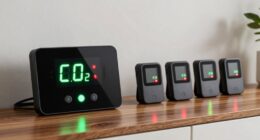
To get real readings from your air quality monitor, place it away from windows, air vents, and sources of pollution like kitchens or bathrooms. Position it at eye level, ideally in central areas with good airflow, but avoid corners or low surfaces. Make sure it isn’t in direct sunlight or obstructed by furniture, as this can skew data. For more tips on optimizing your air quality monitor’s effectiveness, you might want to explore further.
Key Takeaways
- Position the monitor at eye level (4-6 feet high) in a central room to accurately reflect general air conditions.
- Avoid placing the monitor near windows, air vents, or pollution sources to prevent skewed readings.
- Ensure unobstructed airflow around the monitor by keeping it away from furniture and corners.
- Use indoor plants to enhance air quality and place monitors in frequently used spaces like living rooms or bedrooms.
- Regularly calibrate and clean the monitor to maintain accuracy and reliability of readings.
Understanding Air Quality Monitors

Air quality monitors are essential tools that help you assess the pollution levels in your environment. These devices measure various pollutants, giving you a clearer picture of your indoor air quality. When you place your monitor strategically, it can provide more accurate readings. For instance, avoid putting it too close to an air purifier, as this could skew the data. Instead, position it in an area with good air circulation, like near a window or in the center of a room. This way, you’ll capture a true representation of the air quality. Regularly checking your monitor can guide you in making necessary adjustments, ensuring you maintain a healthier living space. Additionally, understanding how to maximize your truck bed’s potential can help ensure you have the right tools for monitoring air quality while on the go. Incorporating an air quality monitor into your routine can enhance your awareness of indoor air quality, empowering you to take proactive measures to improve your environment. Furthermore, being mindful of gelato consumption can also contribute to overall well-being, as certain ingredients may affect respiratory health. Consider adding fire pits to your backyard to create a cozy atmosphere while ensuring the air quality remains optimal during gatherings.
Factors Influencing Air Quality Readings

When you set up your air quality monitor, consider where you place it, as room location can greatly affect its readings. Ventilation also plays a vital role; how air circulates in the space can influence what the monitor detects. Additionally, environmental factors, like nearby pollution sources, can skew the results, so it’s important to be aware of your surroundings. Proper lighting control is crucial in optimizing the performance of various monitoring devices, including air quality monitors. Furthermore, investing in diverse options for air quality monitoring can enhance your understanding of the environment. For example, understanding seasonal variations in air quality can provide insights into changing pollution levels throughout the year. It’s also beneficial to utilize data-driven comparisons of different air quality monitors to ensure you select the most effective device for your specific needs. Incorporating smart appliances into your kitchen can help maintain optimal air quality through better ventilation and air filtration systems.
Room Placement Considerations
To guarantee accurate air quality readings, consider the room placement of your monitor carefully. First, think about airflow patterns in your space. Placing the monitor near an air vent or window can skew readings, as it may pick up external pollutants or drafts. Instead, choose a location that reflects the general air quality of the room, ideally at eye level, away from direct airflow. Additionally, ensure the monitor is positioned away from sources of energy-efficient cloud solutions that may emit pollutants. An ideal location is near central heating sources, which can help provide a more consistent air quality reading throughout the room. Electric fireplace options can also contribute to a more stable temperature, which may enhance overall air quality.
Next, watch out for furniture interference. Large objects can obstruct airflow, leading to inaccurate measurements. Avoid positioning the monitor behind furniture or in corners where air may stagnate. By being mindful of these factors, you’ll assure your air quality monitor provides reliable readings, helping you maintain a healthier indoor environment. Additionally, consider using practical, room-by-room solutions to guide your placement decisions for optimal results.
Ventilation Impact Factors
While you may not realize it, the ventilation system in your space considerably impacts air quality readings. The way air moves throughout your environment can alter what your monitor detects. Here are some key factors to take into account:
- Air flow patterns: Ensure that air circulates freely without obstructions that might trap pollutants.
- Air purifier placement: Position your air purifier strategically to maximize its efficiency in clearing contaminants.
- Ventilation source: Identify if your air source is fresh or recirculated; this affects overall air quality.
- Room layout: Open spaces promote better air movement, while cluttered areas can impede proper ventilation.
Environmental Influences on Readings
The placement of your air quality monitor can be considerably affected by various environmental factors. Building codes often dictate where air quality monitors should be installed, impacting their effectiveness. For instance, if your monitor is placed near an exterior wall, it may pick up outdoor pollutants like vehicle emissions or industrial discharge, skewing your readings. Additionally, factors like nearby sources of pollution—such as factories or highways—can lead to inaccurate data. Make sure your monitor is positioned away from these influences, ideally in a central location within your space. By considering these environmental factors, you’ll get a clearer picture of your indoor air quality, enabling you to take appropriate action for a healthier environment. Furthermore, the presence of home security systems can also help mitigate indoor air quality issues by reducing outdoor pollutants that infiltrate your living space. Additionally, monitoring air quality can be crucial for understanding electric power generation since poor air quality can impact the overall efficiency of renewable energy projects. Implementing risk management strategies can further enhance the effectiveness of your air quality monitoring efforts. Regular maintenance of fuel injectors is also essential, as it ensures that your vehicle operates efficiently, which can indirectly influence the air quality in your environment. Moreover, understanding how to create a bug out bag can prepare you for emergencies caused by poor air quality, ensuring you have essential items ready for any situation.
Ideal Locations in Living Spaces

Choosing the right spots for air quality monitors in your living space can considerably impact their effectiveness. To guarantee accurate readings, consider these ideal locations:
- Near air purifiers for effective air purifier placement monitoring, as filtration systems can significantly improve indoor air quality. Additionally, using an air quality monitor can help you evaluate the performance of best home security systems that integrate with smart devices.
- In high-traffic areas like living rooms or hallways to capture varying air quality throughout the day.
- Away from windows or doors to avoid drafts that might skew results.
- In bedrooms for smart monitor integration, allowing you to track air quality while you sleep.
These placements help you understand how your indoor air quality fluctuates, enabling you to make informed decisions about ventilation and air purification systems. With the right setup, you’ll gain valuable insights into your living environment. Additionally, monitoring air quality can enhance your understanding of deep-sky imaging and its relationship with environmental factors affecting visibility and clarity during astronomical observations.
Avoiding Common Placement Mistakes

When placing your air quality monitor, make certain it’s not near windows, as this can skew readings from outside air influences. You should also position it on an elevated surface to ensure it captures the right airflow. Avoiding these common mistakes will help you get the most accurate data.
Away From Windows
Although it might seem convenient to place your air quality monitor near a window for easy visibility, doing so can lead to inaccurate readings. Windows can allow external pollutants and air flow to skew the data your monitor collects. Instead, consider placing it in a location that reflects the indoor air quality more accurately.
Here are some tips for ideal placement:
- Position it at least three feet away from any air purifier.
- Avoid corners or areas with stagnant air.
- Keep it away from direct sunlight, which can affect its sensors.
- Ensure it’s not obstructed by furniture, allowing for proper air flow.
Elevated Surface Placement
To get the most accurate readings from your air quality monitor, place it on an elevated surface, ideally at a height of about four to six feet. This height helps you avoid common placement mistakes that can skew your results. When positioned too low, your monitor may pick up surface contamination from dust or other pollutants that settle on the floor, leading to inaccurate data. High placement also enhances airflow dynamics, ensuring your monitor captures a more representative sample of the air you breathe. Avoid corners and tight spaces; instead, opt for open areas where air can circulate freely. By following these guidelines, you’ll gain better insights into your indoor air quality and create a healthier environment.
Monitoring Air Quality in Different Rooms

How can you guarantee excellent air quality in every room of your home? Start by strategically placing air quality monitors in key areas. Each room has unique challenges, so consider the following tips:
- Position your monitor near sources of pollution, like kitchens and bathrooms.
- Incorporate indoor plants to naturally filter air and improve quality.
- Ensure air purifier placement is ideal, ideally in rooms you use most frequently.
- Monitor bedrooms to check for allergens and maintain a healthy sleeping environment.
Height Matters: Positioning Your Monitor

Placement of your air quality monitor isn’t just about where you put it; height plays a significant role in its effectiveness. By positioning it at the right height, you can ensure accurate readings that reflect airflow dynamics in your space. Generally, aim for a height between 3 to 6 feet, where most people breathe. This height allows for ideal sensor calibration, guaranteeing you get readings that matter.
| Height (Feet) | Effectiveness Level |
|---|---|
| 1-2 | Low |
| 3-6 | Optimal |
| 7-10 | Moderate |
| Above 10 | Low |
Regular Maintenance and Calibration

While you may think your air quality monitor is set and forget, regular maintenance and calibration are essential for accurate readings. Neglecting these tasks can lead to inaccurate data, reducing your monitor’s effectiveness. To guarantee sensor longevity and reliable performance, follow these tips:
- Check calibration frequency: Depending on your monitor, this could be weekly, monthly, or quarterly.
- Clean the sensors: Dust and debris can affect readings; gently wipe sensors with a soft cloth.
- Inspect for damage: Regularly look for signs of wear or malfunction that may impact performance.
- Update software: Ensure your monitor’s firmware is up to date to benefit from the latest features and fixes.
Interpreting Your Air Quality Data
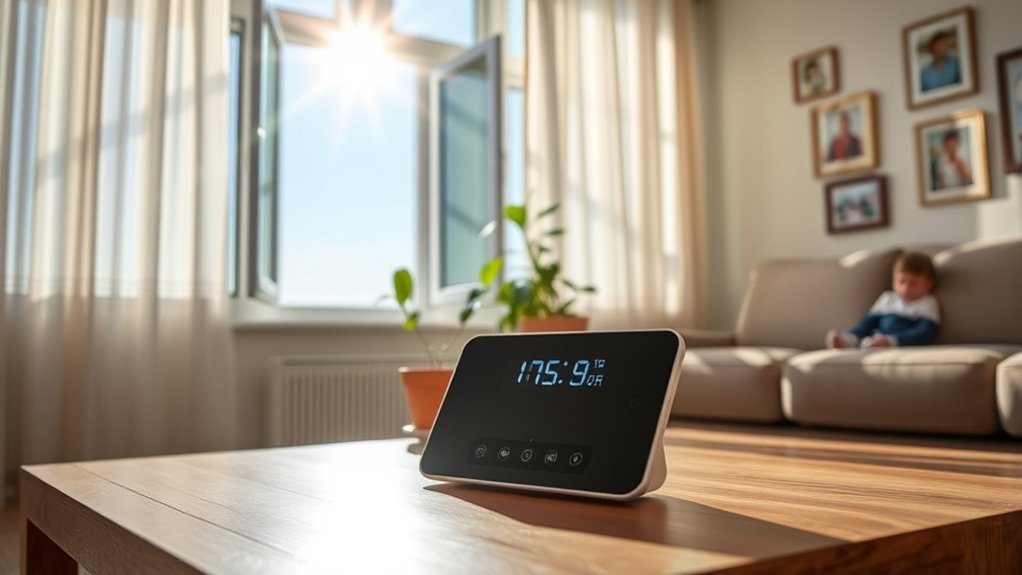
Understanding your air quality data is crucial for making informed decisions about your environment. Start by comparing your readings to established air quality standards to identify any potential risks. If your monitor shows elevated levels of pollutants, take action—like improving ventilation or using air purifiers. It’s essential to ensure your monitor’s sensor calibration is up-to-date; inaccurate readings can lead to misguided conclusions. Regularly check the manufacturer’s guidelines for recalibration to maintain accuracy. Consider the time of day and weather conditions when interpreting your data, as these factors can considerably influence air quality. By staying proactive and informed, you can create a healthier living space and mitigate any risks associated with poor air quality.
Frequently Asked Questions
Can Air Quality Monitors Detect Odors or Smells?
Air quality monitors don’t specifically detect odors or smells, but they can measure certain pollutants that might contribute to them. While they provide data on particulate matter and volatile organic compounds, they lack the sensitivity to identify specific odors. If you’re looking for odor detection, consider using specialized devices designed for smell sensitivity. They can give you better insights into unpleasant scents in your environment, complementing your air quality readings.
How Long Does It Take for Monitors to Provide Accurate Readings?
It usually takes air quality monitors a few minutes to provide accurate readings after you set them up. During this time, the device undergoes monitor calibration to guarantee precision. Keep in mind that the sensor lifespan can affect accuracy, so regular maintenance is essential. If you notice discrepancies, it might be time to recalibrate or replace the sensor. By staying proactive, you’ll get the most reliable data from your monitor.
Are There Specific Brands Known for Better Accuracy?
Yes, some brands are known for better accuracy. You’ll find that monitors from companies like PurpleAir, IQAir, and Aeroqual offer superior sensor calibration and reliable readings. When you choose a device, consider its placement, as that affects performance. A well-calibrated sensor in the right spot ensures you get the most precise data. So, look for trusted brands and pay attention to how and where you position your monitor for ideal results.
Do Air Quality Monitors Require Wi-Fi to Function Properly?
No, air quality monitors don’t always require Wi-Fi to function properly. Many models operate independently, providing real-time readings directly on the device. However, Wi-Fi connectivity enhances their capabilities by allowing data synchronization to your smartphone or cloud service. This means you can track air quality trends over time, receive alerts, and access detailed reports. If you want those advanced features, look for a monitor that supports Wi-Fi connectivity.
Can I Use Multiple Monitors in the Same Room?
Absolutely, you can use multiple monitors in the same room, like stars in a night sky. Just remember, proper sensor placement is key to obtain accurate readings. Spread them out to cover different areas and avoid interference. Regular calibration frequency ensures each monitor stays sharp, like a finely-tuned instrument. This way, you’ll capture a full picture of the air quality, turning your space into a haven of fresh, clean air.
Conclusion
Just like a well-tended garden needs sunlight and shelter, your air quality monitor thrives in the right spot. By placing it wisely and avoiding common pitfalls, you cultivate a clearer understanding of your indoor environment. Remember, it’s not just about data; it’s about creating a healthier haven. Regular care and attention to your monitor will yield rich insights, helping you nurture your space and breathe easier. Your home deserves to flourish, and so do you!