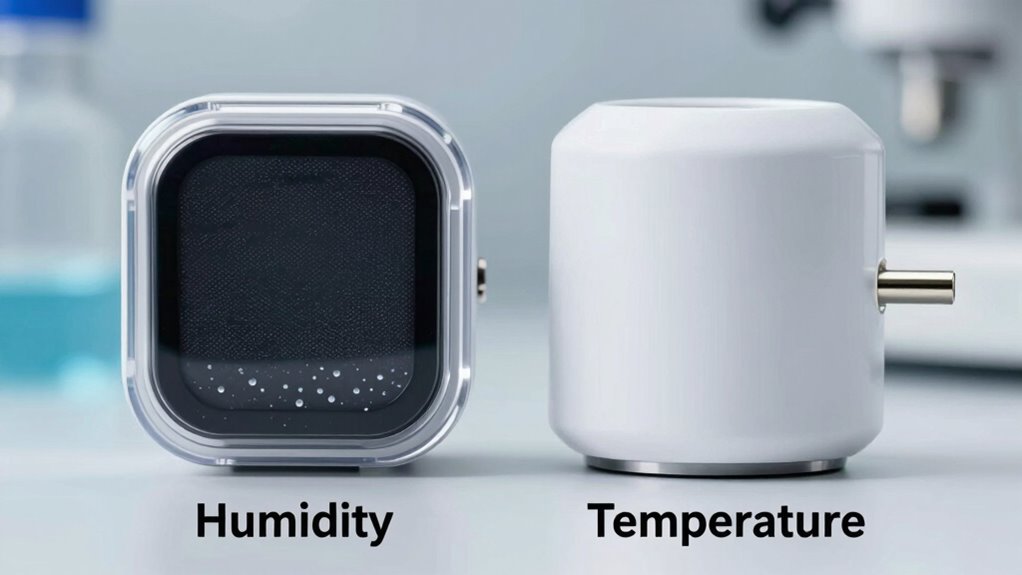
Humidity sensors tend to drift more over time than temperature sensors, especially in harsh or dusty environments. Factors like dust, chemicals, and high humidity accelerate their degradation, requiring frequent calibration. Temperature sensors, particularly high-quality RTDs, are more stable and experience less drift, making them more reliable for long-term use. To understand how environmental conditions and sensor materials influence drift, consider exploring further details about each sensor type’s behavior over time.
Key Takeaways
- Humidity sensors tend to drift more over time due to environmental exposure and material degradation.
- Temperature sensors, especially RTDs, generally exhibit less drift and more stable long-term performance.
- Environmental factors like dust, chemicals, and high humidity accelerate humidity sensor drift more than temperature sensors.
- Proper calibration and protective measures can mitigate drift in both sensor types but are more critical for humidity sensors.
- Overall, humidity sensors drift more than temperature sensors, which are designed for better long-term stability.
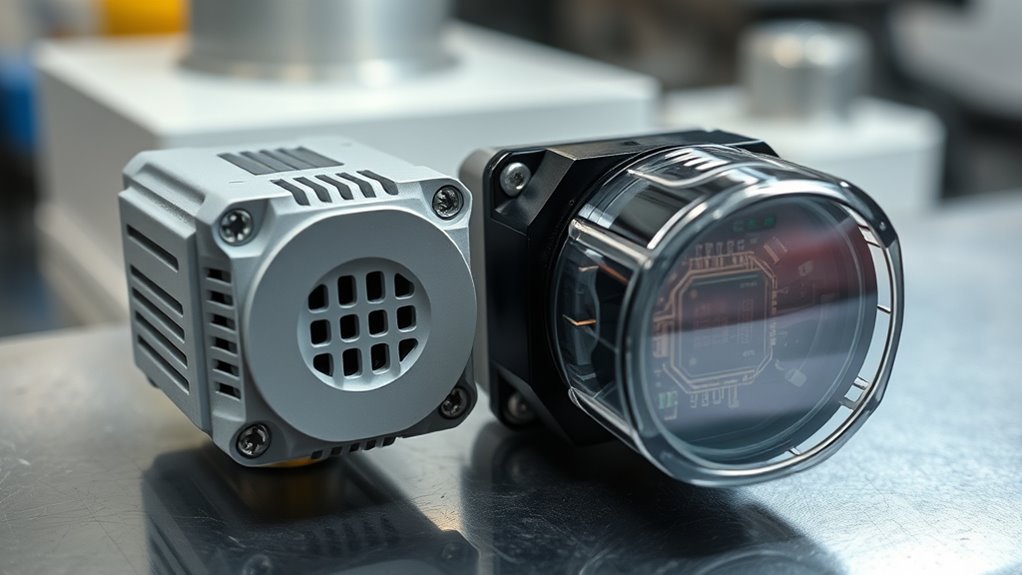
Humidity sensors, also known as hygrometers, tend to drift more than temperature sensors, especially when exposed to harsh conditions. They often rely on materials like polymers, capacitive plates, or resistive elements that respond to moisture levels. Over time, these materials can degrade or become contaminated, leading to a gradual loss of calibration accuracy. For example, exposure to dust, chemicals, or high humidity can cause the sensor’s readings to become less reliable. Additionally, temperature fluctuations also affect humidity sensors more significantly, amplifying their drift. This means that if you’re using a humidity sensor in a humid or chemically polluted environment, you’ll need to calibrate it more frequently to ensure precision. The design and technology used in manufacturing can also influence the extent of drift experienced. Temperature sensors, on the other hand, generally exhibit less drift, especially when made from stable materials such as thermocouples, resistance temperature detectors (RTDs), or thermistors. These devices are designed for accuracy and stability over time. For instance, RTDs made from platinum are known for their excellent long-term stability and minimal drift, making them suitable for precise industrial measurements. While temperature sensors can drift due to aging or exposure to extreme conditions, their drift rate is usually lower compared to humidity sensors. Proper calibration and protective measures, like shielding and regular maintenance, can greatly extend their accuracy lifespan. Understanding the material stability and environmental sensitivities of each sensor type is essential for making informed choices. The main takeaway is that humidity sensors require more careful calibration and maintenance to stay accurate over extended periods. Their susceptibility to environmental factors makes them more prone to drift, especially in challenging settings. Temperature sensors, especially high-quality RTDs and thermocouples, tend to maintain their calibration longer, making them more reliable for applications demanding long-term stability. If your environment involves frequent changes or harsh conditions, understanding these drift tendencies becomes crucial. It ensures you select a sensor that balances accuracy, durability, and maintenance needs, ultimately helping you avoid costly errors and downtime.

Boveda for Cigars | One-Step Calibration Kit | Preloaded with 75% RH Humidity Control Pack | Precise Salt Test for Digital and Analog Hygrometers and Humidity Sensors | 1-count
- Calibrates Digital and Analog Hygrometers: Ensures accurate RH readings for cigars
- Patented Saltwater Calibration: Provides precise salt test for sensors
- Mess-Free, Easy Calibration: Simple zip-and-check process in high-density bag
As an affiliate, we earn on qualifying purchases.
As an affiliate, we earn on qualifying purchases.
Frequently Asked Questions
How Do Calibration Methods Differ Between Humidity and Temperature Sensors?
You calibrate humidity and temperature sensors differently because they respond to distinct environmental factors. For humidity sensors, you often use saturated salt solutions or calibration chambers to set accurate moisture levels. Temperature sensors typically require comparisons with a precise reference thermometer, using ice baths or dry blocks. You should regularly recalibrate both to maintain accuracy, but humidity sensors may drift more due to moisture exposure, so frequent checks are essential.
What Environmental Factors Most Significantly Affect Sensor Drift?
You’ll find that environmental factors like temperature fluctuations, humidity levels, and exposure to dust or chemicals most markedly cause sensor drift. Rapid or extreme changes can strain sensor accuracy, while prolonged exposure to moisture or corrosive substances accelerates deterioration. To maintain precision, you should regularly calibrate sensors, protect them from harsh conditions, and monitor environmental parameters, ensuring reliable readings over time despite these influences.
Are There Specific Industries More Prone to Humidity Sensor Drift?
You’ll find that industries like pharmaceuticals and food processing are more prone to humidity sensor drift. Unlike manufacturing or automotive sectors, these fields require precise humidity control, making sensor accuracy critical. Constant exposure to moisture, cleaning, and sterilization processes accelerates drift. So, if you work in these sensitive industries, anticipate humidity sensors to need frequent calibration and maintenance to ensure reliable readings.
How Often Should Sensors Be Recalibrated for Optimal Accuracy?
You should recalibrate your sensors at least once a year to maintain ideal accuracy, but in critical or harsh environments, more frequent recalibration—every six months or quarterly—may be necessary. Regular checks help identify drift early, ensuring reliable readings. Keep an eye on calibration logs and performance trends; if you notice deviations, recalibrate sooner. Consistent maintenance extends sensor lifespan and guarantees precise data for your applications.
Can Sensor Drift Be Predicted or Modeled Effectively?
Think of sensor drift as a weather forecast for your equipment—sometimes predictable, sometimes not. You can model it effectively by analyzing historical data, recognizing patterns, and applying statistical tools. While no prediction is perfect, these models help you anticipate drift trends, allowing proactive recalibration. This approach acts like a lighthouse guiding you through foggy conditions, ensuring your sensors stay accurate and reliable over time.

TempPro TP50 Digital Hygrometer Indoor Thermometer Room Thermometer
- Wellness Indicator: Air condition status with icons
- High Accuracy & Fast Refresh: ±2-3%RH and ±1°F, updates every 10 seconds
- Record High & Low Levels: Displays temperature and humidity extremes
As an affiliate, we earn on qualifying purchases.
As an affiliate, we earn on qualifying purchases.
Conclusion
Think of humidity and temperature sensors as two travelers on a journey through a changing landscape. Humidity sensors tend to drift more like a traveler caught in shifting winds, constantly adjusting to unseen forces. Temperature sensors, meanwhile, stay steady like a mountain standing firm against the weather. Knowing which drifts more helps you choose your companion wisely, ensuring your measurements remain reliable on your voyage through the environment. Stay vigilant, and trust your sensors to guide you accurately.

7“ RTD Temperature Probe Sensor, Replacement for Traeger Grill Probe, Internal Ambient Probe Compatible with Traeger and Z-Grill Pellet Grills and Smoker
- Wide Compatibility: Compatible with Traeger and Z-Grill
- Premium Material: Made from durable stainless steel
- Accurate Monitoring: Provides precise temperature readings
As an affiliate, we earn on qualifying purchases.
As an affiliate, we earn on qualifying purchases.

HT607 Temperature Humidity Meter – Large LCD Backlight with Cover Protector
- High-precision digital hygrometer: Accurate temperature and humidity readings
- Multiple measurement modes: Ambient, humidity, dew point, wet bulb
- Comprehensive functions: Data hold, unit conversion, backlight, auto shutdown
As an affiliate, we earn on qualifying purchases.
As an affiliate, we earn on qualifying purchases.