
PM sensors measure dust by detecting airborne particulate matter using various techniques. They analyze particle size, concentration, and composition in real-time through methods like optical and gravimetric sampling. Optical sensors rely on light scattering, while gravimetric methods collect and weigh particles. Proper sensor placement enhances data accuracy, which is essential for understanding air quality. There’s a lot more to explore about how these sensors function and their impact on health and the environment.
Key Takeaways
- PM sensors use optical methods to measure dust by detecting light scattering caused by airborne particles.
- Laser sensors track historical trends of dust concentrations, providing insights into long-term air quality changes.
- Electrochemical sensors in mobile units alert users to dust levels in real-time, enhancing awareness of air quality.
- Calibration of sensors ensures accurate dust measurements by adjusting baseline readings and comparing outputs to known standards.
- Proper sensor placement near pollution sources improves dust measurement reliability and captures more representative air quality data.
Understanding Particulate Matter: Definitions and Categories

When it comes to air quality, understanding particulate matter (PM) is vital. PM refers to tiny particles suspended in the air, which can profoundly impact your health and environment. It’s categorized based on size, primarily PM10 and PM2.5, with PM2.5 being the most concerning due to its ability to penetrate deep into the lungs. In indoor air, sources like dust, smoke, and mold contribute to these particles. Environmental monitoring plays an essential role in tracking PM levels, allowing you to gauge air quality in your surroundings. By staying informed about particulate matter, you can make better decisions regarding air purification and overall well-being, ensuring a healthier environment for you and your family.
The Science Behind PM Sensors

When you explore PM sensors, you’ll uncover the technology that powers them. These devices utilize various measurement techniques to accurately classify particle sizes. Understanding how they work is essential for grasping their role in monitoring air quality.
Sensor Technology Explained
Although you might not think about it often, understanding how PM sensors work is vital for grasping their role in monitoring air quality. These sensors operate by detecting particulate matter (PM) in the air, with specific technology influencing their effectiveness. Additionally, they are part of a larger ecosystem of trusted businesses and services that help ensure public health and safety. High accuracy in measurements can be compared to the importance of color accuracy in producing vivid images in projectors. Furthermore, the use of energy-efficient cloud solutions enhances the capabilities of data processing for these sensors.
| Technology Type | Sensor Placement | Data Visualization |
|---|---|---|
| Optical | Indoor/Outdoor | Real-time graphs |
| Laser | Fixed Locations | Historical trends |
| Electrochemical | Mobile Units | Alerts and reports |
Each type has unique advantages, affecting how and where they’re placed. For instance, optimal sensor placement enhances accuracy, while effective data visualization helps you interpret the results. Additionally, the ability to measure interpersonal attraction levels can be compared to the effectiveness of these sensors in contributing to cleaner air. By understanding these elements, you can better appreciate how PM sensors contribute to cleaner air. Furthermore, the effectiveness of these sensors can be compared to high-protein breakfast options that provide essential nutrients for the body.
Measurement Techniques Overview
Understanding the measurement techniques behind PM sensors is essential for recognizing their effectiveness in air quality monitoring. These sensors utilize various methods to capture and analyze particulate matter in the air. For accurate results, sensor placement is key; positioning them in areas with high foot traffic or pollution can yield more representative data. Additionally, maintaining adequate space around sensors can prevent interference from nearby sources of pollution. Once the data’s collected, it’s processed and transformed into visual formats, such as graphs or charts. This data visualization helps you quickly grasp air quality trends and potential health impacts. By understanding these techniques, you can better appreciate how PM sensors function and their role in maintaining healthier environments. The clarity of the data also empowers communities to take informed action regarding air quality issues. Additionally, these sensors play a significant role in promoting public health awareness, allowing individuals to understand the implications of air quality on their well-being. Moreover, the effectiveness of PM sensors can be enhanced by understanding the importance of glycolic acid in improving overall environmental conditions, much like its benefits for skin health. Top-rated vacuums equipped with HEPA filters can also help reduce airborne particulate matter in indoor environments.
Particle Size Classification
How can the classification of particle sizes enhance our understanding of air quality? By categorizing particles, you gain insights into their behavior and impact on health. PM sensors excel in nanoparticle detection, identifying particles as small as 0.1 micrometers. This precision allows you to assess aerosol dynamics, revealing how particles interact with each other and the environment. For instance, fine particles can penetrate deep into the lungs, while larger ones may settle quickly. Understanding these classifications helps you recognize sources of pollution and their effects on air quality. By monitoring different particle sizes, you can implement more effective strategies for improving air quality and protecting public health. Ultimately, this knowledge empowers you to make informed decisions in your community. Additionally, understanding maintenance costs associated with air quality monitoring equipment can help you budget effectively for long-term monitoring solutions. Furthermore, the evolution of arcade games illustrates how advancements in technology have transformed user interaction and engagement over time. Moreover, recognizing the importance of hydrating ingredients can help guide the selection of products to improve skin texture and overall health. Additionally, the use of DIY decorations during community events can promote awareness about air quality and health. By embracing Stoic wisdom, you cultivate a mindset that allows you to remain calm and focused even amidst environmental challenges.
Types of PM Sensors: A Comparative Overview
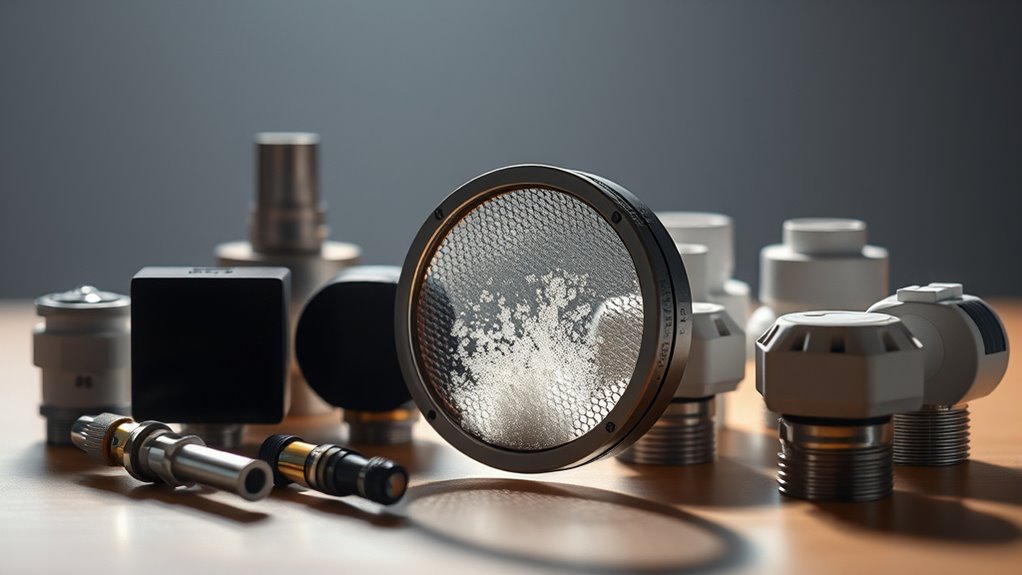
As you explore the various types of PM sensors, you’ll discover that they come in different designs and technologies, each tailored for specific applications and environments. Some sensors excel in sensor durability, making them perfect for harsh outdoor conditions. Others focus on compact designs for indoor air quality monitoring. You’ll find optical sensors using light scattering, while others rely on laser technology for precise measurements. Reliable connections are essential in ensuring that data from these sensors is accurately transmitted and analyzed. Notably, hygiene practices are crucial in maintaining the longevity and accuracy of sensors, especially those exposed to dust and environmental factors. Understanding the 15 best insulated jackets can also help you choose the right gear for outdoor activities while using PM sensors. Data integration is another key factor; many modern sensors can seamlessly connect to software platforms, allowing for real-time monitoring and analysis. Additionally, understanding how to convert values between crores and millions can aid in interpreting data related to air quality metrics. Depending on your needs, you may prioritize portability, accuracy, or the ability to integrate data with existing systems. Ultimately, understanding these differences will help you choose the right PM sensor for your specific requirements. Additionally, consider how truck bed accessories can enhance your outdoor adventures by providing extra storage and organization for your equipment.
Sampling Air: How PM Sensors Collect Data

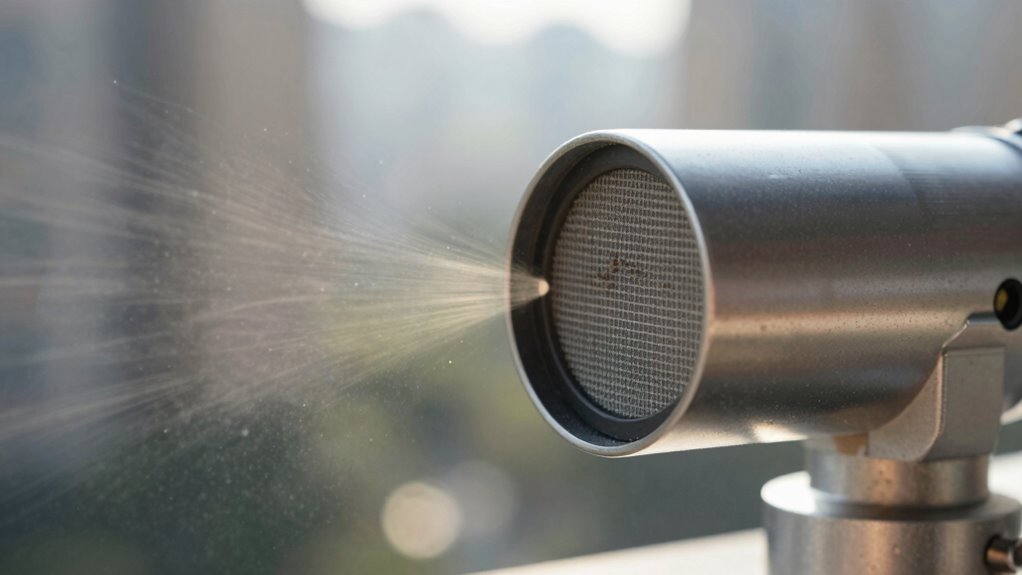
Different types of PM sensors utilize various methods to sample air and collect data effectively. When you think about air sampling, consider the significance of sensor placement. Proper placement ensures that sensors capture accurate readings of particulate matter in the environment. For instance, positioning a sensor near a busy road may yield different data compared to one located in a quiet park. The airflow around the sensor plays a vital role in the accuracy of measurements, so placing it in a location with good air circulation is key. Additionally, some sensors use fans to draw in air, enhancing their sampling capability. By understanding these factors, you can better appreciate how PM sensors work to monitor air quality. Moreover, the effectiveness of air sampling can also be influenced by proper sensor calibration, ensuring that the data collected reflects true environmental conditions. Furthermore, the process of air sampling can lead to enhanced cognitive flexibility, allowing for better decision-making in addressing air quality issues. Effective air sampling is crucial for accurately assessing pollution levels and implementing necessary interventions. Additionally, incorporating smart home technology can greatly enhance the monitoring of air quality by providing real-time data and alerts.
Measurement Techniques: Optical vs. Gravimetric Methods

While both optical and gravimetric methods are popular for measuring particulate matter, each technique offers unique advantages and considerations. Optical methods use light scattering to detect particles in real time, making them ideal for continuous monitoring. However, they can be affected by factors like humidity and require regular sensor upkeep to guarantee accuracy. On the other hand, gravimetric methods involve collecting particles on filters and weighing them, providing a reliable mass concentration measurement. This method is more labor-intensive and slower but offers high precision. When considering air filtration systems, knowing which measurement technique to use can enhance your air quality assessments and inform effective maintenance strategies for your sensors.
Calibration and Accuracy of PM Sensors

When it comes to PM sensors, understanding calibration techniques is vital for ensuring accurate readings. You’ll want to take into account various factors that can affect accuracy and how different sensors compare against each other. Let’s explore how proper calibration can enhance your sensor’s performance and reliability.
Calibration Techniques Explained
To guarantee accurate readings, calibrating PM sensors is essential for reliable air quality monitoring. Calibration helps ensure that your sensors accurately reflect dust accumulation levels in the environment. Proper sensor placement is also vital; positioning your sensors in areas with minimal interference will improve accuracy.
Here’s a quick overview of calibration techniques:
| Calibration Technique | Description |
|---|---|
| Zero Calibration | Adjusts the baseline reading without dust. |
| Span Calibration | Compares sensor readings to a known standard concentration of dust. |
| Field Calibration | Conducts adjustments based on real-world measurements in specific locations. |
Factors Affecting Accuracy
Accurate readings from PM sensors depend on several factors, which can considerably influence air quality assessments. One key aspect is sensor placement; positioning your sensors too close to sources of dust or in areas with poor airflow can skew results. Additionally, the calibration of your sensors must be regularly maintained to guarantee they provide reliable data. Environmental factors like temperature and humidity can also affect accuracy, so it’s essential to consider these variables during installation. Furthermore, effective data visualization techniques can help you interpret the gathered information clearly, allowing you to make informed decisions. By understanding these factors, you’ll enhance the reliability of your PM sensor data and obtain a clearer picture of air quality.
Sensor Comparison Methods
While understanding the calibration and accuracy of PM sensors is essential, comparing different models can provide valuable insights into their performance. You’ll want to consider sensor placement, as it considerably impacts readings. For instance, sensors positioned near sources of pollution may yield higher measurements compared to those placed in cleaner areas.
When you analyze the data, effective data visualization tools can help you interpret the results better. By plotting the performance of various sensors against known standards, you can identify discrepancies and determine which models deliver the most reliable results. Ultimately, a thorough comparison not only helps you choose the right sensor but also informs adjustments needed in sensor placement for ideal accuracy in measuring particulate matter.
The Role of Algorithms in Data Interpretation
As algorithms analyze data from PM sensors, they play a crucial role in interpreting the levels of dust in the air. These algorithms enhance data processing by transforming raw measurements into actionable insights. Here’s how they contribute:
- Data Filtering: Algorithms eliminate noise and irrelevant fluctuations, ensuring accurate readings.
- Pattern Recognition: They identify trends and patterns in dust concentration over time.
- Real-Time Analysis: Algorithms provide instant data interpretation, allowing for timely responses to air quality changes.
- Predictive Modeling: By analyzing historical data, algorithms can forecast future dust levels, aiding in preventive measures.
Understanding algorithm interpretation is key to fully grasping how PM sensors provide meaningful insights into air quality.
Limitations and Challenges of PM Sensors

When using PM sensors, you’ll quickly notice some limitations, especially with calibration issues that can affect accuracy. These sensors also struggle with distinguishing between different particle sizes, which can lead to misleading data. Understanding these challenges is essential for effective monitoring and analysis of dust levels.
Sensor Calibration Issues
Although PM sensors are invaluable for monitoring air quality, they face significant calibration challenges that can affect their accuracy. You need to be aware of these issues to guarantee reliable measurements. Here are four key calibration challenges:
- Sensor Drift: Over time, sensors can lose accuracy, leading to misleading data.
- Calibration Intervals: Infrequent calibration can result in outdated readings, making regular checks essential.
- Environmental Variability: Changes in temperature and humidity can impact sensor performance.
- Cross-Sensitivity: Some sensors may react to gases other than particulate matter, skewing results.
Understanding these calibration issues can help you maintain accurate and reliable PM measurements, ensuring you get the most out of your air quality monitoring efforts.
Particle Size Limitations
While PM sensors play a crucial role in tracking air quality, they face inherent limitations regarding particle size detection. You might not realize that aerosol dynamics can greatly impact how these sensors measure particulate matter. For instance, smaller particles can easily agglomerate, leading to larger complexes that sensors may misinterpret. This particle agglomeration makes it challenging to accurately gauge the true concentration of fine particles in the air. Additionally, the response of PM sensors can vary based on the size distribution of aerosols, complicating data interpretation. Without addressing these challenges, the effectiveness of PM sensors can be compromised, potentially leading to misleading conclusions about air quality. Understanding these limitations helps you better appreciate the complexities of air monitoring.
Applications of PM Sensor Data in Public Health

As you explore the impact of particulate matter (PM) sensors on public health, you’ll find that these devices play a crucial role in monitoring air quality and informing communities about potential health risks. Here are some key applications of PM sensor data:
- Indoor Air Quality: PM sensors help assess indoor air pollution, allowing you to take action to improve your living environment.
- Public Awareness: Communities can use data from PM sensors to educate residents about pollution levels, promoting healthier choices.
- Policy Making: Governments can leverage this data to create regulations aimed at reducing industrial pollution and protecting public health.
- Health Studies: Researchers utilize PM sensor data to study the relationship between air quality and health outcomes, guiding interventions.
With this data, you can better understand and combat the risks posed by particulate matter.
Future Innovations in Particulate Matter Measurement
With ongoing advancements in technology, the future of particulate matter measurement looks promising and innovative. You can expect sensors that not only detect dust but also analyze dust particle morphology, providing you with more detailed information about air quality. These innovations will enhance your understanding of how different sizes and shapes of particles affect health and the environment. Additionally, automated sensor maintenance is on the horizon, making it easier for you to guarantee accurate readings without manual checks. As technology evolves, real-time data analysis will empower you to make informed decisions about air quality management. Embracing these advancements will help you stay ahead in monitoring and improving the air you breathe.
Frequently Asked Questions
What Are the Health Effects of Different Types of Particulate Matter?
Different types of particulate matter can considerably impact your health. The particle composition determines the health implications; for instance, fine particles can penetrate deep into your lungs, leading to respiratory issues and heart problems. Coarse particles, while less harmful, can still cause irritation and exacerbate allergies. Understanding the types of particles you’re exposed to helps you take necessary precautions to protect your well-being from potential health risks.
How Do Environmental Conditions Affect PM Sensor Readings?
Environmental elements impact PM sensor readings profoundly. Humidity interference can cause sensors to misread particulate levels, while temperature variance might distort data accuracy. When you’re in a humid area, moisture can cling to particles, leading to inflated readings. Conversely, extreme heat can cause sensors to react unpredictably. To guarantee precise readings, you’ve got to take these conditions into account. Understanding how environmental factors affect your sensors helps you interpret data more effectively.
Can PM Sensors Differentiate Between Natural and Man-Made Dust?
PM sensors can’t definitively differentiate between natural and artificial dust based solely on dust composition. They measure particulate matter but don’t specify the source. When you analyze the data, you might infer the type based on particle size and concentration patterns. For example, higher levels of certain minerals could suggest natural sources, while specific chemicals might indicate human activity. However, you’ll need additional context for a clearer understanding of the origins.
What Maintenance Is Required for PM Sensors?
Think of your PM sensor like a watchful guardian, always on the lookout for dust. To keep it functioning properly, you’ll need to perform regular maintenance. Start with sensor calibration every few months to ensure accuracy. Don’t forget to replace the filters periodically, as they can become clogged and affect performance. By staying on top of these tasks, you’ll guarantee your sensor remains sharp and reliable in detecting air quality.
How Do PM Sensors Compare to Traditional Air Quality Monitoring Methods?
PM sensors offer real-time data accuracy that often surpasses traditional air quality monitoring methods. While traditional methods can be slower and less responsive, PM sensors require regular sensor calibration to maintain their precision. You’ll find that PM sensors can provide more immediate insights into particulate matter levels, making them a valuable tool for evaluating air quality quickly. Their compact design also allows for easier deployment in various environments compared to traditional systems.
Conclusion
In summary, PM sensors play a vital role in understanding air quality and its impact on health. Did you know that fine particulate matter (PM2.5) can penetrate deep into your lungs and even enter your bloodstream? This highlights the importance of accurate measurement. As technology advances, these sensors will become even more effective, helping you stay informed about air quality and its implications for your well-being. Keeping an eye on these developments can make a real difference in your health.