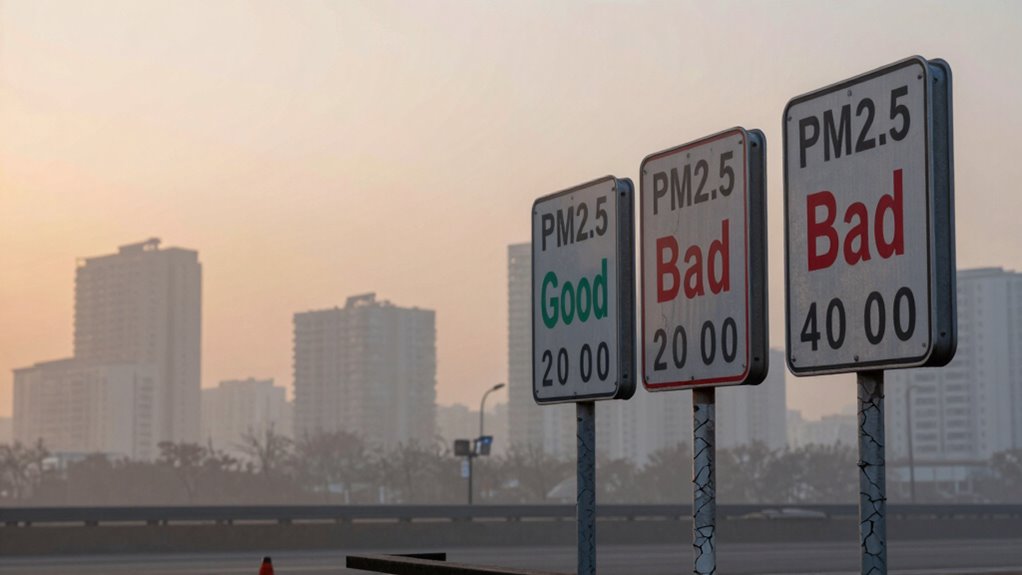

The confusion over “good” or “bad” PM2.5 levels comes from different standards set by various health agencies, which interpret scientific studies differently and consider factors like economic impact and public health priorities. Some agencies prioritize preventing immediate health issues, while others focus on long-term risks. This leads to varying thresholds and messages about air quality. Understanding these differences can help you better grasp what’s safe, and there’s more to uncover if you explore further.
Key Takeaways
- Different agencies set varying PM2.5 thresholds, causing inconsistent standards for “good” or “bad” air quality.
- Scientific interpretations and health priorities influence the establishment of these PM2.5 level guidelines.
- Discrepancies can lead to confusion in public messaging and personal risk assessment.
- Local air quality indices may follow different standards, affecting how air quality is perceived.
- Understanding these differences helps individuals make informed decisions about health precautions.
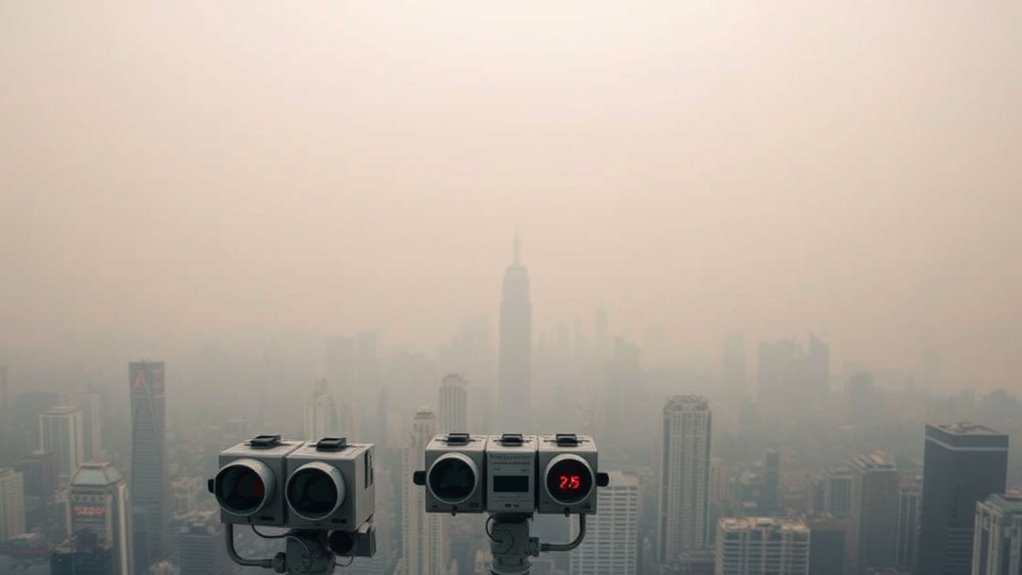
Have you ever wondered why different health agencies set varying PM2.5 air quality thresholds? It can be confusing to see conflicting guidelines from organizations like the EPA, WHO, and local health authorities. Each agency evaluates scientific data differently, leading to discrepancies in what they consider safe or hazardous air quality levels. These differences often stem from variations in how they interpret research, weigh short-term versus long-term health effects, and account for vulnerable populations. For example, the EPA might set a higher threshold for what it considers safe, focusing on protecting the general population, while the WHO may adopt a stricter standard based on the latest scientific studies emphasizing long-term health risks. Additionally, scientific interpretation plays a crucial role in how these thresholds are determined, as different agencies may prioritize different health outcomes based on available evidence.
Understanding these distinctions is vital because they influence public health policies, individual behaviors, and how you interpret air quality reports. When a local air quality index indicates “Good,” it might mean different things depending on which guideline you follow. If you’re living in an area that adheres to the EPA standards, you could be exposed to higher PM2.5 levels without immediate health warnings, whereas a stricter WHO guideline might classify the same air quality as unhealthy. This inconsistency can lead to confusion about when to take precautions, especially for sensitive groups like children, the elderly, or those with pre-existing health conditions.
Varying air quality standards can cause confusion about safety, especially for vulnerable populations.
The core of this confusion lies in how these thresholds are established. Agencies analyze scientific studies investigating the effects of fine particles on respiratory and cardiovascular health. They consider factors like particle size, composition, and exposure duration. However, studies sometimes produce conflicting results or emphasize different health outcomes. Some organizations prioritize preventing acute health issues, such as asthma attacks, while others focus on long-term risks like lung cancer or heart disease. As a result, the thresholds they set reflect these priorities, which can seem arbitrary or inconsistent to the public.
Additionally, economic and political factors can influence these standards. Stricter thresholds might lead to increased regulations and costs for industries, which some agencies weigh against the public health benefits. Consequently, thresholds are sometimes a compromise, balancing scientific evidence with economic considerations. This can make it seem like the “good” or “bad” air quality labels are inconsistent or even arbitrary.
In the end, it’s important to understand that these varying thresholds are a reflection of different interpretations of science and policy priorities, not necessarily a sign of confusion or misinformation. Still, it’s wise to stay informed about local air quality reports and recognize that “safe” levels can vary depending on which guideline you consult. Being aware of these differences helps you better protect yourself and your loved ones from potential health risks associated with PM2.5 pollution.
Frequently Asked Questions
How Do PM2.5 Levels Fluctuate Seasonally?
You’ll notice PM2.5 levels fluctuate seasonally, often rising in winter due to increased heating and stagnant air, which traps pollutants. In summer, levels tend to drop as warmer temperatures and stronger winds disperse particles. Additionally, seasonal activities like agricultural burning and wildfires can spike pollution temporarily. By understanding these patterns, you can better prepare and protect yourself during high-pollution periods, especially in colder months.
What Are the Long-Term Health Effects of PM2.5 Exposure?
You might not realize it, but long-term PM2.5 exposure can silently damage your lungs and heart over decades. It increases your risk of respiratory diseases, like asthma and COPD, and can lead to heart attacks and strokes. Children and older adults are especially vulnerable. Persistent exposure can even shorten your lifespan. Protect yourself by reducing outdoor activities during high pollution days and using air purifiers indoors.
How Accurate Are Current PM2.5 Monitoring Devices?
You’ll find that current PM2.5 monitoring devices are quite accurate, especially those used by regulatory agencies. They use advanced sensors and calibration techniques to measure fine particle levels precisely. However, accuracy can vary based on device quality, maintenance, and environmental conditions. Portable personal monitors tend to be slightly less precise than fixed station equipment but still provide reliable data for evaluating air quality and making health decisions.
Can Individuals Effectively Protect Themselves From PM2.5?
You can definitely protect yourself from PM2.5 by staying indoors during high pollution days, using high-efficiency air filters, and wearing masks when outside. While some people believe these measures are enough, others think more systemic solutions are needed. Research shows that personal actions help, but reducing overall pollution sources is essential for long-term health. So, take immediate steps, but also support policies that improve air quality.
What Policies Are in Place to Regulate PM2.5 Emissions?
You’re protected by policies like the Clean Air Act, which sets limits on PM2.5 emissions from industries, vehicles, and power plants. These regulations require monitoring and controlling pollution sources to reduce harmful particles in the air. Governments also enforce standards and implement air quality programs to make certain of compliance. By supporting these policies and staying informed about air quality alerts, you can help minimize your exposure and advocate for cleaner air.
Conclusion
Understanding PM2.5 thresholds is like steering a foggy road—you need clear signs to guide you. The confusion around what constitutes “good” or “bad” air quality can make it hard to know when to worry. But remember, staying informed and paying attention to local standards helps you breathe easier, like a gentle breeze on a warm day. Keep learning, stay cautious, and don’t let the haze of confusion block your path to cleaner air.