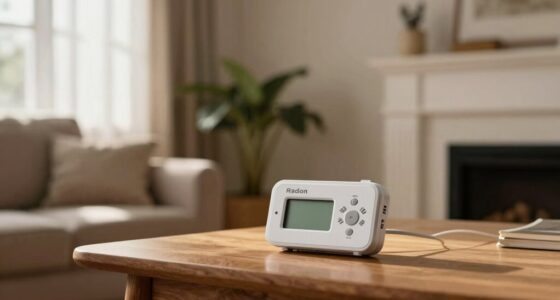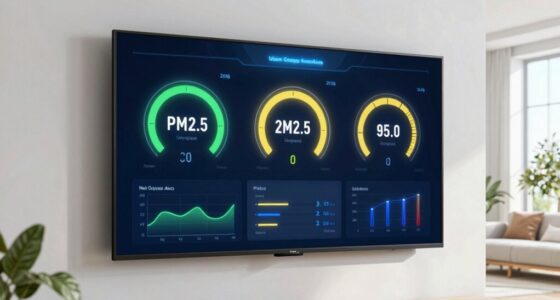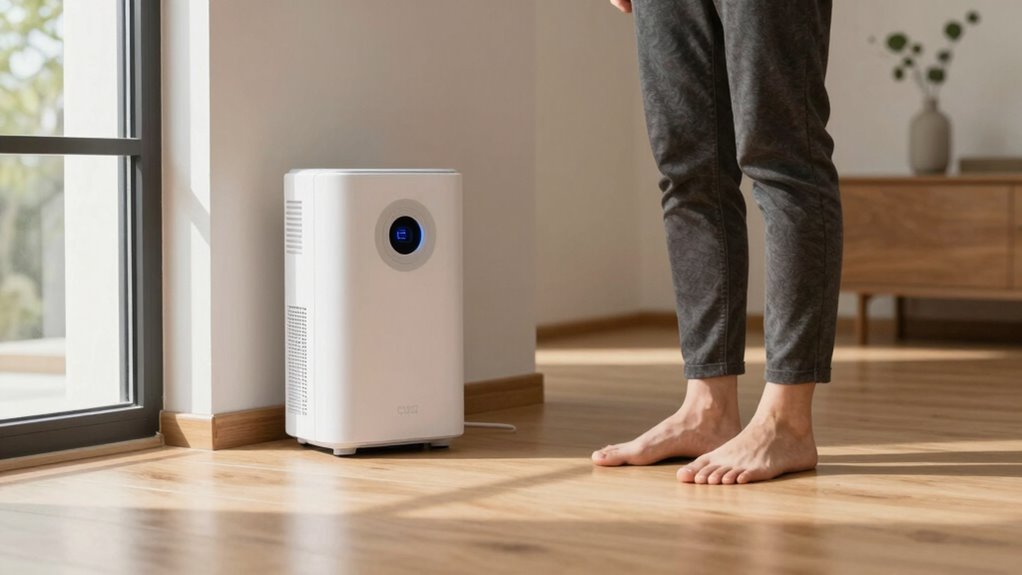

When deciding where to measure, it depends on what you need. If you’re taking body measurements like height or chest size, measure at breathing height with your back against a wall, ensuring a relaxed, upright stance. For home projects, furniture, or key placements, measure from the floor to get an accurate reference point. Understanding the purpose will help you choose the right spot—keep exploring to see when each method fits best.

Get health and wellness essentials delivered free — and shop member deals
- Fast, free delivery on millions of items
- Access to Prime Big Deal Days deals on October 6–7
- Prime Video, Amazon Music and more included
Key Takeaways
- Measure at breathing height for accurate body measurements like height and chest circumference.
- Use the floor as a baseline for space planning, furniture placement, and installation tasks.
- Breathing height reflects true standing height, essential for clothing fit and health assessments.
- Floor measurements are ideal when ensuring level surfaces and accurate room dimensions.
- Choose the measurement point based on purpose—body measurements or spatial/architectural accuracy.
Measuring the right areas is essential to guarantee accurate results, whether you’re tailoring clothing, planning a home project, or evaluating your health. One of the most important decisions you’ll make involves knowing where to measure—specifically, whether you should focus on the floor or breathing height. Understanding the purpose of your measurements helps determine the correct point to take them from, ensuring precision and consistency. When it comes to measurements related to your body, such as height or clothing fit, you’ll want to measure at breathing height. This usually means standing straight with your back against a wall, feet together, and eyes looking forward. The measurement should be taken at the level of your shoulders or the top of your head, depending on what’s needed. This ensures you’re capturing your true height or chest circumference, providing an accurate reference for clothing sizes or health assessments. For example, if you’re measuring for a new suit or shirt, measuring at shoulder level yields the best fit. Similarly, health professionals often record height at breathing height because it reflects your standing height when you’re upright and relaxed. In contrast, if you’re working on a home project—such as installing shelves, curtains, or furniture—you’ll likely need to measure from the floor. This is because the floor serves as a fixed reference point. When you measure from the floor to a specific point, like the height of a window sill or the placement of a countertop, you’re establishing a consistent baseline. It helps in planning the dimensions of your space and ensures that everything aligns properly. For instance, if you’re hanging artwork or installing a new appliance, measuring from the floor guarantees your measurements are accurate relative to the room’s overall layout. Another aspect to factor in is the environment in which you’re measuring. For height, measuring at breathing height minimizes errors caused by slouching or uneven surfaces. For floor-based measurements, ensure the floor is level and clean, so your measurements aren’t thrown off by unevenness or debris. Always use a reliable measuring tape or ruler, and double-check your measurements for accuracy. Marking points with a pencil or tape can also help maintain consistency, especially if you need to take multiple measurements or replicate them later. Additionally, considering the use of vetted wave and wind measurements can be crucial in outdoor settings, ensuring your measurements account for environmental factors that might affect accuracy.
Frequently Asked Questions
How Does Temperature Affect Indoor Air Quality Measurements?
Temperature can markedly impact indoor air quality measurements because higher temperatures often increase the levels of volatile organic compounds (VOCs) and other pollutants, making the air seem poorer in quality. Conversely, cooler temperatures may lead to lower readings. You should consider how temperature fluctuations influence your measurements, as they can cause variations in pollutant concentrations, potentially misleading your assessment of indoor air safety. Always account for temperature changes when analyzing air quality data.
What Equipment Is Best for Measuring at Different Heights?
Think of your measuring equipment as a versatile camera capturing different perspectives. For different heights, use portable devices like handheld anemometers or portable air quality monitors. For precise readings at breathing height, opt for fixed, calibrated sensors mounted at eye level. When measuring near the floor, select equipment designed for low-level detection to account for potential dust and mold. Always choose tools suited to the specific height to guarantee accurate, meaningful data.
Does Humidity Influence the Accuracy of Measurements?
Yes, humidity can influence measurement accuracy. When humidity levels are high, moisture in the air can affect electronic sensors, leading to skewed readings. Similarly, low humidity might cause static buildup, also impacting certain instruments. To guarantee precise measurements, you should monitor humidity levels and consider calibration or adjustments if necessary. Using devices designed to compensate for humidity fluctuations can also help maintain accuracy across different environments.
How Often Should Air Quality Be Monitored at Each Height?
You should monitor air quality at each height at least once a week to guarantee accurate readings. If your environment experiences frequent changes, like new sources of pollution or weather shifts, consider more frequent checks, such as daily or bi-weekly. Consistent monitoring helps you identify trends and take timely action. Remember, regular measurements at different heights provide an extensive picture of your indoor air quality.
Are There Specific Regulations for Measurement Heights in Different Settings?
Oh, absolutely, because regulations are known for their playful flexibility, right? In reality, many standards specify measurement heights—usually at breathing level for humans, around 1.5 to 2 meters. Some settings, like factories or labs, might have more precise rules, but generally, you follow industry guidelines or local standards. So, no need to invent your own; just check the applicable regulations for your specific environment.
Conclusion
Ultimately, choosing where to measure is like finding the right spot on a map—it shapes your entire journey. Measuring at breathing height is your compass, capturing the true essence of the air you breathe. Going by the floor is like reading a story from the bottom up, missing the whispers of the atmosphere. So, trust your instincts, stand tall at breathing level, and let your measurements reflect the world as you truly experience it.
Fall Picks
fall essentials
As an affiliate, we earn on qualifying purchases.