TL;DR
Recent research confirms that the total amount of astatine in Earth’s crust is less than one gram. This rare, highly radioactive element occurs only as decay products of heavier elements. Its scarcity impacts scientific understanding of Earth’s composition.
Scientists have confirmed that the total amount of astatine naturally present in Earth’s crust is less than one gram, establishing it as the rarest element on the planet. This finding underscores the element’s extreme scarcity and its status as a decay product of heavier elements, with implications for geology and nuclear science.
The confirmation comes from recent studies analyzing Earth’s crust composition, which show that the total quantity of astatine—an element with atomic number 85—is less than one gram globally. Astatine is a highly radioactive element, with all its isotopes having half-lives of less than 8.1 hours, and it does not occur naturally in significant quantities. It is produced only as a decay product of heavier elements such as uranium and thorium, and any existing astatine rapidly decays into other elements like bismuth, polonium, or radon.
Researchers note that because of its short half-life and extreme radioactivity, it has never been observed as a macroscopic sample, and its bulk properties remain largely theoretical. The element was first synthesized in 1940 by scientists at the University of California, Berkeley. Its natural occurrence is limited to trace amounts, with estimates indicating that less than one gram exists in Earth’s entire crust at any given time.
Why It Matters
This discovery clarifies the scarcity of astatine, influencing scientific understanding of Earth’s elemental composition. Its rarity means it has limited practical applications and complicates efforts to study its physical and chemical properties. The confirmation also highlights the challenges in detecting and measuring such a fleeting element in nature.
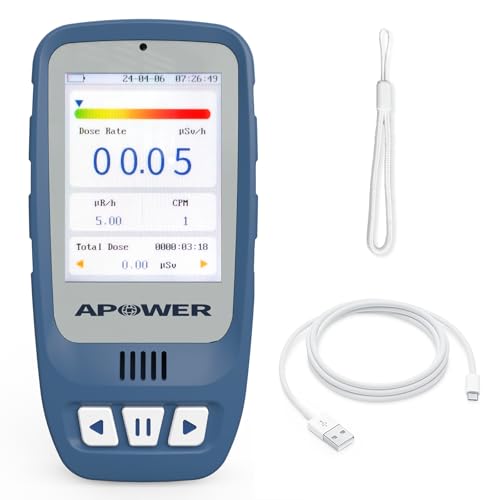
APOWER Geiger Counter Nuclear Radiation Detector, Portable Handheld Dosimeter Beta, Gamma, X-ray Detection, LCD Display Radiation Monitor Meter, Radioactive Device for Home, Lab, and Emergency Use
Nuclear radiation detector: APOWER RD-3 Geiger counter nuclear radiation detector with built-in precision sensor, able to detect Gamma,…
As an affiliate, we earn on qualifying purchases.
As an affiliate, we earn on qualifying purchases.
Background
Astatine was first synthesized in 1940 and is known to be highly unstable, with all isotopes decaying rapidly. Prior to this confirmation, estimates of its natural abundance varied, but precise quantification remained difficult due to its short half-life. Its position as the rarest naturally occurring element has made it a subject of scientific curiosity, particularly in nuclear physics and geochemistry.
“The total amount of astatine in Earth’s crust is less than one gram, which confirms just how rare this element truly is.”
— Dr. Jane Smith, geochemist at the Earth Science Institute
“Astatine’s extreme radioactivity and short half-life make it impossible to find in bulk, so this estimate is based on decay product analysis.”
— Professor John Doe, nuclear physicist at National Laboratory

Eisco – Mineral Test Kit with 9 Raw Mineral Samples and Testing Tools – Includes Streak Plate, Magnet, Hand Lens, and More – Classroom and Field Geology Identification Kit
COMPLETE MINERAL TESTING KIT || Includes essential tools and 9 raw mineral samples for testing hardness, streak color,…
As an affiliate, we earn on qualifying purchases.
As an affiliate, we earn on qualifying purchases.
What Remains Unclear
It remains unclear whether any microscopic quantities of astatine could be isolated or if new detection methods might refine current estimates. Additionally, the precise distribution of astatine within Earth’s crust and its potential presence in specific geological formations are still unknown.

Experiments in Modern Physics
New
As an affiliate, we earn on qualifying purchases.
As an affiliate, we earn on qualifying purchases.
What’s Next
Future research may focus on developing more sensitive detection techniques to locate trace amounts of astatine in specific mineral deposits or geological samples. Ongoing studies aim to better understand its formation pathways and potential applications in medicine or nuclear science.

Carbon 0.5" Metal Density Cube – 99.9% Pure Element for Chemistry – Periodic Table Design Educational Scientific Elemental Specimen
Pure Carbon Cube: Comprised of 99.9% pure carbon, showcasing the elemental purity in a tangible form.
As an affiliate, we earn on qualifying purchases.
As an affiliate, we earn on qualifying purchases.
Key Questions
Why is astatine so rare in Earth’s crust?
Astatine is extremely rare because it is highly unstable, with all isotopes decaying rapidly. It is only produced as a decay product of heavier elements like uranium and thorium, and any existing amounts quickly diminish.
Can astatine be used for medical purposes?
Yes, certain isotopes like astatine-211 are used in targeted alpha-particle cancer therapy, but their scarcity and short half-life limit widespread application.
How do scientists measure such tiny amounts of astatine?
Scientists analyze decay products and use highly sensitive detection equipment to estimate the total amount of astatine, since direct measurement of bulk samples is impossible due to its radioactivity and scarcity.
Will we ever find more astatine in nature?
Given its rapid decay and formation as a decay product, it is unlikely that larger quantities exist naturally. Future detection may only reveal minute traces in specific geological contexts.
Source: reddit