Pet dander and pet hair are often confused, but they’re not the same. Pet dander comprises tiny skin flakes, saliva, and urine, and it’s the primary allergen triggering allergic reactions. While pet hair can carry dander, it’s not the main source of allergens. Understanding this difference is vital for managing allergies effectively. By recognizing the role of both dander and hair, you can take steps to reduce allergens in your home. Discover more helpful tips on managing pet allergies.
Key Takeaways
- Pet dander consists of tiny skin flakes, saliva, and urine particles, while pet hair is primarily the fur that sheds from animals.
- Dander is a major airborne allergen that triggers allergic reactions, whereas pet hair carries dander and can also act as an allergen source.
- Allergic reactions are mostly caused by dander, leading to symptoms like sneezing and itchy eyes, rather than by pet hair itself.
- Regular grooming reduces both dander and hair, helping to alleviate allergy symptoms and improve indoor air quality.
- Understanding the difference is crucial for effective allergy management and creating healthier living environments for allergy sufferers.
Understanding Pet Dander
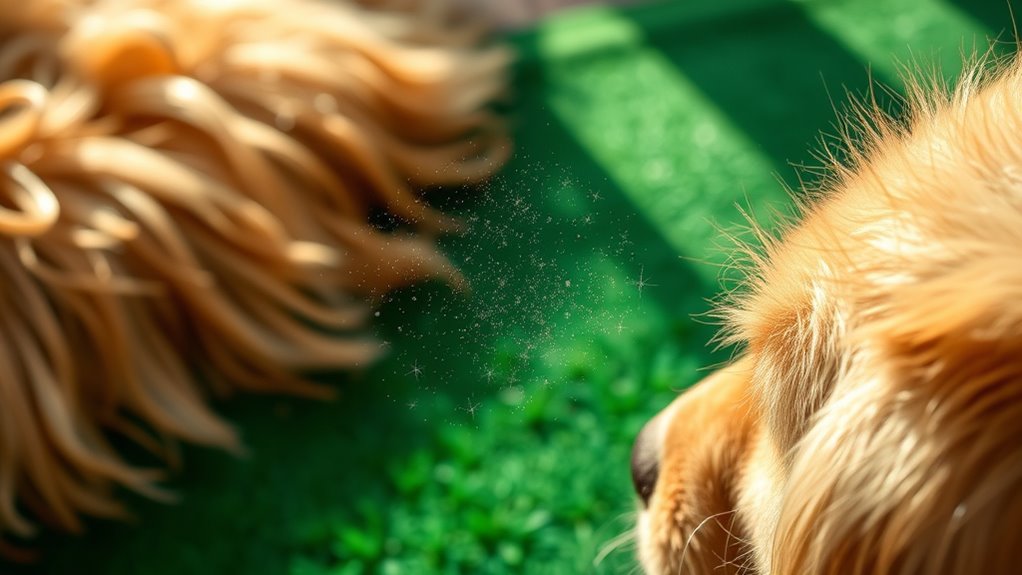
While you might think pet hair is the main culprit behind allergies, pet dander plays an even bigger role. Many people hold pet dander misconceptions, believing that it’s only the fur that triggers their symptoms. In reality, dander consists of tiny skin flakes, saliva, and urine particles that can linger in the air and settle on surfaces. These microscopic allergens can remain in your home for months, making it essential to understand their impact. If you’re experiencing allergy symptoms, consider allergy testing to identify specific triggers. By recognizing the difference between pet hair and dander, you can take effective measures to reduce exposure and improve your living environment. Addressing dander is indispensable for allergy management and overall well-being.
The Nature of Pet Hair

Pet hair is often viewed as a nuisance, but it’s important to understand its role in your home and its relationship with allergies. The fur texture varies among different pets, from the soft, fine fur of a rabbit to the coarse coat of a terrier. Each type of fur can influence how much you notice shedding in your space. Shedding patterns also play a significant role; some pets shed seasonally, while others may shed year-round. This means that knowing your pet’s specific shedding habits can help you manage the hair in your home. Regular grooming can reduce loose hair, making your living environment cleaner and potentially easing allergy symptoms. Understanding these factors can make a big difference in your daily routine.
Common Allergens in Pets

When it comes to pets, allergens can come from various sources, not just hair. You might experience symptoms like sneezing or itchy eyes if you’re sensitive to these triggers. Understanding the types of allergens and how to prevent exposure can make a big difference in your comfort level around your furry friends.
Types of Allergens
Although many people love having pets, it is vital to understand the types of allergens they can introduce into your home. The primary culprits include pet dander, saliva, and urine. Dander, tiny flakes of skin, can trigger allergic reactions and is often found in the air and on surfaces. Saliva and urine can also release proteins that cause issues for sensitive individuals. Regular use of an air purifier can significantly help in removing these allergens from your home environment. Additionally, using effective weed killers in your garden can help reduce the presence of outdoor allergens that may exacerbate indoor allergy symptoms. If you’re considering getting a pet but worry about allergies, hypoallergenic breeds like poodles or bichon frises may be a better option since they produce fewer allergens. Additionally, allergen immunotherapy can help some people build tolerance to these allergens, allowing for a more enjoyable pet experience without the constant sneezing and discomfort. Understanding the role of color accuracy in your home environment can also help minimize allergy symptoms by improving overall air quality. Regular cleaning and essential strategies for preparing your home can further reduce the presence of allergens and create a healthier living space.
Symptoms of Allergies
Allergies to pets can manifest in various ways, affecting your comfort and well-being. You might experience symptoms like:
- Sneezing and runny nose – Common reactions to allergens in pet dander.
- Itchy or watery eyes – A typical response when your body detects allergens.
- Skin rashes or hives – These can occur if you’re sensitive to pet saliva or urine.
- Respiratory issues – Wheezing or difficulty breathing can arise from exposure to allergens. Regular exposure to luxury fashion insights can also enhance your overall well-being and help you feel more confident in your personal style. Additionally, utilizing techniques from auditory processing disorder sound therapy can help improve your listening skills during discussions about managing allergies. Proactive measures such as ethical hacking can also help identify vulnerabilities in your environment that may exacerbate allergic reactions. Understanding deep-sky imaging techniques can also provide a distraction that may help alleviate stress associated with allergies.
If you notice any of these symptoms, consider evaluating your pet food or adjusting grooming techniques to minimize allergen exposure. Regular grooming can considerably reduce dander and hair in your home, leading to a more comfortable environment. Additionally, understanding clean-home systems can help you manage allergens effectively, creating a healthier space for you and your pets.
Prevention Strategies
To keep allergens at bay, it’s essential to implement effective prevention strategies for managing pet dander and hair. Start with regular pet grooming; brushing your furry friend several times a week reduces loose fur and dander in your home. Consider using an air purifier with a HEPA filter to capture airborne allergens effectively. Additionally, invest in allergen-proof bedding for both you and your pets. This type of bedding can help minimize exposure to allergens while you sleep. Washing your pet’s bedding frequently and vacuuming your home regularly to further eliminate allergens is also crucial. Furthermore, incorporating ventilation considerations in your home can significantly enhance air quality, as good ventilation helps disperse allergens and improve overall comfort. Regularly cleaning your truck bed can also prevent the accumulation of pet allergens that may affect your outdoor adventures. Ultimately, designate pet-free zones in your house, such as bedrooms, to help create safe spaces for allergy sufferers. Taking these steps can considerably improve your indoor air quality and comfort. Furthermore, utilizing smart appliances can enhance your cleaning efficiency, making it easier to manage allergens in your home. Regular grooming not only reduces allergens but also strengthens the bond between pets and their owners, much like Cote de Pablo’s character Ziva David developed connections in her narrative journey on NCIS.
How Pet Dander Affects Allergies
You might not realize it, but pet dander is a major contributor to your allergy woes. It comes from your furry friend’s skin flakes, saliva, and urine, triggering symptoms like sneezing and itching. Understanding how to manage and prevent exposure to dander can make a big difference in your comfort. Additionally, knowing the challenges of caregiving can help you create a more comfortable environment for both yourself and your loved ones. By implementing effective cleaning strategies, you can significantly reduce the presence of dander in your home. Investing in high-quality air purifiers can also help in maintaining a healthy indoor air quality. Moreover, creating designated seating areas for your pets can minimize dander spread throughout your living spaces. Regular maintenance of small appliances like air purifiers and vacuums can enhance their effectiveness in capturing dander.
Sources of Pet Dander
How can something so small cause such big reactions? Pet dander, tiny flakes of skin, can trigger allergies in many people. Understanding its sources can help you manage your environment better. Here are four key sources of pet dander to contemplate:
- Pet Diet: What your pet eats impacts their skin health, influencing dander production.
- Pet Grooming Routines: Regular grooming helps reduce dander accumulation, keeping your home cleaner.
- Saliva and Urine: Proteins found in these fluids can also contribute to allergenic reactions.
- Environmental Factors: Dust and pollen can cling to dander, increasing allergy potential. Additionally, energy-efficient solutions can play a role in reducing overall allergens in your living space.
Symptoms of Allergic Reactions
While enjoying the companionship of pets, many people unknowingly expose themselves to pet dander, which can lead to a range of allergic reactions. You might experience symptoms like sneezing, runny or stuffy nose, itchy eyes, and skin rashes. In some cases, asthma symptoms can worsen, causing wheezing and shortness of breath. If you suspect you’re having an allergic reaction, consider visiting an allergist for allergy testing to identify specific triggers. Regular pet grooming can also help reduce dander in your home, although it won’t eliminate it entirely. Understanding how pet dander affects you is essential, especially if you love having pets around but struggle with allergies. Staying informed can help you make better choices for your health.
Management and Prevention Strategies
Managing and preventing allergic reactions to pet dander starts with understanding how it enters your home and affects your health. To minimize exposure, consider these strategies:
- Establish grooming routines: Brush your pet regularly to reduce dander and hair around your home.
- Invest in allergen-proof bedding: Use special covers for pillows and mattresses to keep allergens at bay.
- Clean your home frequently: Vacuum carpets and furniture with a HEPA filter to trap dander effectively. Additionally, using whole-house filtration systems can improve overall air quality by reducing airborne allergens.
- Limit pet access: Keep pets out of bedrooms and other common areas where you spend a lot of time. Additionally, consider utilizing smart home technology to monitor air quality and reduce allergens effectively.
The Role of Pet Hair in Allergies

Although many people associate pet allergies with dander, pet hair can also play a significant role in triggering allergic reactions. When your furry friend sheds, their hair can carry pet dander, saliva, and urine, all of which are potent allergy triggers. These particles can linger in your home, attaching to furniture, carpets, and clothing, making it easy for you to inhale them. Even if you don’t have a pet, hair can find its way into your environment, potentially causing issues for sensitive individuals. Regular grooming and cleaning can help reduce the accumulation of pet hair and dander, but it’s essential to recognize that both components can contribute to allergy symptoms. Being proactive will help you create a more comfortable living space. Additionally, maintaining fine rugs in your home can minimize dust and allergens, contributing to a healthier indoor environment.
Identifying Symptoms of Allergic Reactions

Recognizing the symptoms of allergic reactions is essential for anyone living with pets. When you notice these signs, it’s vital to act promptly. Here are four common symptoms to watch for:
- Sneezing or Nasal Congestion: You might feel a tickle in your nose or find it hard to breathe.
- Itchy or Watery Eyes: If your eyes become red and itchy, it could be a sign of an allergy.
- Skin Reactions: Rashes or hives may appear, especially after grooming routines or handling pet food.
- Respiratory Issues: Coughing, wheezing, or tightness in your chest can indicate a serious allergic response.
Being aware of these symptoms helps you manage your health while enjoying your pets.
Managing Pet Allergies at Home

To create a comfortable living space for both you and your pets, it’s important to implement effective strategies for managing pet allergies at home. Start with regular pet grooming to minimize dander and loose hair. Brushing your pets outside can greatly reduce indoor allergens. It’s also wise to establish a grooming routine, including bathing them frequently with pet-safe products. Additionally, consider using allergy medications as needed. Consult your doctor about antihistamines or other treatments that can help alleviate your symptoms. Keep your living space clutter-free and use air purifiers to filter out allergens. By taking these proactive steps, you’ll not only improve your quality of life but also ensure your furry friends feel comfortable and loved in their home.
Cleaning Tips to Reduce Allergens

While keeping your home clean may seem like a formidable task, implementing a few key strategies can considerably reduce allergens from pet dander and hair. Here are four effective cleaning tips:
- Regular Pet Grooming: Brush your pet frequently to minimize loose hair and dander. Consider using a vacuum with a HEPA filter to capture allergens.
- Wash Bedding Weekly: Use allergen proof bedding for your pet’s sleeping areas and wash it weekly to keep allergens at bay.
- Vacuum Frequently: Make vacuuming a routine, especially in areas your pet frequents.
- Air Purifiers: Invest in HEPA air purifiers to help filter out pet dander from the air.
Making Informed Decisions About Pet Ownership

Before bringing a pet into your home, it’s crucial to weigh the potential impacts on your health and lifestyle. Consider any allergies you or your family members may have, as pet dander can trigger reactions. During your pet selection process, think about breeds known for lower allergen levels. Don’t forget to consult with your vet about any specific health considerations related to your chosen pet. They can provide insights on grooming needs and potential health issues, helping you make a more informed decision. It’s also important to assess how much time and energy you can dedicate to a pet. Making the right choices now can lead to a fulfilling companionship that enhances your life, rather than complicates it.
Frequently Asked Questions
Can Specific Breeds Produce Less Dander or Hair?
Yes, specific breeds can produce less dander or hair. When choosing a pet, consider breed differences and their shedding patterns. Some breeds, like Poodles and Bichon Frises, are known for minimal shedding and lower dander levels, making them better options for allergy sufferers. Always research individual breeds, as genetics and grooming habits can also affect how much dander or hair they produce. You’ll find the right match for your lifestyle and sensitivities.
How Can I Test for Pet Allergies at Home?
To test for pet allergies at home, start by strategically setting up an air purifier. This can help capture allergy symptom triggers like dander and hair. Spend time in a room with your pet, then note any noticeable reactions. You can also try avoiding your pet for a few days and see if your symptoms subside. Consistently clean your living space to further assess what’s affecting you. It’s all about observing your body’s reactions!
Do Hypoallergenic Pets Really Exist?
Yes, hypoallergenic pets do exist, but they’re not completely allergy-proof. They tend to produce fewer allergens, which might help reduce your allergy symptoms. Breeds like poodles and bichon frises often require regular pet grooming to minimize dander and loose hair, making them better options for allergy sufferers. However, it is crucial to spend time with a hypoallergenic pet before adopting to see how you react, as everyone’s sensitivities differ.
Can Pet Dander Be Eliminated Completely?
You can’t completely eliminate pet dander, but you can substantially reduce it. Regular cleaning, like vacuuming with a HEPA filter and washing your pet’s bedding, helps. Using air purification systems also aids in allergen reduction, capturing dander particles from the air. Additionally, grooming your pet frequently can minimize the amount of dander that spreads throughout your home. While you may not remove it entirely, these steps can make a noticeable difference in your environment.
Is Pet Dander Harmful to Non-Allergic Individuals?
Pet dander isn’t typically harmful to non-allergic individuals, but it can still stir up some discomfort. Like a whispering wind, airborne allergens can affect anyone, causing mild irritation or respiratory issues in sensitive people. While you might not experience full-blown allergy symptoms, you could feel a bit of stuffiness or sneezing. Keeping your space clean and well-ventilated helps minimize exposure, ensuring you breathe easier and feel your best.
Conclusion
In the world of pet ownership, understanding the distinction between pet dander and pet hair is like steering a maze—each twist can lead to new challenges and solutions. By recognizing how dander triggers allergies and managing your home environment, you can create a haven for both you and your furry friend. Addressing these allergens isn’t just about comfort; it’s about fostering a harmonious relationship where love and health coexist. With the right strategies, you can enjoy the best of both worlds.