Smoke particles and gases pose different risks and require different responses. Particles are tiny solids and liquids that can settle on surfaces or penetrate deep into your lungs, causing respiratory and heart issues. Gases like carbon monoxide and VOCs tend to disperse widely, lingering longer and affecting air quality and your health’s oxygen supply. Understanding these differences helps you better protect yourself—keep exploring to discover the best ways to stay safe in smoky environments.
Key Takeaways
- Smoke particles are solid and liquid debris that can penetrate deep into lungs, causing respiratory and cardiovascular issues.
- Smoke gases are gaseous compounds like carbon monoxide and VOCs that spread widely and persist longer in the environment.
- Particles settle quickly and contaminate surfaces, while gases disperse more broadly and may linger in poorly ventilated areas.
- Health risks from particles include deep lung penetration; gases can cause immediate irritation and long-term health effects.
- Monitoring and mitigation strategies differ: masks and purifiers target particles; ventilation and filtration address gases.
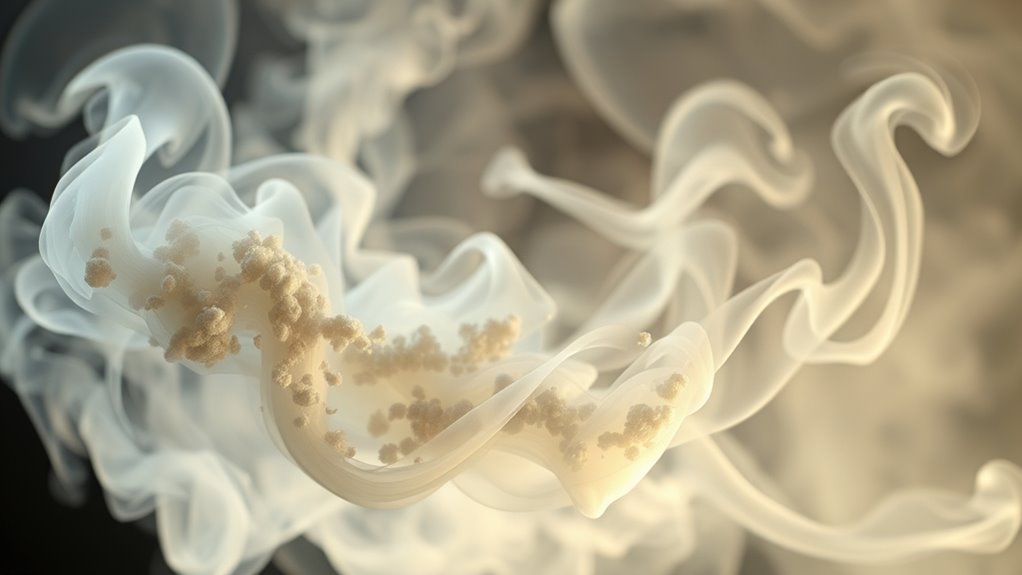
When you think about smoke, you might picture the visible cloud rising from a fire, but smoke actually consists of two main components: particles and gases. These components are fundamentally different, and understanding that difference is vital because each poses unique health risks and environmental impacts. Smoke particles are tiny solid and liquid bits suspended in the air. They’re made up of unburned carbon, ash, soot, and other microscopic debris. Because these particles are so small, they can easily penetrate deep into your lungs when you breathe in, causing respiratory issues, aggravating asthma, or even contributing to cardiovascular problems. The particles can also settle on surfaces, leading to staining and contamination, especially in indoor environments where smoke exposure can be more concentrated and prolonged. Additionally, the size of these particles influences how deeply they can infiltrate the respiratory system, making particle size a critical factor in health impact assessments.
On the other hand, smoke gases are gaseous compounds released during combustion. These include carbon monoxide, carbon dioxide, volatile organic compounds (VOCs), nitrogen oxides, and other chemicals. These gases behave very differently from particles. For instance, carbon monoxide is a colorless, odorless gas that can quickly bind to your red blood cells, preventing oxygen from being transported throughout your body. This can lead to symptoms like headaches, dizziness, or even poisoning in high enough concentrations. Similarly, VOCs can cause eye, nose, and throat irritation, and some are known to be carcinogenic. Nitrogen oxides contribute to smog formation and acid rain, affecting both your health and the environment. Gases tend to disperse more widely than particles, but that doesn’t mean they’re harmless; in fact, their effects can be more insidious since they can spread over large areas and persist for longer periods.
The problems caused by smoke particles and gases are interconnected but distinct. Particles tend to settle out of the air relatively quickly, especially in well-ventilated spaces, but when inhaled, they can cause immediate health problems, particularly in vulnerable populations like children, the elderly, or those with pre-existing health issues. Gases, however, often linger longer in the environment, especially in poorly ventilated areas, and their effects might not be immediately obvious. That’s why firefighting efforts and air quality monitoring focus on both components. Recognizing the difference helps you better understand the risks involved and why measures like wearing masks, installing air purifiers, or evacuating smoky environments are necessary to protect your health. Both particles and gases demand attention, but they require different strategies to minimize their harmful impacts. Furthermore, advancements in air quality monitoring technology enable better detection and management of both smoke particles and gases, improving safety protocols during fire incidents.
Frequently Asked Questions
How Do Smoke Particles Affect Indoor Air Quality Long-Term?
Long-term exposure to smoke particles can considerably worsen your indoor air quality, leading to respiratory issues, allergies, and even cardiovascular problems. These tiny particles can settle in your lungs, causing inflammation and reducing lung function over time. You might not notice immediate effects, but sustained inhalation raises your risk of chronic health conditions. To protect yourself, guarantee good ventilation, use air purifiers, and avoid indoor smoking.
Can Smoke Gases Cause Immediate Health Emergencies?
Yes, smoke gases can cause immediate health emergencies. Did you know that exposure to high levels of carbon monoxide, a common smoke gas, can cause symptoms within minutes? You might experience headaches, dizziness, or even fainting. In severe cases, it can be life-threatening. If you notice smoke or gas smells, evacuate promptly and seek fresh air or emergency help. Acting quickly can prevent serious health consequences.
What Are the Most Common Sources of Smoke Particles?
You often encounter smoke particles from sources like vehicle exhaust, burning wood, cigarettes, and industrial processes. When you burn wood or other organic materials, tiny particles are released into the air. Cigarette smoke also produces a high concentration of particles. Even indoor activities like cooking or using fireplaces can generate smoke particles. These particles can linger and pose health risks, especially for sensitive individuals or those with respiratory issues.
Are Certain Populations More Vulnerable to Smoke Gases?
Yes, certain populations are more vulnerable to smoke gases. If you have pre-existing respiratory or heart conditions, you’re at higher risk of experiencing severe health effects. Children and the elderly are more susceptible because their lungs and immune systems are less developed or weakened. Pregnant women should also be cautious, as smoke gases can affect fetal development. To protect yourself, stay indoors, use air purifiers, and avoid strenuous activity during smoke events.
How Can One Effectively Filter Out Smoke Particles From the Air?
You can effectively filter out smoke particles by using a high-efficiency particulate air (HEPA) filter, which traps tiny particles like smoke. Make sure your air purifier has a sealed design and is rated for smoke removal, ideally with a CADR (Clean Air Delivery Rate) suitable for your room size. Keep windows and doors closed, and replace filters regularly to maintain peak performance for cleaner indoor air.
Conclusion
In understanding the subtle distinctions between smoke particles and gases, you come to appreciate the nuanced challenges each presents. While particles gently linger, potentially causing discomfort, the gases’ more elusive nature can quietly influence your environment. Recognizing these differences allows you to approach fire safety with a refined awareness, gently guiding your actions. By respecting these delicate distinctions, you foster a safer space, ensuring that both visible and invisible aspects are thoughtfully managed.