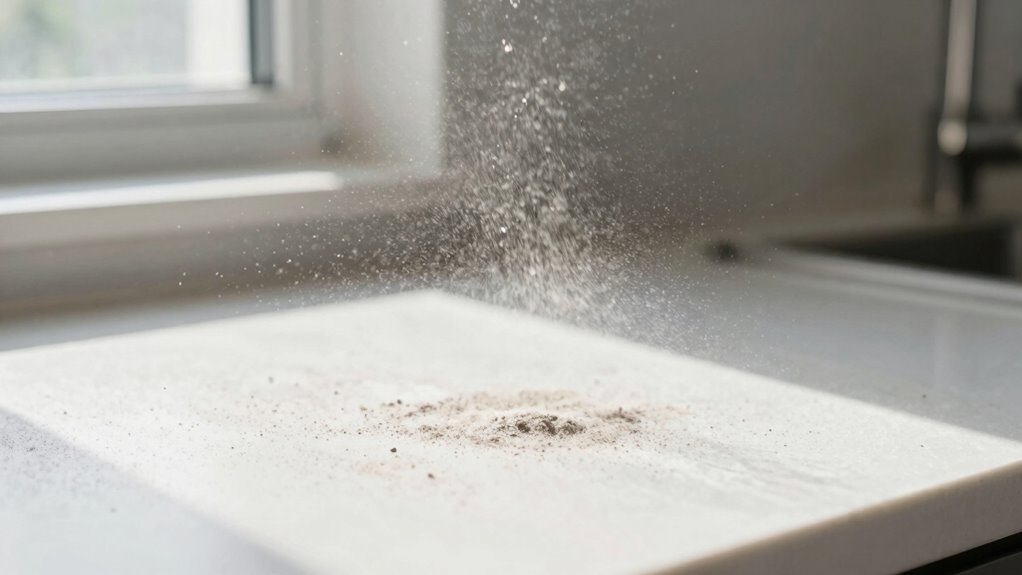

Dust comes back quickly because lightweight particles are constantly carried by air currents that stir up and settle dust on surfaces. When you clean, the dust isn’t gone for long—air movement from opening windows, walking, or fans quickly redistributes it. Outdoor dust can also sneak in through gaps or ventilation. To keep dust away longer, managing airflow and using effective filters are essential. Keep going to discover how you can better control dust in your space.
Key Takeaways
- Dust particles are lightweight and easily carried by air currents, causing quick re-settling after cleaning.
- Air circulation from opening windows or moving objects redistributes dust to surfaces rapidly.
- Continuous sources like pet dander, outdoor pollution, and fibers constantly deposit new dust indoors.
- Disturbing surfaces stirs up dust, which air currents quickly transport and redeposit.
- Without airflow control, dust reaccumulates swiftly despite regular cleaning routines.
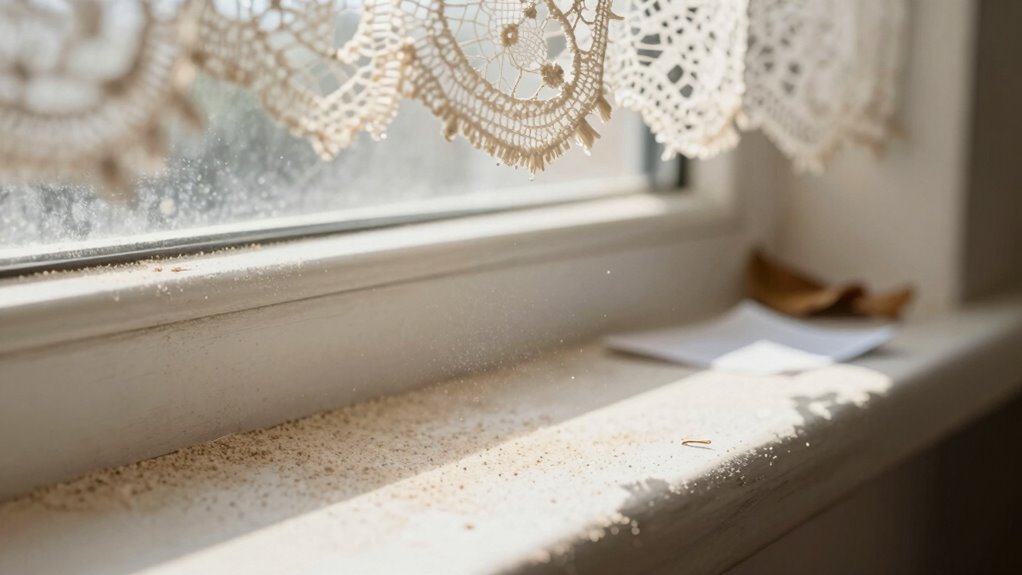
Have you ever noticed how dust seems to reappear almost immediately after cleaning? It’s frustrating, isn’t it? No matter how often you wipe down surfaces or vacuum, dust seems to settle back in quickly. The reason for this is simple: dust is constantly in motion, carried by air currents and everyday activities. It’s not just a matter of cleaning routines needing to be more frequent; it’s about understanding how dust moves and settles in your environment.
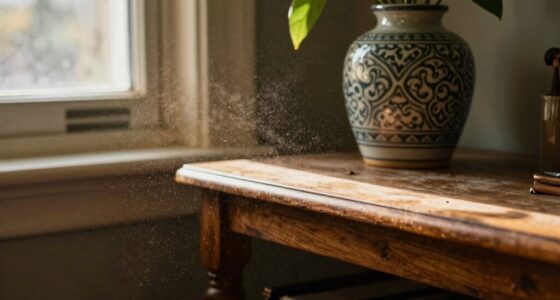
Air circulation plays a considerable role in how quickly dust reappears. Every time you open a window, turn on a fan, or even walk across a room, you stir up air currents that lift dust particles from surfaces and floors. These tiny particles are lightweight and easily transported through the air, settling onto surfaces again in minutes. Even the ventilation in your house can contribute to this cycle, bringing in dust from outside or redistributing existing dust within your space. That’s why, despite your best efforts, dust keeps coming back. Managing airflow patterns is crucial in this process, as it influences how dust moves and settles. Additionally, air circulation can also carry allergens and pollutants that further impact indoor air quality.
Air movement from opening windows, fans, or walking stirs up dust, causing it to settle back quickly.
Your cleaning routines are just one part of the solution, but they’re often not enough to keep dust at bay long-term. When you clean, you remove a considerable amount of dust, but unless you address the airflow and reduce the sources of dust, it quickly reoccupies your home. For example, dust from pet dander, fabric fibers, and outdoor pollution constantly settles on surfaces and becomes airborne with movement. If you don’t minimize air circulation that stirs this dust, you’ll find yourself cleaning more often without ever feeling like your space stays dust-free. Additionally, dust management techniques like controlling humidity levels can help reduce dust accumulation by preventing it from becoming airborne as easily. Maintaining proper humidity levels also helps keep dust from becoming airborne and settling in hard-to-reach places. Proper ventilation strategies can also significantly influence how dust is distributed throughout your home.
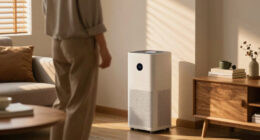
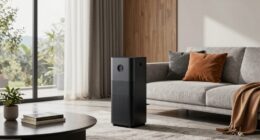
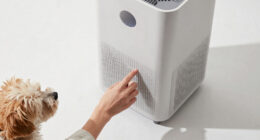
To combat this persistent problem, consider adjusting your cleaning routines to include regular dusting with a damp cloth, which traps dust rather than dispersing it into the air. Using high-efficiency particulate air (HEPA) filters in your vacuum cleaner and air purifiers can substantially reduce airborne dust particles that circulate through your home. Additionally, managing air circulation by keeping windows closed during windy days, sealing gaps around doors and windows, and maintaining proper ventilation can help control dust movement. Regularly replacing filters and ensuring proper maintenance of your HVAC system can also play a vital role in reducing airborne dust. Creating a cleaner environment also involves understanding the sources of dust and actively minimizing them whenever possible.
Ultimately, understanding how air circulation impacts dust movement is key to reducing its rapid return. Combining consistent cleaning routines with measures to control airflow creates a more effective defense against dust accumulation. So, instead of feeling defeated by the quick comeback of dust, use this knowledge to tweak your approach and create a cleaner, healthier living space.

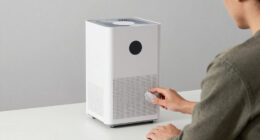
Air Purifiers for Home Large Room 2200 Ft² with Washable Filters, MOOKA H13 HEPA Air Purifier for Home Pets Bedroom with Fragrance, Air Cleaner for Smoke Dust Pollen Pets Hair Odor, KJ190 White
𝐇𝐢𝐠𝐡𝐞𝐫 𝐀𝐢𝐫 𝐈𝐧𝐭𝐚𝐤𝐞 & 𝐋𝐚𝐫𝐠𝐞𝐫 𝐂𝐨𝐯𝐞𝐫𝐚𝐠𝐞 𝐟𝐨𝐫 𝐏𝐞𝐭 𝐋𝐨𝐯𝐞𝐫𝐬: This air purifier for home pets is designed with…
As an affiliate, we earn on qualifying purchases.
As an affiliate, we earn on qualifying purchases.
Frequently Asked Questions
How Often Should I Vacuum to Prevent Dust Buildup?
You should vacuum at least twice a week to maintain a good vacuuming schedule and prevent dust buildup. Regular vacuuming helps remove dust, allergens, and pet hair effectively. Incorporate dust prevention techniques like using high-efficiency filters and wiping surfaces regularly. If you have pets or allergies, consider vacuuming more often. Staying consistent with your vacuuming schedule keeps your home cleaner and reduces dust accumulation over time.
Does Humidity Level Affect Dust Accumulation?
Imagine a sponge soaking up water—high humidity levels cause dust particles to cling to surfaces, making dust buildup worse. Humidity control helps keep dust from settling and circulating in the air. Using dust trapping materials like microfiber cloths and HEPA filters also reduces dust accumulation. When you maintain ideal humidity, you create a less inviting environment for dust to settle, keeping your space cleaner longer and making cleaning easier.
Are There Specific Materials That Attract More Dust?
Certain materials are more prone to dust magnetism because of their susceptibility. You’ll notice that fabrics like upholstery, carpets, and curtains attract more dust because of their textured surfaces and static charge. Smooth, non-porous materials like glass or metal tend to attract less dust. By understanding material susceptibility, you can choose surfaces that resist dust build-up or clean more effectively, reducing overall dust accumulation in your space.
Can Air Purifiers Completely Eliminate Dust?
Think of an air purifier as a diligent gatekeeper, but even it can’t catch every dust particle. While it reduces airborne dust by trapping larger particles, its limitations lie in tiny dust particles that slip through. Dust particle size varies, and some are too small for filters to capture completely. So, no, air purifiers can’t entirely eliminate dust, but they considerably improve your air quality by reducing most airborne allergens.
Does Cleaning Frequency Influence Dust Reappearance Speed?
Yes, cleaning frequency affects how quickly dust reappears. Regular cleaning reduces dust mites and allergens, preventing them from settling and multiplying. By frequently dusting, vacuuming, and wiping surfaces, you limit the buildup of dust and allergen sources, which slows down their return. Consistent cleaning helps maintain a healthier environment and reduces allergy symptoms, making your space more comfortable and allergen-free over time.
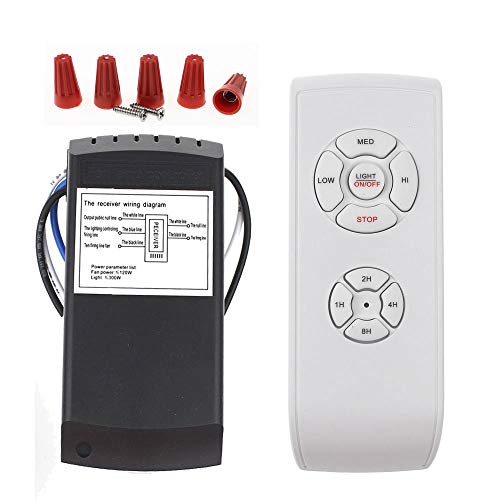
LPHUMEX Universal Ceiling Fan Remote Control Kit, 3-in-1 AC Motor Ceiling Fan Light Timing & Speed Remote, for Hunter/Harbor Breeze/Westinghouse/Honeywell/Other Ceiling Fan lamp
☞Easy Installation – Installation of the Universal Ceiling Fan Remote Controls Kit is a breeze and the looks…
As an affiliate, we earn on qualifying purchases.
As an affiliate, we earn on qualifying purchases.
Conclusion
So, next time you swear you just cleaned, remember—dust has the energy of a superhero, bouncing back faster than you can blink. It sneaks into every corner, making your efforts seem like a drop in an endless ocean. Don’t get discouraged; dust is just doing its job. Keep cleaning, because even the mightiest warriors can’t defeat dust’s unstoppable comeback. Embrace the battle—your home’s sparkle is worth the fight!

Air Ionizers (4 Pack)- Plug In Negative Ion Air Purifiers – Quiet Air Freshener for Home, Bedroom, Office, Basement – Portable Air Purifier Odor, Smoke, Dust, Pet Smell – Mini Air Cleaner White
【Air Ionizer For Home】The air purifier plug has a simple and stylish design, making it a discreet yet…
As an affiliate, we earn on qualifying purchases.
As an affiliate, we earn on qualifying purchases.

Hon&Guan 4" Air Filtration Kit: 4 Inch Inline Duct Fan with Speed Controller, 10" High Carbon Filter, 8 Ft Ducting & Rubber Coupler, Ventilation System for Grow Tents, Indoor Gardening, Hydroponics
【Efficient Ventilation System Kit】: Includes Hon&Guan 4" inline duct fan, Speed Controller, 10" High Carbon Filter & 8…
As an affiliate, we earn on qualifying purchases.
As an affiliate, we earn on qualifying purchases.