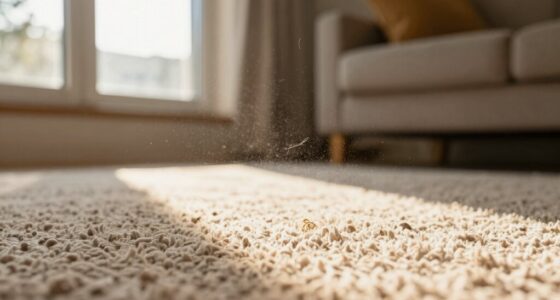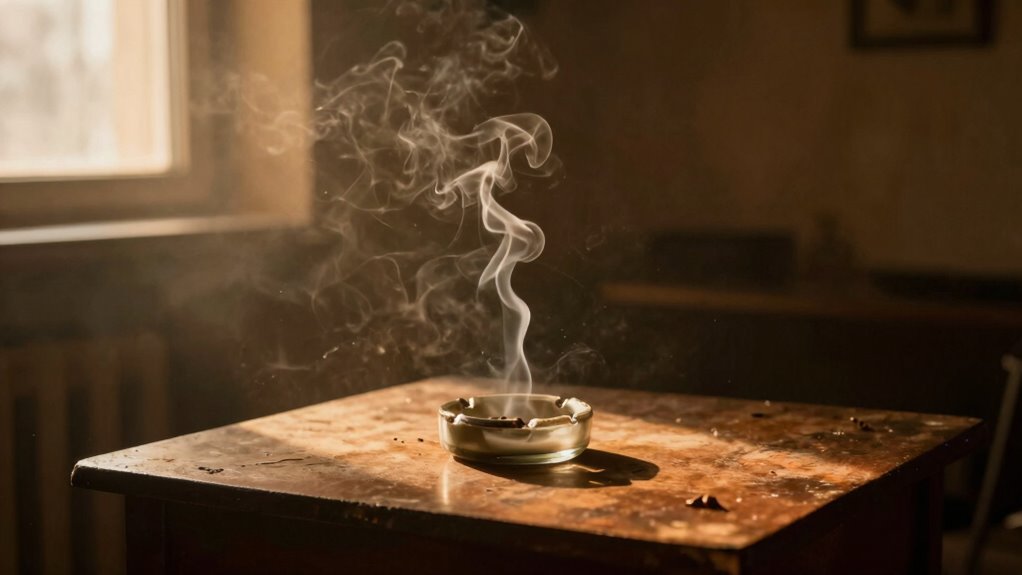
Smoke lingers indoors longer than you might think because its tiny particles easily attach to surfaces like furniture, carpets, and curtains, making odors and pollutants persist even after the source disappears. These particles float in the air and settle into furnishings, creating hidden contamination that keeps releasing odors over time. Proper filtration and ventilation can help remove these particles, but understanding how smoke behaves inside your space is key to controlling its stay. Keep going to discover more about this process.

Get health and wellness essentials delivered free — and shop member deals
- Fast, free delivery on millions of items
- Access to Prime Big Deal Days deals on October 6–7
- Prime Video, Amazon Music and more included
Key Takeaways
- Smoke particles are tiny and can remain suspended in the air for extended periods.
- Particles settle into surfaces, causing persistent odors and hidden contamination.
- Indoor spaces trap smoke more effectively than open environments, prolonging its presence.
- Proper ventilation alone may not effectively remove all smoke particles.
- High-quality filters, like HEPA, are necessary to capture microscopic smoke particles and improve air quality.
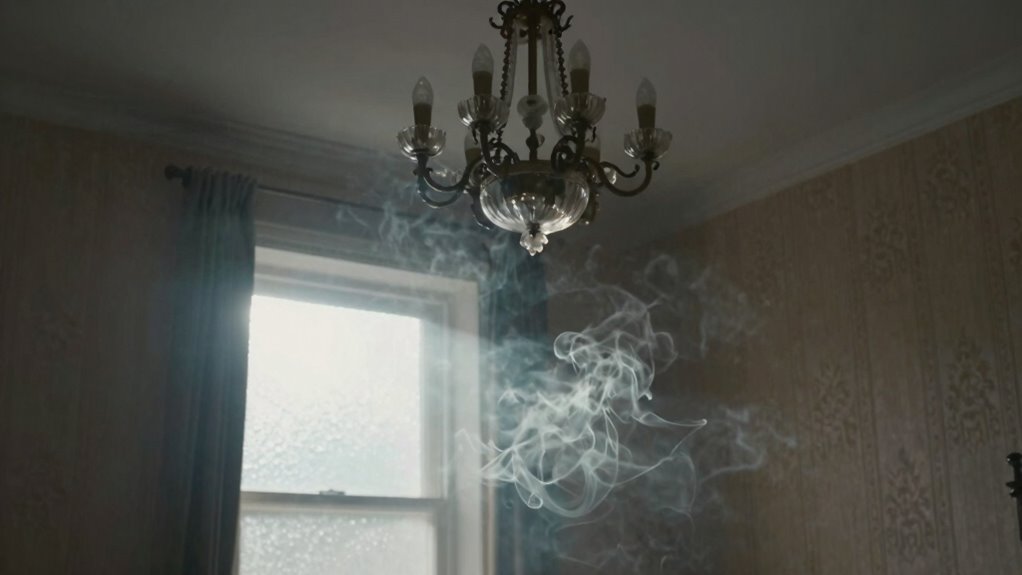
Have you ever noticed how smoke can seem to hang in the air long after the source is gone? It’s a common experience, yet many people don’t realize why smoke persists indoors more than they expect. The answer lies in how smoke particles behave once they’re inside your space. Smoke isn’t just visible; it’s made up of tiny particles and gases that easily become trapped in the environment, clinging to surfaces and floating in the air. These particles are small enough to evade your eyes but large enough to cause lingering odors and potential health issues. To combat this, air filtration becomes essential. High-quality air filters can trap many of these particles, pulling them from the air before they settle or get inhaled. HEPA filters, in particular, are effective at capturing the microscopic particles found in smoke, markedly reducing indoor pollution and making the air safer to breathe.
However, simply filtering the air isn’t enough. Ventilation strategies play an equally important role in dispersing and removing smoke particles from your indoor environment. Proper ventilation encourages the exchange of indoor air with fresh outdoor air, which helps dilute lingering smoke and odors. You might think opening a window is enough, but effective ventilation often requires a combination of methods—such as exhaust fans, air exchangers, or mechanical ventilation systems—that actively move contaminated indoor air outside. These strategies prevent smoke from settling deep into furniture, carpets, and curtains, where it can remain hidden and continue releasing odors over time. Additionally, understanding the behavior of smoke particles can help you better target your efforts in reducing indoor smoke buildup. Recognizing how smoke interacts with surfaces and materials can also guide you in choosing smoke-resistant furnishings to further improve indoor air quality.
Understanding the importance of air filtration and ventilation strategies helps you take control of indoor air quality. When smoke enters your home—whether from cooking, smoking, or nearby fires—it’s not just about letting it disperse passively. You need to act proactively to remove contaminants. Invest in a good air filtration system, and use ventilation techniques that promote the continuous renewal of indoor air. Doing so not only clears out smoke more quickly but also improves overall air quality, making your living space healthier and more comfortable. Keep in mind that smoke particles are persistent; they settle and linger in ways you might not initially notice. But with the right combination of filtration and ventilation, you can markedly reduce their presence, restoring fresh, clean air to your home.
As an affiliate, we earn on qualifying purchases.
Frequently Asked Questions
How Long Does Smoke Typically Stay Suspended Indoors?
Smoke particles can stay suspended indoors for hours, depending on ventilation and air quality. When you smoke indoors, the tiny particles linger in the air, reducing air quality and making it harder to breathe. Poor ventilation traps these particles, prolonging their stay. To improve indoor air quality, open windows, use fans, and air purifiers, which help clear smoke faster and reduce health risks associated with lingering smoke particles.
Can Indoor Plants Help Remove Indoor Smoke?
Indoor plants can help with smoke absorption, but they’re not enough on their own. While some plants like peace lilies and snake plants can filter airborne toxins, they don’t replace air purifiers. To effectively remove indoor smoke, you should use air purifiers equipped with HEPA filters, which actively scrub particles from the air. Combine plants with air purifiers for the best chance of improving your indoor air quality.
Does Lighting Incense or Candles Affect Smoke Retention?
Lighting incense or candles can mildly impact indoor air quality and smoke absorption, but they don’t substantially reduce lingering smoke. While they add pleasant scents, they can also introduce more particles into the air, making smoke absorption harder. If you want to improve indoor air quality, focus on proper ventilation and air purifiers. Incense and candles might contribute to smoke retention, so use them in moderation and ensure good airflow.
Are There Specific Rooms Where Smoke Lingers Longer?
You’ll find smoke lingers longer in rooms with poor airflow and limited ventilation, especially in smoke permeation zones like corners, behind furniture, or enclosed spaces. Air purifier effectiveness varies, but using one in these areas can substantially reduce lingering smoke. To improve air quality, open windows regularly and guarantee good circulation, especially in rooms prone to trapping smoke. This helps clear smoke faster and keeps your indoor air cleaner.
How Does Ventilation Impact Indoor Smoke Dissipation?
Ventilation plays a vital role in improving indoor air quality by dispersing smoke particles more quickly. When your ventilation systems are functioning well, they help exhaust smoke and replace contaminated air with fresh air from outside. Without proper ventilation, smoke lingers longer, degrading indoor air quality and making it harder to breathe comfortably. Regularly using exhaust fans or air purifiers can greatly speed up smoke dissipation indoors.
As an affiliate, we earn on qualifying purchases.
Conclusion
So, next time you think smoke disappears quickly indoors, think again. Smoke particles can linger for hours, affecting your air quality long after the smoke has cleared. Did you know that indoor air can contain up to five times more pollutants than outdoor air? That’s a staggering reminder to be cautious. Keep windows open, use air purifiers, and avoid smoking indoors to protect your health and breathe easier every day.
ventilation fan for indoor air quality
As an affiliate, we earn on qualifying purchases.
As an affiliate, we earn on qualifying purchases.
As an affiliate, we earn on qualifying purchases.
Fall Picks
fall essentials
As an affiliate, we earn on qualifying purchases.