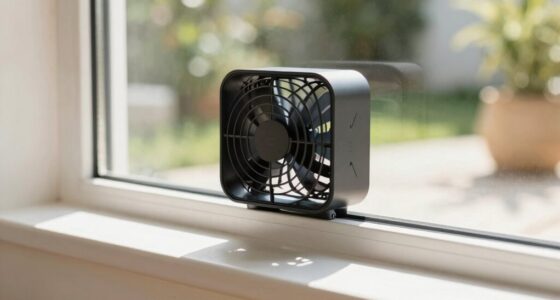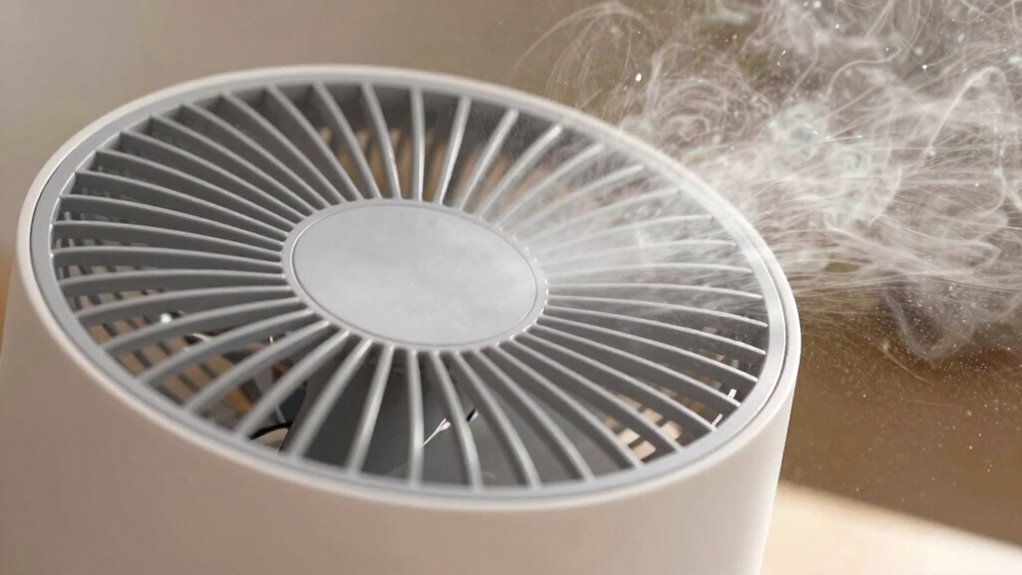
Air circulator fans feel different from standard fans because they move air more evenly and gently, creating a natural breeze that feels softer and less harsh. They promote better air circulation, which helps regulate temperature and improves comfort, especially in quiet spaces. Unlike traditional fans that produce strong gusts, circulators disperse airflow, making it feel more natural and pleasant. Keep exploring to discover how choosing the right fan can enhance your comfort even further.
Key Takeaways
- Air circulator fans produce a softer, more dispersed airflow that feels more natural and less harsh than traditional fans.
- They create a consistent airflow that evenly circulates air, reducing gusts and draftiness.
- Circulators operate at lower noise levels, making the airflow feel gentler and quieter.
- Their design promotes overall air circulation, resulting in a more comfortable and balanced breeze.
- They are more energy-efficient, providing effective cooling with less power, which influences the airflow sensation.
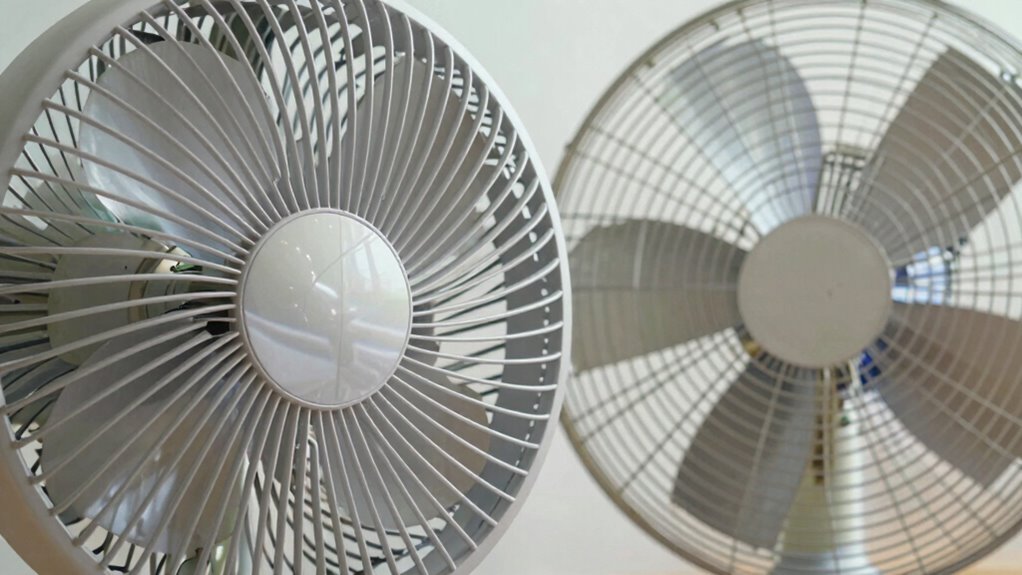
When choosing between air circulator fans and standard fans, understanding how each one operates can help you make an informed decision. Air circulator fans are designed to move air more efficiently throughout a space, creating a gentle, consistent airflow that reaches every corner. Unlike standard fans, which focus on blowing air in a specific direction, circulator fans are built to promote overall air circulation, helping to regulate temperature and improve comfort. This comprehensive airflow can also contribute to more even heating or cooling, especially when used alongside other heating or cooling appliances. The difference in operation influences how each fan feels when you’re near it. You might notice that air circulator fans produce a more even and natural breeze, often feeling less harsh or direct compared to traditional fans. The airflow from a circulator tends to be softer and more dispersed, giving you a more comfortable experience without the intense gusts sometimes associated with standard fans. Additionally, the design of circulator fans often incorporates features that reduce mechanical noise, enhancing their quieter operation. An added benefit is that their adjustable settings allow for more control over airflow intensity, further improving user comfort. Energy efficiency is another key factor that sets these fans apart. Because air circulator fans are designed to circulate air more thoroughly, they often require less power to achieve the same cooling effect as a standard fan. This means you might see lower energy bills over time with a circulator, especially if you use it consistently. Proper placement and fan size are also crucial for maximizing efficiency and comfort. Standard fans, on the other hand, tend to need higher settings or multiple units to cover larger spaces effectively, which can increase energy consumption. If you’re concerned about saving energy, a circulator fan could be the smarter choice, helping you stay cool without wasting electricity. Noise levels also differ significantly between the two. Standard fans, especially older or cheaper models, can generate noticeable noise, particularly at higher speeds. This can be disruptive, especially if you’re trying to focus, work, or sleep. Air circulator fans are generally quieter because they operate at lower speeds while still moving air efficiently. Their design minimizes vibrations and mechanical noise, making them less intrusive in quiet environments. If noise level is a priority for you, especially in bedrooms or study areas, an air circulator fan might provide a more peaceful experience. The technological advancements in fan design have further improved the quietness and efficiency of circulators in recent years. In essence, the feeling you get from each fan type hinges on how they move air and how quietly they operate. Air circulator fans create a more uniform, gentle airflow that feels more natural, while standard fans might produce more direct gusts and louder noise. When selecting a fan, consider these differences in operation, energy efficiency, and noise levels to find the one that best suits your comfort and lifestyle needs.

Honeywell TurboForce Air Circulator, Small Tabletop Fan, Quiet Personal Fan for Home or Office, 3 Speeds, 90 Degree Pivoting Head, Black, HT900
Small floor or tabletop fan: Honeywell TurboForce Air Circulator Fan is a cooling fan that is 25% quieter…
As an affiliate, we earn on qualifying purchases.
As an affiliate, we earn on qualifying purchases.
Frequently Asked Questions
Do Air Circulator Fans Consume More Energy Than Standard Fans?
Air circulator fans generally don’t consume more energy than standard fans; in fact, they’re often more power-efficient. Their design allows them to move air more effectively across a room, which means you can achieve the same cooling effect while using less energy. By improving airflow without increasing power consumption, air circulator fans help you save on energy costs and reduce overall energy consumption, making them a smart, efficient choice.
Can Air Circulator Fans Be Used Outdoors Effectively?
Yes, you can use air circulator fans outdoors effectively. Look for models with outdoor durability and weather resistance, which are built to handle elements like rain, wind, and sun exposure. These fans typically feature sturdy materials and sealed components that prevent damage. By choosing a weather-resistant, outdoor-rated air circulator fan, you guarantee reliable performance and longevity in various outdoor conditions.
Are Air Circulator Fans Quieter Than Traditional Fans?
You won’t believe how quiet air circulator fans can be—they’re practically whispering compared to traditional fans! Thanks to their innovative fan design, they produce considerably lower noise levels, making them perfect for peaceful spaces. Unlike loud, bulky fans, these sleek devices keep the air moving without disturbing your focus or sleep. If you want a powerful yet silent fan experience, air circulator fans are your best choice.
How Do Air Circulator Fans Impact Indoor Air Quality?
Air circulator fans positively impact indoor air quality by promoting better air circulation, which helps distribute air pollutants and allergens more evenly. They also assist with air filtration by preventing stagnant air, and can help control humidity levels, reducing excess moisture that fosters mold and bacteria growth. By improving air movement, these fans create a healthier environment, making your indoor space feel fresher and more comfortable.
What Maintenance Is Required for Air Circulator Fans?
You should clean the filters every few months, as dust buildup can reduce airflow by up to 30%. Regular maintenance also involves lubricating bearings to keep the fan running smoothly; neglecting this can cause noise and wear. Check for loose screws or parts periodically. Proper upkeep guarantees your air circulator fan operates effectively, prolongs its lifespan, and maintains ideal air quality in your space.
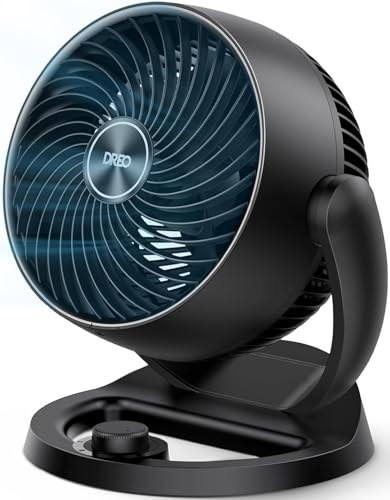
DREO Fan for Bedroom, 12 Inches, 70ft Powerful Airflow, 25db Quiet Table Air Circulator Fans for Whole Room, 120° Adjustable Tilt, 3 Speeds, Desktop Fan for Home, Office, Kitchen
Powerful air Circulation for your entire room: Dreo's WingBoost system combines deep-pitched blades and aerodynamic design to propel…
As an affiliate, we earn on qualifying purchases.
As an affiliate, we earn on qualifying purchases.
Conclusion
So, next time you’re deciding between an air circulator and a standard fan, remember they each have their charm—like the difference between a trusty quill and a modern pen. Air circulators bring a breeze that feels more natural, almost like a gentle whisper from the past, while standard fans can be more direct. Choose what suits your comfort, and don’t forget, sometimes the simplest things make the biggest difference in how we feel.
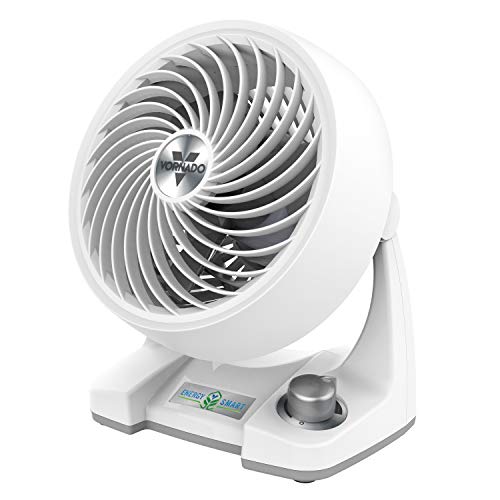
Vornado 133DC Energy Smart Compact Air Circulator with Variable Speed Control, DC Motor, Adjustable Tilt, Quiet Operation for Bedroom, Office, and Home Use, White
ENERGY SMART DESIGN — This compact desk fan features a powerful DC motor that uses up to 80%…
As an affiliate, we earn on qualifying purchases.
As an affiliate, we earn on qualifying purchases.

DREO Fan for Bedroom, 13-Inch Oscillating Table Air Circulator Fan for Whole Room, 120° Tilt Adjustment, 25dB Ultra-Quiet, 75ft Powerful Airflow, 4 Speeds Desk Fans with Remote for Home, Office
𝐏𝐨𝐰𝐞𝐫𝐟𝐮𝐥 𝐰𝐡𝐨𝐥𝐞 𝐫𝐨𝐨𝐦 𝐜𝐢𝐫𝐜𝐮𝐥𝐚𝐭𝐢𝐨𝐧: Using Dreo's WingBoost technology, this air circulator fan delivers far-reaching winds that go as…
As an affiliate, we earn on qualifying purchases.
As an affiliate, we earn on qualifying purchases.