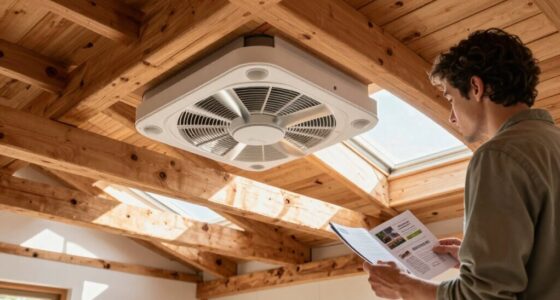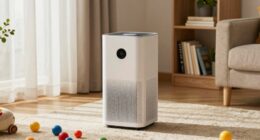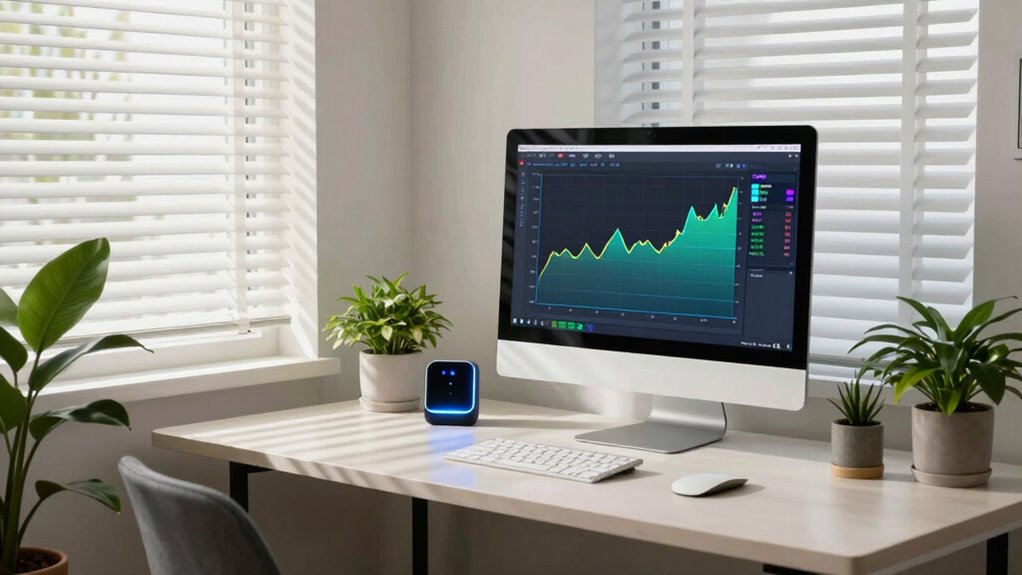
Tracking CO2 levels in your home office helps you catch hidden ventilation issues that can harm your health and decrease your focus. Elevated CO2 indicates stale air, which can cause headaches, fatigue, and reduce your productivity. By monitoring these levels, you can take quick action, like opening a window or using an air purifier, to improve air quality. Keep exploring to discover more simple ways to create a healthier, more efficient workspace.
Key Takeaways
- Elevated CO2 levels indicate poor ventilation, which can impair focus and productivity more than initially anticipated.
- Monitoring CO2 helps prevent subtle health issues like fatigue and headaches that accumulate over time.
- Real-time data enables proactive adjustments, significantly improving overall air quality and workspace comfort.
- Consistent tracking reveals patterns, allowing for optimized ventilation strategies beyond basic air quality awareness.
- Better indoor air quality directly enhances cognitive function and mental clarity, often more impactful than expected.
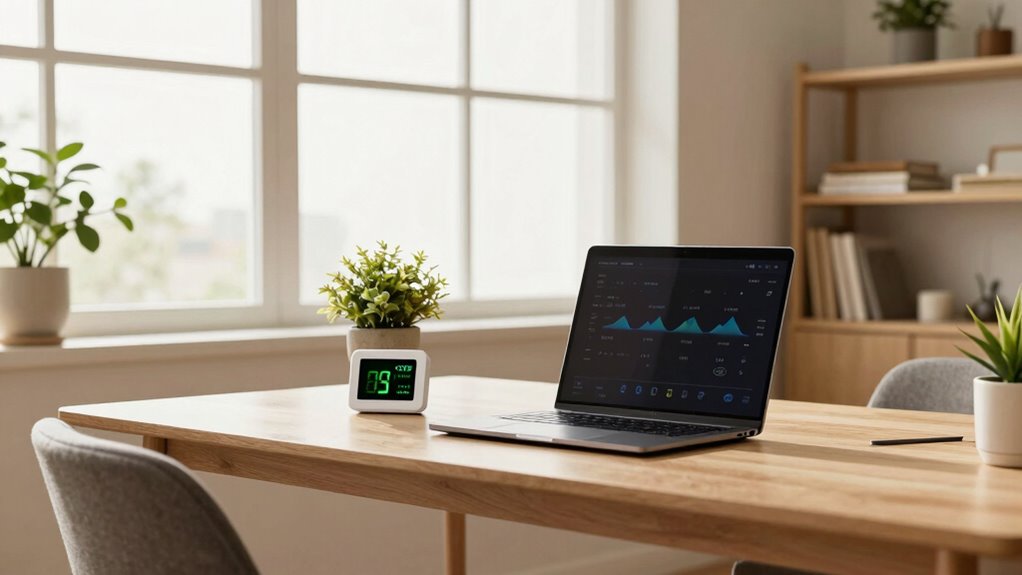
As more people work from home, monitoring the environmental impact of home offices becomes increasingly important. One of the key factors in creating a healthy workspace is maintaining good air quality. Poor air quality can lead to headaches, fatigue, and even decreased concentration, which directly affects your productivity. By tracking CO2 levels, you gain a clear understanding of how well your home office is ventilated. Elevated CO2 indicates that your space might be poorly ventilated, trapping stale air and pollutants. When you’re aware of these levels, you can take simple steps like opening windows or using air purifiers to improve air circulation. This proactive approach helps keep the air fresh and reduces the risk of discomfort or health issues that can arise from poor air quality. Incorporating digital tools to monitor air quality makes tracking even more accessible and efficient. As a result, you can better manage indoor air quality and create a healthier workspace environment. Regularly monitoring CO2 also aligns with the importance of ventilation in maintaining optimal indoor conditions, as emphasized in air quality improvement strategies. Additionally, understanding indoor air quality helps you recognize the significance of proper ventilation, which is often overlooked but crucial for health and productivity.
Furthermore, staying informed about air quality standards can help you set benchmarks for maintaining a safe and comfortable environment. Beyond health benefits, CO2 tracking can considerably enhance your productivity. When air quality dips, your cognitive functions can decline, making it harder to focus and process information efficiently. By monitoring CO2 levels regularly, you can identify patterns—such as times of day when air quality worsens—allowing you to adjust your habits. For example, scheduling intensive tasks during periods of ideal air quality can boost your efficiency. Proper ventilation not only refreshes the air but also creates a more inviting environment, reducing feelings of fatigue and mental fog. As a result, you’re more likely to stay engaged and perform at your best throughout the workday.
Incorporating CO2 sensors into your home office setup isn’t complicated or expensive. Many modern devices connect seamlessly to smartphones or computers, providing real-time data on air quality. This data empowers you to make informed decisions about when to air out the space or use air filtration systems. Over time, tracking CO2 becomes a habit that helps you maximize your workspace environment continuously. It’s a simple yet powerful way to guarantee your home office remains a healthy and productive environment. As you become more conscious of your indoor air quality, you’ll notice improvements not just in your physical health but also in your mental clarity and work output. Regular CO2 monitoring transforms your home office into a space where good air quality actively supports your well-being and efficiency.
In short, paying attention to CO2 levels isn’t just about health—it’s a strategic move to enhance your overall work experience. By understanding and managing your air quality, you create an environment that fosters productivity and well-being, making your home office more effective than you might have originally expected.

Temtop CO2 Monitor Indoor air Quality Monitor Portable CO2 Meter, CO2, Temperature, Humidity Home, Office or School
- Multifunctional Indoor Air Monitor: Measures CO2, temperature, humidity
- High-Precision NDIR Sensor: Accurate ±40 ppm +5% within 400–2500 ppm
- Fast Response Time: Updates every 5 seconds for real-time data
As an affiliate, we earn on qualifying purchases.
As an affiliate, we earn on qualifying purchases.
Frequently Asked Questions
How Accurate Are Consumer-Grade CO2 Monitors for Home Offices?
Consumer-grade CO2 monitors can be fairly accurate for home offices, especially if you regularly perform sensor calibration. They work best when combined with good air circulation, which helps maintain consistent readings. Keep in mind, some devices may drift over time, so calibration guarantees accuracy. While not as precise as professional equipment, these monitors give you a solid idea of your indoor air quality, helping you make better ventilation choices.
Can CO2 Levels Directly Impact Productivity in a Home Workspace?
Yes, CO2 levels can directly impact your productivity in a home workspace. Poor air quality, caused by elevated CO2, can lead to decreased mental clarity, making it harder to focus. When CO2 builds up, you might feel drowsy or mentally foggy. Monitoring and maintaining good air quality helps guarantee you stay alert and sharp, boosting overall productivity and comfort during your workday.
Are There Specific CO2 Thresholds Recommended for Home Office Environments?
You should aim for CO2 levels below 1,000 ppm in your home office. Surprising to many, indoor plants and enhanced air circulation help keep these levels in check, creating a healthier environment. When CO2 rises above this threshold, you might notice decreased focus or fatigue. Keep an eye on these levels, and incorporate plants or improve ventilation to maintain ideal air quality and boost your productivity.
How Often Should CO2 Levels Be Checked in a Home Office?
You should check your CO2 levels at least once an hour to maintain good air circulation and prevent buildup. If levels rise above recommended thresholds, increase ventilation or improve air filtration. Regular checks help you respond quickly, ensuring your home office stays fresh and safe. Using a CO2 monitor allows you to keep track effortlessly, adjusting your air circulation and filtration strategies as needed for peak indoor air quality.
What Are Cost-Effective Ways to Improve Air Quality Based on CO2 Readings?
To improve air quality cost-effectively, consider adding indoor plants like snake plants or pothos, which naturally filter CO2 and improve freshness. You can also use air purifiers with activated carbon filters to reduce pollutants and enhance airflow. Regularly opening windows to exchange stale indoor air with fresh outdoor air is free and highly effective. Combining these methods helps maintain healthier indoor air without breaking the bank.

Amazon Smart Air Quality Monitor – Know your air, Works with Alexa
- Air Quality Monitoring: Tracks PM 2.5, VOCs, CO, humidity, and temperature
- Real-Time Alerts: Color-coded LED indicates current air quality
- Smart App Integration: Provides detailed air quality data via Alexa app
As an affiliate, we earn on qualifying purchases.
As an affiliate, we earn on qualifying purchases.
Conclusion
By tracking CO2 levels in your home office, you can proactively improve your workspace and boost productivity. Imagine noticing a spike in CO2 one afternoon, then opening a window to refresh the air—suddenly feeling more alert and focused. Regular monitoring isn’t just about air quality; it’s about creating an environment that works for *you*. So, don’t wait—start tracking today and turn your home office into a healthier, more energizing space.

Kidde Carbon Monoxide Detector, Plug-In with 9V Battery Backup, Digital Display, 85 dB Alarm, LED Status Light Indicators, 3rd Edition
- Easy Plug-In Installation: Plug into standard 120V outlet
- Battery Backup: Includes 9V battery for power outages
- Digital CO Level Display: Shows real-time carbon monoxide levels
As an affiliate, we earn on qualifying purchases.
As an affiliate, we earn on qualifying purchases.

16 in 1 Air Quality Monitor Indoor 7" Wildfire CO2 Monitor, 9 AQI+7 Alerts
- 16-in-1 Indoor Air Quality Monitoring: Detects 9 key parameters including CO2 and PMs
- 7-inch Large LED Display: Clear, instant air quality readings with adjustable brightness
- High-Precision External Sensors: Accurate to 0.001 units for reliable detection
As an affiliate, we earn on qualifying purchases.
As an affiliate, we earn on qualifying purchases.