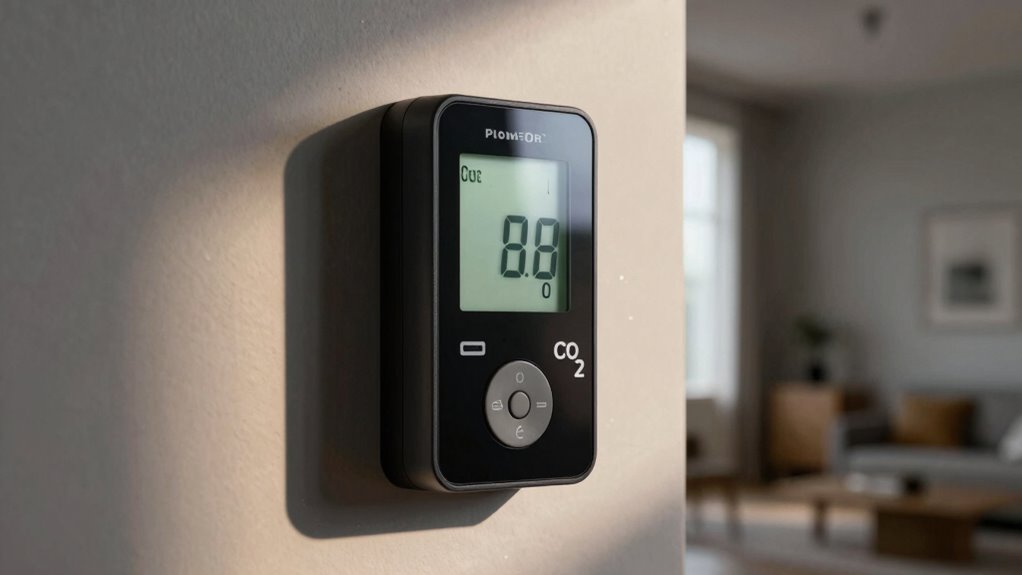
If your CO₂ meter shows unexpectedly low levels, there could be several causes. It might be due to calibration drift, sensor contamination, or physical damage from bumps or exposure to harsh conditions. Environmental factors like good ventilation or unoccupied spaces can also produce low readings. Over time, sensors wear out, reducing accuracy. To guarantee reliable results, you should check for damage, clean the sensor, or recalibrate. Keep reading to learn how to troubleshoot these issues effectively.

Get health and wellness essentials delivered free with Prime
- Fast, free delivery on millions of items
- Prime Video, Amazon Music and more included
- Member-only deals all year
Key Takeaways
- The sensor may be miscalibrated or drifted, causing underreporting of actual CO₂ levels.
- Physical damage or contamination can impair sensor accuracy, leading to falsely low readings.
- Poor airflow or ventilation can result in genuinely low CO₂ concentrations being detected.
- Sensor aging and wear reduce sensitivity, causing lower-than-actual measurements over time.
- External impacts or environmental factors might temporarily affect sensor function, skewing readings downward.
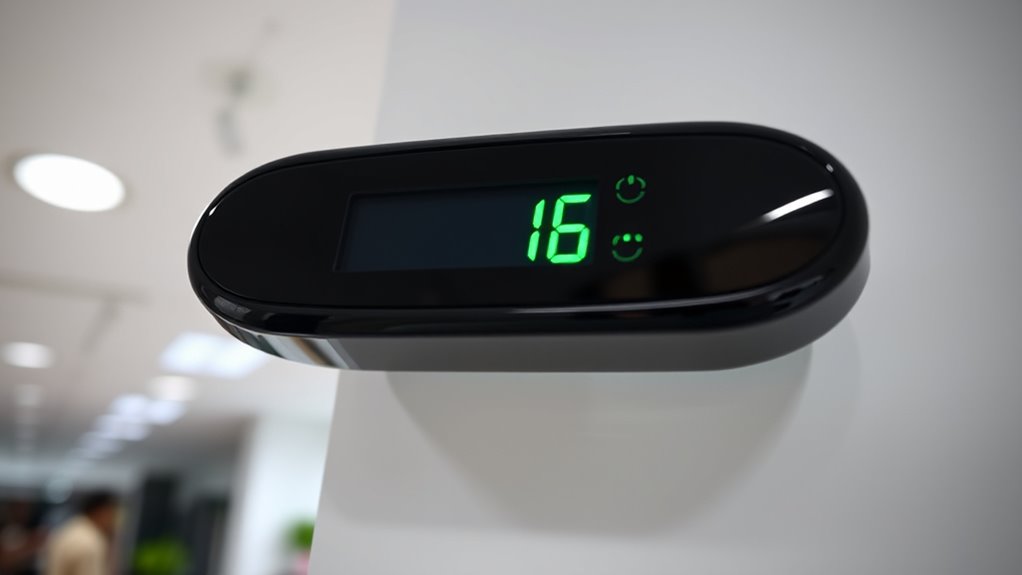
If your CO₂ meter is reading lower than expected, it could indicate a malfunction or calibration issue. This isn’t something to overlook, especially if you rely on accurate readings for health, safety, or ventilation control. First, check whether the device has recently been bumped, dropped, or exposed to extreme conditions. Physical shocks can cause internal sensors to become misaligned or damaged, leading to inaccurate readings. Sometimes, a simple reset or turning the device off and on again can resolve minor glitches. If this doesn’t help, the problem might be related to calibration.
Calibration ensures that your CO₂ meter provides precise measurements. Over time, sensors can drift from their original calibration, especially if exposed to harsh environments, dust, or chemicals. If your readings suddenly seem off, it’s a good idea to recalibrate the device according to the manufacturer’s instructions. Many meters have a calibration mode that uses a known CO₂ concentration, often 400 ppm, which is roughly the outdoor baseline level. If your device consistently reports lower levels than outdoor air, it suggests calibration drift. Proper calibration restores accuracy and ensures your readings reflect real conditions.
Regular calibration is key to maintaining accurate CO₂ readings over time.
Another common cause is sensor contamination or dirt buildup. Dust, grease, or other particles can settle on the sensor, impairing its ability to detect CO₂ accurately. Regularly cleaning the sensor with a soft, dry cloth or following the manufacturer’s cleaning protocol can improve performance. Avoid using harsh chemicals or abrasive materials, as these can damage sensitive parts. Additionally, ensure the device isn’t exposed to high humidity, extreme temperatures, or direct sunlight, which can affect sensor performance. Sensor maintenance is crucial for maintaining accuracy over time.
Sometimes, the issue isn’t with the device itself but with the environment. If you’re measuring in a space with very low airflow or poor ventilation, the CO₂ levels might genuinely be low. For example, in a sealed room that’s largely unoccupied, the CO₂ concentration could be close to outdoor levels, especially if there’s good natural ventilation or air exchange. In such cases, a low reading isn’t necessarily a malfunction but an accurate reflection of the environment. Cross-check with other devices or measurements to confirm the consistency of the readings.
Lastly, consider the age of your CO₂ meter. Sensors degrade over time, losing sensitivity and accuracy. If your device is several years old, replacing the sensor or the entire meter might be necessary. Regular maintenance, calibration, and proper storage prolong the lifespan of your device, but eventually, wear and tear will impact performance. By keeping these factors in mind, you can troubleshoot low readings effectively and ensure your device provides reliable, accurate data whenever you need it.
As an affiliate, we earn on qualifying purchases.
Frequently Asked Questions
Can External Environmental Factors Affect Co₂ Readings?
Yes, external environmental factors can influence your CO₂ readings. For example, open windows or doors can lower indoor CO₂ levels, making your meter read lower than expected. Wind, outdoor air quality, and temperature changes can also impact readings. Humidity and nearby sources of CO₂, like combustion devices or plants, may influence measurements too. Keep these factors in mind to ensure accurate readings and proper ventilation.
How Often Should I Calibrate My Co₂ Meter?
You should calibrate your CO₂ meter regularly, ideally every 6 to 12 months, to guarantee accurate readings. Check the manufacturer’s recommendations for your specific model, and calibrate more frequently if you notice inconsistent data or if the device is used in varying environments. Consistent calibration maintains precision, ensures reliable data, and helps you make informed decisions about air quality. Keep a calibration schedule to stay on top of proper maintenance.
Do Battery Levels Impact the Accuracy of Measurements?
Yes, battery levels can impact your CO₂ meter’s accuracy. When batteries are low, the device may not function properly, leading to incorrect readings. It’s important to keep your batteries fresh and fully charged to guarantee accurate measurements. Weak batteries can cause fluctuations or errors, so regularly check and replace them as needed. Doing this helps maintain the reliability of your CO₂ readings and overall device performance.
Can Nearby Electronic Devices Interfere With Readings?
Sure, your fancy electronic gadgets can play sneaky tricks on your CO₂ meter. Wireless routers, smartphones, or even that Wi-Fi-enabled toaster might send signals that confuse your device, making it read lower than actual levels. It’s like trying to have a serious conversation with a room full of chatty parrots—your meter gets distracted. Keep electronic devices away, and your readings will be as truthful as your grandma’s secret recipe.
Is a Low Co₂ Reading Always a Sign of Good Air Quality?
A low CO₂ reading generally indicates good air quality, but it’s not always a guarantee. If your meter is malfunctioning or improperly calibrated, it might give false low readings. Also, fresh outdoor air can reduce indoor CO₂ levels, but other pollutants could still be present. So, while low readings are a positive sign, consider other factors like ventilation and possible device issues before concluding your air quality is excellent.
As an affiliate, we earn on qualifying purchases.
Conclusion
Think of your CO₂ meter as a faithful guide, like a lighthouse guiding a ship safely through fog. When it reads low, it’s as if the lighthouse’s light dimmed just enough to mislead. But with a little tuning—calibration, placement, and awareness—you’ll restore its glow. Trust your meter again, letting it lead you through the haze, so you can breathe easy, knowing you’re steering your space with clarity and confidence, just like a ship finding its true path home.
As an affiliate, we earn on qualifying purchases.
As an affiliate, we earn on qualifying purchases.
Halloween Picks
halloween
As an affiliate, we earn on qualifying purchases.