
To fix garage air leaks into your house, start by inspecting for drafts around doors, walls, and ceilings, especially during windy conditions. Seal gaps with weatherstripping, door sweeps, and caulk, and repair any cracks or damaged drywall. Insulate walls and ceilings to block air exchange, and ensure connecting doors are properly sealed. Regular maintenance helps keep conditioned air inside. If you’re curious about more effective solutions, there’s plenty to explore below.
Key Takeaways
- Identify and seal gaps around garage doors, walls, and ceiling using weatherstripping, caulk, and door sweeps.
- Repair cracks and openings in walls and ceilings to prevent air infiltration.
- Insulate garage walls and ceiling to reduce temperature fluctuations and air exchange.
- Seal vents, electrical outlets, and door connections to block unconditioned air entry.
- Regularly inspect and maintain seals, insulation, and structural integrity for long-term air leak prevention.

If your garage isn’t properly sealed, air can easily leak into your home, affecting your comfort and energy bills. This is a common issue that often goes unnoticed until you notice higher heating or cooling costs. The problem starts with small gaps around the garage door, walls, or ceiling, through which conditioned air escapes or unconditioned air enters. Over time, these leaks can dramatically impact your home’s energy efficiency, making your HVAC system work harder and increasing your monthly bills. Addressing garage air leaks isn’t just about saving money—it’s also about creating a more comfortable living environment and maintaining better indoor air quality.
Unsealed garages cause air leaks, raising energy bills and compromising comfort.
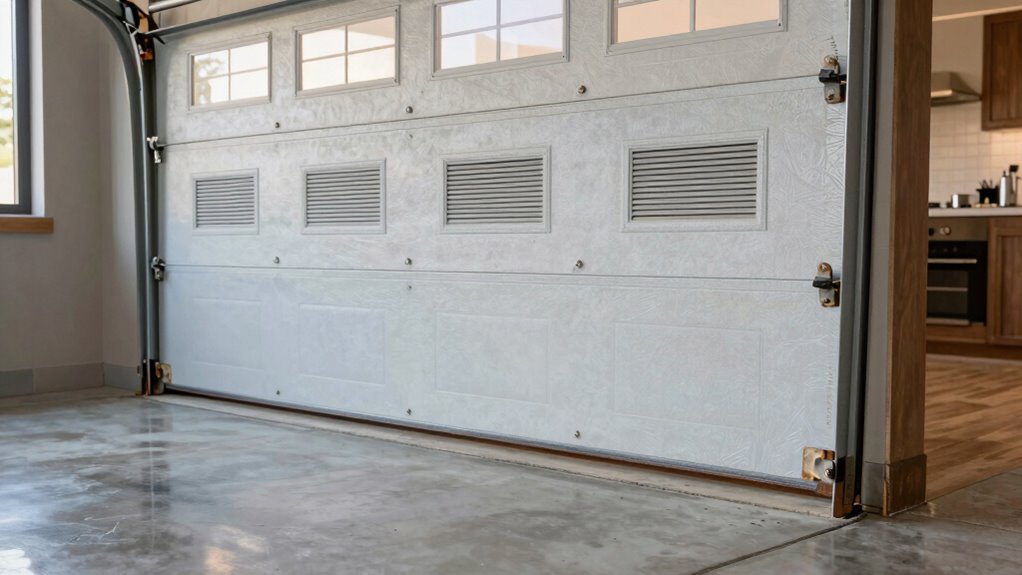
First, you need to identify where the leaks are coming from. Walk around your garage on a windy day or use a lit incense stick or a piece of tissue paper to detect drafts. If the tissue moves or the smoke flutters near certain spots, you’ve found your leaks. Start with the garage door itself—many leaks occur along its edges. Installing or upgrading weatherstripping can create a tight seal when the door is closed. Make sure the weatherstripping is in good condition and replace it if it’s cracked or worn out. For larger gaps or damaged sections, consider adding door sweeps at the bottom of the garage door to prevent air infiltration.
Next, inspect the walls and ceiling for cracks or gaps. Use a high-quality sealant or caulk to fill small cracks around electrical outlets, plumbing penetrations, or along the edges of the wall panels. If you notice substantial gaps or damaged drywall, it might be worthwhile to hire a professional to assess and repair the structural issues. Insulating the garage walls and ceiling can also help regulate temperature fluctuations. Proper insulation acts as a barrier, reducing the exchange of air between the garage and your living space. Additionally, using high-quality insulation materials can further improve energy efficiency and comfort.
Another effective fix is sealing the garage door’s perimeter with weatherstripping designed specifically for garage doors. If you have a detached garage, ensure that any openings or vents are properly sealed or fitted with adjustable dampers. You might also consider installing an air barrier or a vapor barrier in the garage to further minimize air leaks. For garages that are connected to your home through a door, ensure that door is weatherproofed and sealed. Installing a door sweep or threshold seal can make a noticeable difference.
Finally, don’t forget to maintain your seals and insulation over time. Regularly check for wear and tear, especially after extreme weather conditions. Keeping your garage sealed and well-ventilated prevents unwanted air exchange, boosts energy efficiency, and keeps your home more comfortable year-round. Taking these steps might seem minor, but they can lead to substantial savings and improved indoor air quality.
Frequently Asked Questions
How Can I Detect Small Garage Air Leaks Effectively?
You can detect small garage air leaks effectively by performing a visual inspection for gaps around doors, windows, and vents. Use a lit incense stick or a piece of tissue near potential leak points; if the smoke or tissue moves, you’ve found a leak. Also, do a blower door test or hold a lit candle near suspect areas on a windy day, watching for flickering or movement indicating airflow.
Are There DIY Methods to Seal Garage Leaks?
Did you know small leaks can account for up to 15% of your home’s energy loss? You can seal garage leaks yourself using affordable materials. Start by inspecting gaps around doors, windows, and where the garage meets the house. Use weatherstripping or caulk to seal these areas. Foam sealants work well for larger gaps. Regularly inspect and maintain these seals to keep cold air out and improve energy efficiency.
What Are the Health Risks of Garage Air Infiltration?
You might face health risks like increased exposure to mold, dust, and outdoor pollutants when garage air leaks into your home. These airborne particles can trigger allergies, asthma, or respiratory issues, especially if you or your family have sensitivities. Poor ventilation can also lead to the buildup of volatile organic compounds (VOCs) from chemicals stored in the garage, which can cause headaches, dizziness, or long-term health problems over time.
How Often Should I Inspect My Garage for Leaks?
You should inspect your garage for leaks at least once every three to six months. Regular checks help you identify cracks, gaps, or worn seals around doors, windows, and vents. After extreme weather or major temperature shifts, it’s a good idea to do a quick inspection. Stay proactive, and seal any leaks promptly to prevent unwanted air infiltration, improve energy efficiency, and protect indoor air quality.
Can Weather Changes Worsen Garage Air Leaks Over Time?
Yes, weather changes can worsen garage air leaks over time. Cold, hot, and humid conditions cause materials to expand and contract, which can loosen seals and create new gaps. This process makes leaks more likely and more significant, affecting your home’s indoor air quality and energy efficiency. Regular inspections are essential, especially after extreme weather, to guarantee your garage remains sealed and properly ventilated.
Conclusion
Think of your home as a sealed treasure chest, guarding its warmth and comfort. When garage air leaks in, it’s like letting in unwanted drafts that weaken your defenses. By fixing those leaks, you’re sealing the chest tighter, preserving your treasure’s value. Don’t let sneaky air compromise your cozy haven. Take action now—seal those leaks and keep your home’s warmth locked in, just like a treasure chest protecting its precious contents.