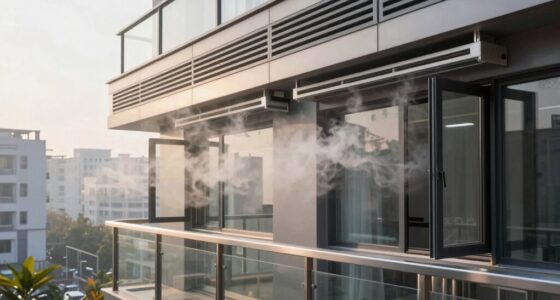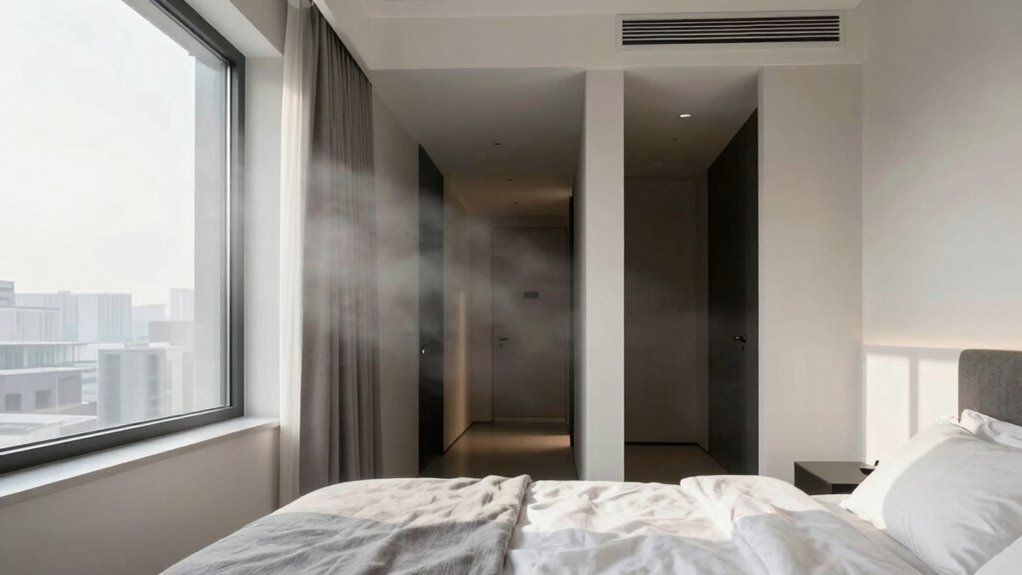

Hallways play a bigger role in bedroom CO2 levels than you might think because poor airflow and limited ventilation can trap pollutants and CO2, allowing them to build up and spread into nearby rooms. Stagnant air in hallways makes it harder for fresh air to reach bedrooms, leading to higher CO2 concentrations and potential health issues like headaches or drowsiness. Understanding airflow patterns can help you improve ventilation and create healthier living spaces—if you keep exploring, you’ll find how to make it happen.

Get health and wellness essentials delivered free — and shop member deals
- Fast, free delivery on millions of items
- Access to Prime Big Deal Days deals on October 6–7
- Prime Video, Amazon Music and more included
Key Takeaways
- Hallways act as air conduits, influencing airflow between rooms and affecting ventilation in bedrooms.
- Poor hallway ventilation can trap CO2 and pollutants, causing higher concentrations in adjacent bedrooms.
- Restricted airflow in hallways limits fresh air entering bedrooms, increasing CO2 buildup over time.
- Odors and pollutants from hallways can migrate into bedrooms, impacting indoor air quality.
- Improving hallway airflow enhances overall ventilation, reducing CO2 levels in bedrooms and promoting better health.
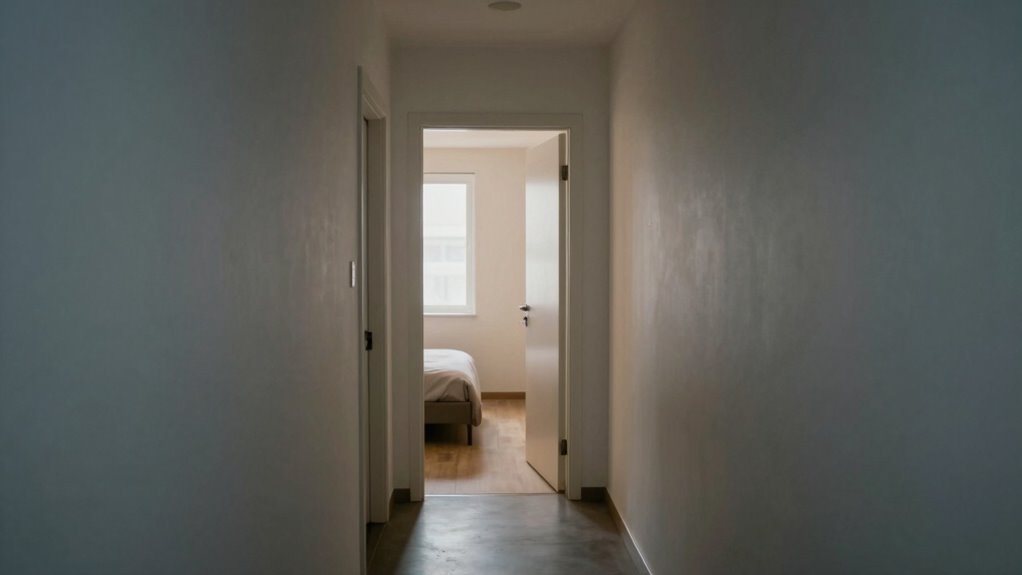
Have you ever wondered how CO2 levels in hallways and bedrooms can affect your health? It’s not just about the air you breathe directly in your bedroom; airflow patterns throughout your home play a significant role in determining indoor air quality. Hallways, often overlooked, can become silent contributors to elevated CO2 levels in your bedroom, especially when air circulation isn’t ideal. When air doesn’t move freely, CO2 from various parts of your home can accumulate in enclosed spaces, leading to poor ventilation and potential health issues over time.
Poor airflow in hallways can increase CO2 levels and impact your health over time.
In many homes, hallways act as the connecting corridors for airflow, yet they often lack proper ventilation. If your hallway is narrow, poorly ventilated, or blocked by furniture, it limits how fresh air circulates into bedrooms. This lack of air movement allows CO2 to linger longer in these spaces, gradually increasing its concentration. As CO2 builds up, you might notice more than just stuffy air—you could experience headaches, drowsiness, or difficulty concentrating. All these symptoms are linked to poor indoor air quality, which is worsened when air circulation is inadequate. Improving ventilation can significantly reduce these risks and promote better health.
Another issue that arises from stagnant air in hallways is odor buildup. Without proper airflow, smells—whether from cooking, pets, or even mold—become trapped and intensify. These odors often originate in rooms but tend to migrate into hallways, where they linger if ventilation is poor. The resulting smell can be a good indicator that CO2 and other indoor pollutants are also accumulating. You might not realize it, but this odor buildup is more than just an inconvenience; it signifies compromised air quality that could impact your health, especially if you’re sleeping or spending extended periods in your bedroom. Proper ventilation systems can help improve indoor air quality, ensuring fresh air circulation and reducing pollutants. Additionally, understanding how airflow patterns influence indoor environments can help you identify potential problem areas and improve overall ventilation. Recognizing that air circulation can be affected by home layout and furniture placement helps in creating a healthier living space.
home ventilation fan for hallways
As an affiliate, we earn on qualifying purchases.
As an affiliate, we earn on qualifying purchases.
Frequently Asked Questions
How Do Hallway Materials Influence CO2 Levels in Bedrooms?
Hallway materials influence CO2 levels in bedrooms by affecting air flow and insulation. If your hallway walls are poorly ventilated or made of dense materials, they block airflow, trapping CO2 inside your bedroom. Conversely, materials with better insulation and ventilation allow fresh air to circulate more freely, reducing CO2 buildup. To maintain healthy levels, choose materials that promote good air flow and proper insulation, especially around hallways connecting to bedrooms.
Can Hallway Ventilation Improvements Reduce Bedroom CO2?
Yes, hallway ventilation improvements can lower bedroom CO2 levels by enhancing airflow dynamics. Think of it like opening a window to let fresh air rush in, clearing out stale, CO2-rich air. Upgrading ventilation strategies, such as installing vents or exhaust fans, creates a healthier environment. When airflow moves smoothly through hallways, it pulls fresh air into bedrooms, reducing CO2 buildup and making your space more comfortable and breathable.
Do Hallway Occupancy Patterns Impact Bedroom Air Quality?
Yes, your hallway occupancy patterns impact bedroom air quality. When people frequently pass through or spend time in the hallway, they increase CO2 levels, which can seep into your bedroom. Keep hallway lighting dim to discourage unnecessary use, and regularly clean the hallway to reduce dust and pollutants that might circulate. These habits help maintain better airflow and minimize CO2 buildup, improving your bedroom’s air quality overall.
Are There Specific Hallway Designs That Help Lower Bedroom CO2?
Yes, specific hallway designs can help lower bedroom CO2 levels. You should consider bright hallway lighting, which encourages better airflow and reduces stagnation. Opt for light, neutral color schemes that visually expand the space, promoting airflow. Incorporate ventilation vents or doors that facilitate air exchange between hallways and bedrooms. These design choices support better circulation, helping to keep CO2 levels low and air quality high in your bedroom.
How Often Should Hallway Air Quality Be Monitored for Bedroom Health?
You should monitor your hallway air quality at least once a month to guarantee healthy bedroom conditions. Focus on air purifier placement in hallways to effectively reduce CO2 and pollutants, and maintain humidity control to prevent mold and stale air buildup. Regular checks help spot issues early, especially if hallways connect multiple rooms. This proactive approach keeps your bedroom environment fresh, safe, and comfortable for better sleep and overall health.
air circulator fan for indoor use
As an affiliate, we earn on qualifying purchases.
As an affiliate, we earn on qualifying purchases.
Conclusion
Did you know that hallways can influence your bedroom’s CO2 levels more than you might expect? Since hallways often act as ventilation pathways, poor airflow can trap CO2 in your bedroom, making it harder to breathe comfortably. In fact, studies show that rooms connected to poorly ventilated hallways can have CO2 concentrations 30% higher than isolated rooms. Paying attention to hallway airflow isn’t just about comfort; it’s about ensuring your sleep environment stays fresh and healthy.
air purifier for bedroom and hallway
As an affiliate, we earn on qualifying purchases.
As an affiliate, we earn on qualifying purchases.
ventilation system for better airflow
As an affiliate, we earn on qualifying purchases.
As an affiliate, we earn on qualifying purchases.
Fall Picks
fall essentials
As an affiliate, we earn on qualifying purchases.