When using cleaning products, watch out for harmful ingredients like chemical preservatives, artificial fragrances, and harsh solvents. These can trigger allergies, respiratory problems, and degrade your indoor air quality. Be aware of Volatile Organic Compounds (VOCs), which off-gas from common household items. Opt for natural alternatives and DIY solutions to keep your home fresh without introducing toxins. Maintaining a healthy indoor environment is key to your well-being and there’s more to explore on how to achieve it.
Key Takeaways
- Many cleaning products contain harmful chemicals, including VOCs and artificial fragrances, that can degrade indoor air quality and trigger health issues.
- Always read labels to identify harsh solvents and preservatives that may cause respiratory or skin irritation.
- Opt for eco-friendly, non-toxic cleaning alternatives to minimize exposure to harmful substances and support a healthier indoor environment.
- Consider using natural DIY cleaning solutions, such as vinegar and baking soda, to avoid harsh chemicals while effectively cleaning your space.
- Improve ventilation during and after cleaning to help dissipate any airborne pollutants and enhance overall indoor air quality.
Understanding Indoor Air Quality
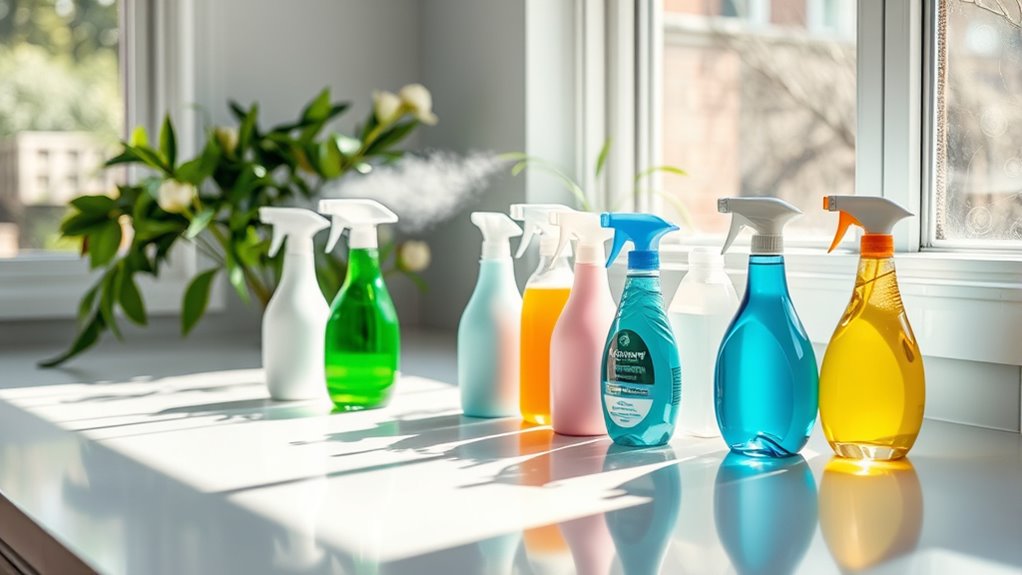
When you think about your home, you might not realize how crucial indoor air quality is to your overall health. Poor air quality can lead to various health issues, and one of the key factors is how effectively you manage air filtration. Consider the common pollutant sources in your home, such as dust, mold, pet dander, and volatile organic compounds from cleaning products. By investing in quality air filtration systems, you can considerably reduce these pollutants, creating a healthier environment. Regularly replacing filters and ensuring proper ventilation also help maintain good air quality. Additionally, incorporating eco-friendly practices in your home can further enhance your indoor environment by reducing the presence of harmful chemicals. In addition, maintaining high contrast ratios in your home cinema setup can improve visual experiences, allowing for better focus on indoor activities and reducing strain on your eyes. Remember, the air you breathe indoors can impact your well-being, so take the necessary steps to ensure it’s clean and fresh for you and your family. Necessary cookies support secure and functional website operations, which can also be crucial for maintaining a healthy home environment. Additionally, utilizing air purifiers can significantly enhance your indoor air quality by targeting specific contaminants.
To maximize effectiveness, be sure to regularly check and clean filters in your air purification system.
Common Harmful Ingredients in Cleaning Products
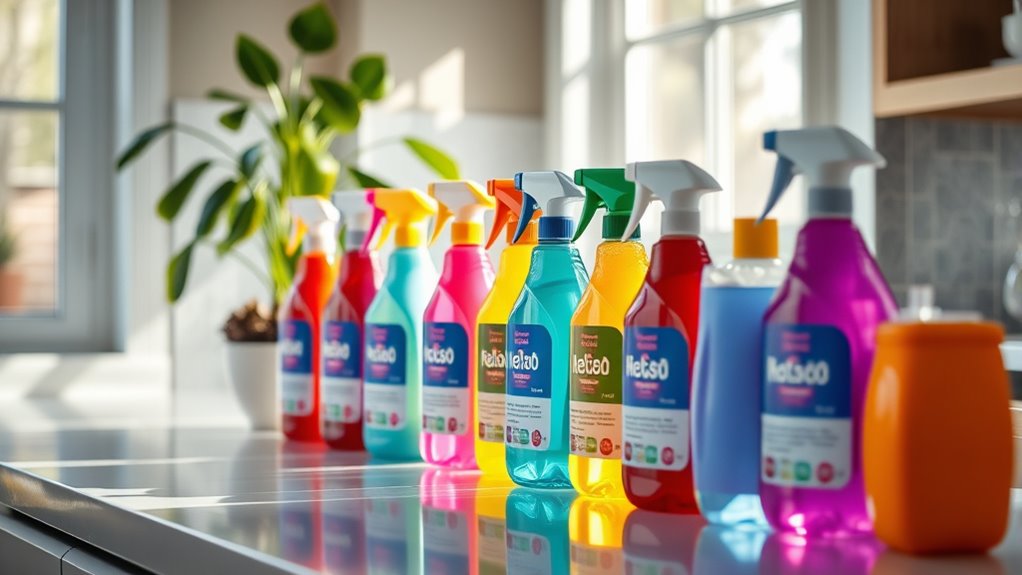
While you might rely on cleaning products to keep your home spotless, many contain harmful ingredients that can negatively affect your indoor air quality. It’s crucial to be aware of what you’re using. Some common harmful ingredients include:
Many cleaning products can harm indoor air quality; it’s essential to know what you’re using for a healthier home.
- Chemical preservatives: These can cause respiratory issues and skin irritations, contributing to poor indoor air quality. Additionally, products with artificial fragrances may contain harmful solvents that exacerbate these effects. Choosing cleaning products with natural ingredients can help maintain a healthier environment. Many consumers are now opting for eco-friendly alternatives that are less likely to contain these harmful substances.
- Artificial fragrances: Often linked to allergies and headaches, they can release volatile compounds into the air.
- Harsh solvents: These can irritate your eyes and throat, contributing to poor air quality.
Choosing products with natural ingredients can help mitigate these risks. Additionally, understanding indoor air quality can empower you to make better choices for your home environment. Always read labels carefully and opt for eco-friendly alternatives to ensure a healthier environment for you and your family. Your cleaning routine doesn’t have to come at the expense of your indoor air quality.
The Impact of Volatile Organic Compounds (VOCs)

When you use cleaning products, you might not realize you’re exposing yourself to volatile organic compounds (VOCs). These chemicals come from various sources, including air fresheners and disinfectants, and can pose significant health risks. It’s essential to understand how VOCs affect your indoor air quality and overall well-being. Additionally, being aware of user consent management can help you make informed choices about the cleaning products you use. Using science-informed guidance can also assist in selecting safer alternatives that minimize VOC exposure and promote a healthier home environment. Choosing products labeled as sulfate-free options can reduce the introduction of harmful chemicals into your living space. Furthermore, the reliance on cloud services for product information can influence your purchasing decisions and awareness of VOCs. As you consider your cleaning habits, integrating smart appliances in your kitchen can also aid in maintaining a cleaner environment with reduced VOC emissions.
Common VOC Sources
Though you might not realize it, many common household items release volatile organic compounds (VOCs) that can profoundly impact indoor air quality. These airborne pollutants can trigger chemical sensitivities and lead to various health issues. It’s essential to be aware of these sources in your home:
- Cleaning products: Many sprays and liquids contain VOCs that evaporate quickly. Additionally, utilizing eco-friendly cleaning solutions can help reduce the presence of harmful VOCs in your home.
- Paints and varnishes: These products off-gas VOCs for extended periods after application.
- Air fresheners: Even seemingly harmless scents can release harmful compounds into your air.
Additionally, the use of energy-efficient cloud servers can contribute to reducing overall emissions, promoting a more sustainable environment.
Health Risks of VOCs
Exposure to volatile organic compounds (VOCs) can lead to a range of health risks that often go unnoticed. You might experience symptoms like headaches, dizziness, or respiratory issues without realizing VOC exposure is the cause. Long-term exposure can contribute to more serious health problems, including liver and kidney damage. If you have chemical sensitivities, your reactions may be even more pronounced, making it vital to identify and reduce your exposure to these compounds. Regularly ventilating your living space and choosing low-VOC products can help protect your health. Staying informed about the VOCs in your cleaning products enables you to make better choices for your indoor air quality and overall well-being. Prioritizing cleaner alternatives can greatly improve your environment.
Fragrances and Their Effect on Health

Have you ever considered how the fragrances in your cleaning products might affect your health? Many people overlook the potential impact of these scents. They can trigger fragrance allergies or exacerbate existing scent sensitivities. When you inhale these artificial fragrances, you may experience various health issues, from headaches to respiratory problems. Here are some important factors to keep in mind:
Consider the impact of cleaning product fragrances on your health; they can trigger allergies and respiratory issues.
- Fragrance chemicals can be respiratory irritants.
- They may trigger allergic reactions in sensitive individuals.
- Long-term exposure could lead to chronic health conditions. Additionally, indoor air quality can significantly deteriorate due to these chemicals if not properly managed. Research shows that certain compounds used in fragrances can also contribute to air quality degradation in your home environment. Furthermore, using products that contain harmful chemicals can exacerbate these issues.
Being aware of the ingredients in your cleaning products can help you make informed choices. Opting for unscented or naturally scented alternatives can considerably improve your indoor air quality and overall well-being. Additionally, attention to detail in selecting cleaning products ensures a healthier home environment, free of harmful chemicals. Using products designed for comfortable, welcoming living spaces can further enhance your quality of life.
Safer Cleaning Alternatives to Consider

When it comes to cleaning your home, you might want to contemplate using natural ingredients that are safer for both you and the environment. DIY cleaning solutions can be effective and easy to make, giving you control over what goes into your products. Let’s explore some simple alternatives that can keep your spaces fresh without harmful chemicals. Additionally, incorporating safe installation practices can further enhance your indoor environment by ensuring that any electrical appliances used for cleaning are set up correctly and safely.
Natural Ingredients Benefits
While many conventional cleaning products contain harsh chemicals that can harm your health and the environment, natural ingredients offer a safer alternative that’s just as effective. By choosing products with plant-based ingredients and chemical-free formulations, you can enjoy a cleaner home without compromising your well-being. Here are some benefits of making the switch:
- Reduced Allergens: Natural ingredients are less likely to trigger allergies or respiratory issues.
- Eco-Friendly: Plant-based products are biodegradable and have a lower environmental impact.
- Safety for All: Natural cleaners are often safe for children and pets, giving you peace of mind.
Embracing these alternatives not only enhances your indoor air quality but also promotes a healthier lifestyle.
DIY Cleaning Solutions
If you’re looking for safer alternatives to conventional cleaning products, DIY cleaning solutions can be a game changer. Creating homemade disinfectants is simple and cost-effective. For a basic disinfectant, mix equal parts water and white vinegar in a spray bottle. This mixture can effectively kill germs on surfaces.
When it comes to tackling tough stains, natural stain removers are your best bet. A paste made from baking soda and water works wonders on carpet stains, while lemon juice can help brighten whites in laundry.
Tips for Maintaining a Healthy Indoor Environment

To maintain a healthy indoor environment, you need to be mindful of the cleaning products you use and how they impact air quality. Opt for natural or non-toxic cleaners, as these minimize harmful emissions. Implementing effective ventilation strategies is vital; open windows or use exhaust fans to improve airflow. Additionally, consider air purification systems to reduce indoor pollutants.
- Use houseplants to naturally filter the air.
- Regularly change HVAC filters to guarantee ideal air quality.
- Schedule routine deep cleanings to eliminate dust and allergens.
Frequently Asked Questions
How Often Should I Clean to Improve Indoor Air Quality?
To improve indoor air quality, you should stick to a regular cleaning schedule. Aim to vacuum and dust at least once a week, and clean surfaces with a damp cloth to reduce allergens. Don’t forget to wash your bedding and curtains monthly, and consider deep-cleaning carpets and upholstery every few months. By staying consistent with your cleaning routine, you’ll see significant air quality improvement in your home, making it healthier for you.
Are Homemade Cleaning Products Safe for Indoor Air?
Homemade cleaning products can be safe for indoor air if you choose your ingredients wisely. Many DIY cleaners use natural components like vinegar and baking soda, which pose fewer chemical risks than commercial cleaners. However, be cautious with essential oils and other additives, as they can still emit volatile organic compounds. Always ventilate your space while cleaning, and test any homemade solution to verify it doesn’t irritate your air quality.
Can Pets Be Affected by Cleaning Products?
Yes, pets can be affected by cleaning products. Many common cleaning agents contain chemicals that pose pet toxin risks, leading to potential poisoning or irritation. If your pet is sensitive, these products might act as allergy triggers, causing respiratory issues or skin reactions. To keep your furry friends safe, always guarantee proper ventilation when using cleaning products, and consider opting for pet-friendly alternatives to minimize any harmful effects on their health.
What Are the Symptoms of Poor Indoor Air Quality?
Imagine stepping into a room filled with a thick fog, where every breath feels heavy. That’s what poor indoor air quality can feel like. You might notice respiratory symptoms like coughing, sneezing, or wheezing, as airborne irritants invade your space. Your eyes may water, and you could feel fatigue or headaches creeping in. If you experience these signs, it’s time to address the air you breathe and find ways to improve your environment.
How Do I Ventilate My Home While Cleaning?
To ventilate your home while cleaning, open windows and doors to create airflow. Use ventilation techniques like exhaust fans in kitchens and bathrooms to help remove pollutants. If possible, run an air purifier to filter out dust and chemicals. You can also clean one room at a time, allowing fresh air to circulate in the rest of your home. This way, you’ll minimize exposure to any harmful particles while keeping your space fresh.
Conclusion
So, as you immerse yourself in the world of cleaning, remember: who needs fresh air when you can have a delightful bouquet of harsh chemicals wafting through your home? Sure, those toxic fumes might give your space a “clean” scent, but your lungs might beg to differ. Instead of turning your living room into a chemical factory, why not embrace safer alternatives? After all, your health deserves a little TLC—tender love and cleaner air!