
Odors come back after you ventilate because stubborn molecules cling to surfaces like walls and fabrics. These odors can re-enter the air when airflow or humidity changes. High humidity magnifies odor retention, making smells linger longer. Ventilation helps but only dilutes odor particles instead of removing them. Many sources like pets, cooking, or cleaning products can contribute to the issue. If you want to know how to effectively manage and neutralize these odors, there are strategies you can adopt.
Key Takeaways
- Odor molecules can cling to walls, fabrics, and other surfaces, re-emerging into the air despite ventilation efforts.
- Ventilation only dilutes odors; it doesn’t eliminate odor-causing particles trapped on porous surfaces.
- Environmental factors like humidity and temperature fluctuations can trigger the release of absorbed odors after ventilation.
- External sources, such as cooking or smoking, can reintroduce odors into the air, compounding the issue after ventilation.
- Relying solely on ventilation allows for the accumulation of settled odor particles, making complete odor elimination difficult.

Air Purifiers for Home with High Efficiency Filter Up to 1076 Ft² for Pet Hair, Odors, Pollen, Smoke, Compact Air Cleaner with 3 Speeds, Timer, Aroma Quiet 360°Intake Filter, White
Effortless Operation: Simplified control panel with intuitive design makes it easy to operate. No complicated setup—just one tap,…
As an affiliate, we earn on qualifying purchases.
As an affiliate, we earn on qualifying purchases.
Understanding Odor Molecules

While you might think that odors disappear after ventilation, understanding odor molecules reveals why they can resurface. Odor molecule behavior plays a vital role in this phenomenon. When you ventilate a space, fresh air dilutes the concentration of these molecules, but it doesn’t eliminate them. The scent molecule interactions with surfaces, like fabrics or walls, can trap these molecules, allowing them to linger. When the airflow decreases or changes, those trapped molecules can re-enter the air, bringing the odors back. Additionally, certain environmental factors, such as humidity and temperature, can influence how effectively these molecules are released. For instance, maintaining better indoor air quality can help in reducing the likelihood of odors resurfacing. Higher humidity levels can exacerbate color accuracy issues by causing materials to release more odor molecules. Furthermore, using air purifiers can significantly reduce the presence of odor molecules in your environment. So, even after a thorough airing out, it’s possible for familiar smells to reappear unexpectedly. Understanding this helps you manage odors more effectively. Maintaining better indoor air quality is key to reducing lingering smells and improving overall comfort in your space.

Activated Charcoal Odor Absorber for Strong Odors in Car, Closet, Shoe, Basement. 10 Activated Charcoal Bags Odor Absorbers for Home. Bamboo Charcoals Air Purifying Bag Charcoals Deodorizer Eliminator
CHARCOAL DEODORIZER BAGS WITH HOOKS. Our 3.5oz bamboo charcoal bag musty smell eliminators are the perfect size to…
As an affiliate, we earn on qualifying purchases.
As an affiliate, we earn on qualifying purchases.
The Role of Volatile Organic Compounds

Volatile Organic Compounds (VOCs) are everywhere, from household cleaners to paints, and they can stick around longer than you might think. These compounds not only linger in your environment but also considerably affect the air quality inside your home. Understanding their sources and persistence can help you tackle those pesky odors that just won’t go away. Additionally, some VOCs can produce strong odors that may resurface even after proper ventilation. For instance, certain types of common household items can release VOCs long after their initial use, contributing to the return of unwanted smells. Regular maintenance of your air purifier, including cleaning filters, can help reduce these odors and improve overall air quality. Investing in a whole-house water filtration system can also enhance the air quality by minimizing water-related VOCs that may contribute to odors in your home.
Sources of VOCs
Many common household products emit volatile organic compounds (VOCs), which can linger in the air long after you’ve finished using them. To keep your indoor air clean, it’s crucial to identify the sources of these pollutants. Here are three common sources of VOCs to consider:
- Air Fresheners: While they mask odors, improper air freshener placement can lead to a buildup of VOCs. Engaging in mindfulness practices can help you become more aware of these pollutants in your environment. Additionally, astrology claims that the perception of beauty can be influenced by various factors, including your surroundings. Regular use of professional cleaning services can also help reduce VOC levels by ensuring that your space is thoroughly cleaned. Understanding the easy conversion tool can help you measure the levels of various pollutants in your environment effectively.
- Cleaning Supplies: Many household cleaners contain VOCs that evaporate into the air during use.
- Paint and Solvents: These products release high levels of VOCs, especially during application and drying.
Additionally, understanding the caffeine content in common beverages can help you make mindful choices about what you consume in your home environment. Being aware of these sources helps with odor source identification, allowing you to take steps for a healthier indoor environment.
Persistence in Environments
Because VOCs can easily evaporate into the air, they often linger in indoor environments long after their initial release. Their persistence is closely tied to odor molecule behavior and surface adhesion. When VOCs are emitted, the odor molecules don’t just float away; they can adhere to various surfaces like walls, furniture, or fabrics. This adhesion allows them to remain in your space, even when you think you’ve ventilated effectively. When conditions change—like temperature or humidity—these molecules can re-evaporate, releasing the odors back into the air. As a result, you might notice unpleasant smells returning after ventilation. Understanding this behavior can help you target the sources of these persistent odors more effectively. Additionally, the high water content in certain raw foods can contribute to moisture in the air, influencing the re-evaporation of these odor molecules. Moreover, the use of energy-efficient cloud servers can enhance air quality management by providing innovative solutions for monitoring indoor environments. In many cases, the best makeup products for sensitive skin can also contain ingredients that help neutralize odors, improving overall air quality in the space. Furthermore, proper deep-sky imaging techniques may offer insights into environmental factors that affect air quality by enabling better monitoring of atmospheric conditions. The integration of smart home technology can also aid in managing indoor air quality by automating ventilation and air purification based on real-time data.
Impact on Indoor Air
Persistent odors in indoor spaces can substantially impact your air quality, primarily due to the presence of volatile organic compounds (VOCs). These compounds can linger even after ventilation, affecting your health and comfort. Here’s how they play a role:
- Air Filtering: Regular air filters may not capture all VOCs, allowing harmful particles to remain in your space. Additionally, certain essential oils, like eucalyptus oil, can help purify the air while providing a refreshing scent. Using specialized filters can enhance filtration efficiency, reducing the presence of VOCs in your environment. Furthermore, passive voice detection can help you identify areas in your writing that may need revision, ensuring clarity and effectiveness in communication.
- Scent Masking: Using air fresheners might temporarily mask odors, but they can introduce additional VOCs, complicating the issue.
- Health Risks: Prolonged exposure to high levels of VOCs can lead to headaches, respiratory issues, and other health concerns. Furthermore, layering textiles in your decor can help absorb some of these compounds, improving overall air quality.
To improve your indoor air quality, consider investing in specialized air filtering systems that target VOCs instead of relying solely on scent masking techniques.

PuroAir MegaFilter – 12x24x1 Air Filter MERV 13 Activated CarbonTech Defense – Heavy Duty 3 Layer Furnace Filters Allergens, Pollen, Dust, Pet Dander, Smoke, Odors – HVAC Air Filter 12x24x1 (1-Pack)
PERFECT FIT FOR 12x24x1: Mega Filter 12x24x1 air filters slide in place for a perfect fit with an…
As an affiliate, we earn on qualifying purchases.
As an affiliate, we earn on qualifying purchases.
How Odors Cling to Surfaces

When you cook or smoke indoors, you might notice that the lingering odors don’t just vanish after you ventilate the space. This happens because odor molecules behave differently than you might expect. They can cling to surfaces like walls, furniture, and fabrics due to a process called surface absorption. When these molecules come into contact with various materials, they embed themselves, making it hard to eliminate the smells completely. Even after air circulation, the absorbed odors can be released back into the air, especially when the temperature changes. So, if you want to keep your space fresh, you’ll need to clean those surfaces thoroughly to remove the odor molecules that have taken residence. Regular cleaning is essential to maintaining your rugs, as fine rugs can also absorb odors and contribute to the overall smell of your home.

DREO Smart Humidifiers for Bedroom, 4L Cool Mist Humidifier
𝐏𝐫𝐞𝐜𝐢𝐬𝐞 𝐀𝐮𝐭𝐨 𝐇𝐮𝐦𝐢𝐝𝐢𝐭𝐲, 𝐕𝐨𝐢𝐜𝐞 & 𝐀𝐩𝐩 𝐂𝐨𝐦𝐦𝐚𝐧𝐝: Stop guessing the right humidity. With enhanced sensing precision for more…
As an affiliate, we earn on qualifying purchases.
As an affiliate, we earn on qualifying purchases.
The Impact of Humidity on Odor Retention

Humidity plays a vital role in how odors linger in your space. When moisture levels rise, surfaces can absorb more odor molecules, making it harder to eliminate unwanted smells. Even with ventilation, high humidity can limit your efforts to clear the air effectively.
Humidity and Odor Molecules
As the air becomes more humid, the behavior of odor molecules changes markedly, making it easier for those scents to linger in your environment. Humidity effects on odor molecule structure can substantially impact how smells are perceived and retained. Here are three key points to consider:
- Increased Solubility: Water vapor allows odor molecules to dissolve more readily, enhancing their presence in the air.
- Slower Evaporation: In humid conditions, the evaporation rate of odor molecules decreases, prolonging their duration in the environment.
- Altered Perception: High humidity can amplify certain scents, making them more noticeable and persistent, even after ventilation.
Understanding these factors can help you effectively manage odors in your space.
Moisture Absorption by Surfaces
Surfaces in your environment can absorb moisture, further influencing how odors are retained. This moisture interacts with various materials, enhancing their ability to trap odor molecules. The level of surface porosity plays a vital role; porous materials like fabric and wood absorb more moisture compared to non-porous surfaces like glass or metal. When humidity rises, these materials undergo material absorption, making it easier for them to hold onto odors. Consequently, even after you ventilate, these surfaces can release trapped smells back into the air. If you want to minimize odor retention, consider using less porous materials and regularly cleaning surfaces to reduce moisture buildup. This proactive approach can help manage odors in your space effectively.
Ventilation Limitations and Effects
While ventilation is essential for improving air quality, it often falls short in combating persistent odors, especially when humidity levels are high. High humidity impacts ventilation effectiveness by altering odor molecule behavior, causing these molecules to cling to surfaces rather than dissipate into the air.
Here are three key points to contemplate:
- Humidity Increases Absorption: Moisture allows odor molecules to bond with materials, making them harder to eliminate.
- Dilution Isn’t Enough: Simply ventilating a space may not sufficiently dilute strong odors in humid conditions.
- Persistent Odor Sources: High humidity can reactivate old odor sources, bringing back smells you’ve tried to eliminate.
Understanding these factors can help you manage odors more effectively in humid environments.
Common Sources of Persistent Odors
Persistent odors can often be traced back to a few common sources that linger in your environment. One major culprit is furniture and fabrics, which can absorb odors over time. Even after you ventilate, these materials can release trapped scents back into the air. Another source is your kitchen; grease and food particles can cling to surfaces, creating a persistent smell that ventilation alone won’t eliminate. Additionally, if you rely on scent masking agents like air fresheners, you might only be covering up the problem rather than addressing it. To truly eliminate these odors, you’ll need to clean or replace items that have significant odor absorption, ensuring a fresher living space.
The Limitations of Natural Ventilation

While natural ventilation can help reduce odors, it often suffers from airflow inefficiencies that don’t effectively circulate air throughout a space. Additionally, odor particles can linger even after you’ve opened windows and doors. You might find that some smells persist despite your best efforts to ventilate naturally.
Airflow Inefficiencies
Natural ventilation can effectively improve indoor air quality, but it often falls short due to airflow inefficiencies. When you open windows or doors, you might expect complete odor removal, yet several factors prevent this.
- Odor Molecule Behavior: Odors can cling to surfaces, making them harder to eliminate through simple airflow.
- VOCs Chemical Properties: Volatile organic compounds (VOCs) can linger in the air longer than you’d think, requiring more than just fresh air to disperse.
- Airflow Patterns: Inefficient airflow may create dead zones where stale air and odors accumulate, undermining your efforts.
These factors highlight why, despite your best intentions, odors often come back after ventilation. Understanding these inefficiencies can help you find better solutions for improving your indoor environment.
Odor Particles Persistence
Even with the best intentions for improving indoor air quality, odors can linger due to the persistence of odor particles. These particles often behave in ways that make them stubborn to remove. When you ventilate, the airflow may not be enough to dislodge all of them, especially those absorbed by surfaces like carpets, walls, and furniture. This surface absorption means that even after you’ve aired out the room, the remaining odor molecules can re-enter the air, creating that familiar unpleasant smell. Additionally, odor molecule behavior can lead to them becoming trapped in porous materials, making it difficult to fully eliminate the source. So, while ventilation helps, it might not be a complete solution if odor particles persist.
The Importance of Air Circulation
Air circulation plays a crucial role in maintaining a fresh and healthy indoor environment. When you guarantee proper air circulation, you promote effective odor dispersion, helping to eliminate lingering smells. Here are three key benefits of good air circulation:
- Improved Air Quality: Fresh air replaces stale air, reducing pollutants and allergens in your space.
- Odor Control: Continuous airflow helps disperse odors more efficiently, preventing them from settling in your home.
- Temperature Regulation: Circulating air helps maintain a consistent temperature, making your home more comfortable.
Effective Odor Neutralization Techniques
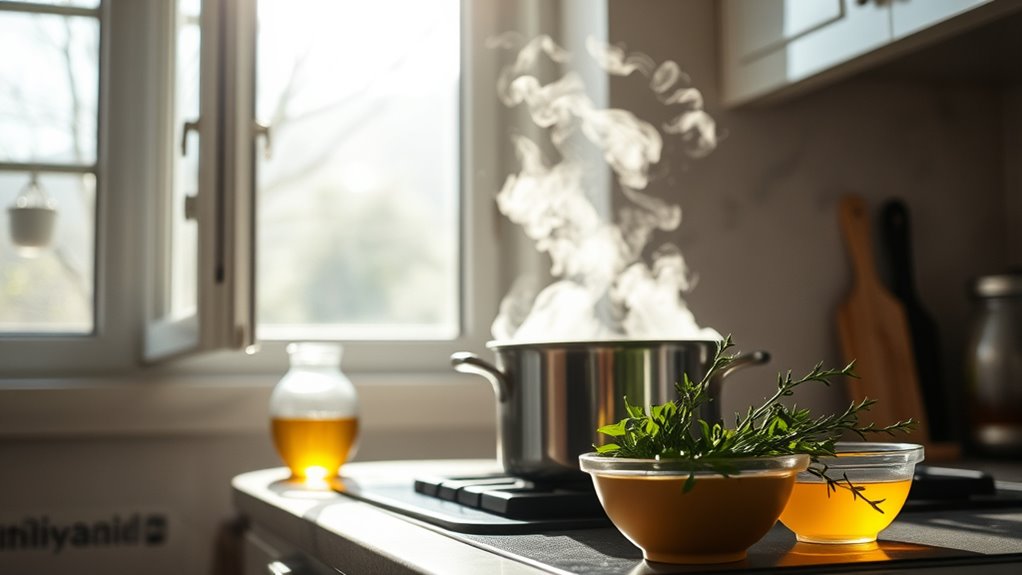
When odors linger in your home despite good ventilation, it’s time to explore effective odor neutralization techniques that really work. First, don’t fall for air freshener myths; they often just mask odors instead of eliminating them. Instead, focus on natural solutions like baking soda or vinegar, which can absorb and neutralize unpleasant smells. You can also use essential oils to create a pleasant atmosphere without resorting to synthetic fragrances. Another technique is to target the source of the odor directly—cleaning carpets, washing fabrics, and ensuring trash is disposed of properly can make a significant difference. Remember, relying solely on odor masking won’t solve the problem; you need to neutralize and eliminate odors for lasting freshness.
Using Air Purifiers to Combat Odors

Although many people rely on traditional cleaning methods to eliminate odors, using air purifiers can substantially enhance your home’s freshness. With advanced air purifier technology, these devices actively filter and neutralize airborne particles, promoting a cleaner environment. Here are three benefits of using air purifiers for odor absorption:
- Effective Filtration: They capture pet dander, smoke, and other odor-causing particles, making your air cleaner.
- Odor Neutralization: Many purifiers use activated carbon filters, which are excellent at absorbing persistent odors.
- Continuous Operation: Running your air purifier consistently ensures that odors don’t have a chance to settle back into your space.
Maintaining a Fresh-Smelling Home Long-Term
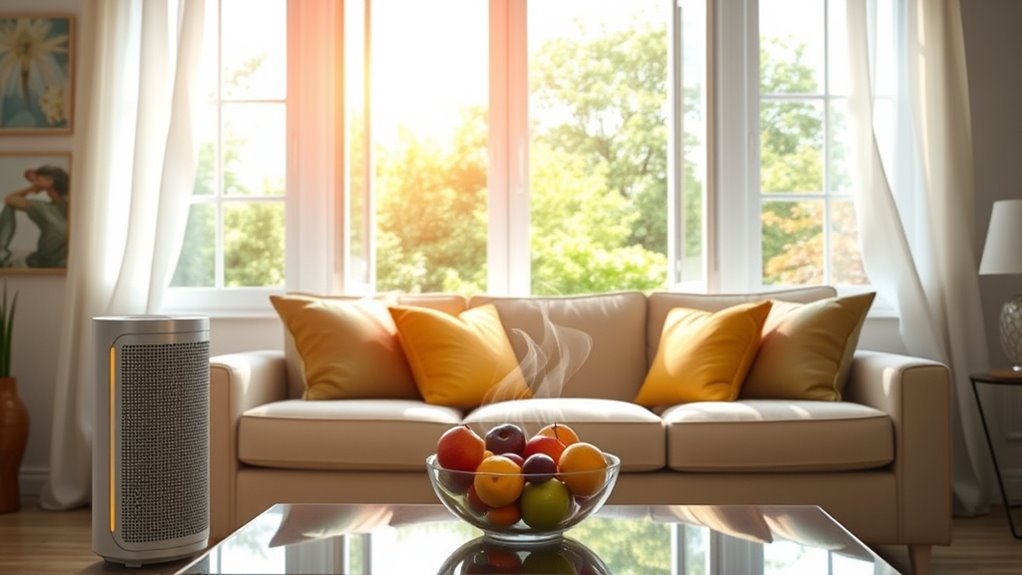
To maintain a fresh-smelling home long-term, it’s essential to adopt a thorough approach that goes beyond just using air purifiers. Start by implementing regular cleaning schedules to tackle dust, pet hair, and spills that can contribute to lingering odors. Focus on high-traffic areas and don’t forget hidden spots like behind furniture or under rugs. Incorporating indoor plants can also help; they not only purify the air but add a touch of nature to your space, promoting a fresher atmosphere. Choose plants like peace lilies or snake plants, which thrive indoors. Finally, keep your home well-ventilated by opening windows when weather permits, allowing fresh air to circulate and flush out unwanted smells. Consistency is key for lasting freshness!
Frequently Asked Questions
Can Cooking Odors Permanently Damage Kitchen Surfaces?
Yes, cooking odors can lead to surface damage over time. When you cook, grease and moisture can settle on surfaces, potentially causing discoloration or deterioration. If you don’t clean regularly, these long-term effects can become more significant, making it harder to restore your kitchen’s appearance. To prevent this, you should clean surfaces promptly after cooking, maintaining their integrity and keeping your kitchen looking fresh and inviting for years to come.
How Often Should I Ventilate to Prevent Odors?
You should ventilate your space at least once every hour to prevent odor buildup. Studies show that proper air exchange can reduce indoor pollutants by up to 50% in just one hour. By allowing fresh air in regularly, you’ll minimize lingering smells from cooking or other activities. Don’t underestimate the importance of good ventilation; it’s essential for maintaining a fresh, inviting environment in your home and keeping odors at bay.
Do Certain Fabrics Hold Odors More Than Others?
Yes, certain fabrics do hold odors more than others. Fabrics with high porosity, like cotton or wool, can trap odors due to their ability to absorb moisture and air. This absorption leads to greater odor retention, especially when exposed to sweat or spills. On the other hand, synthetic fabrics often resist odor better, as they’re less porous and can be treated to repel smells. Choosing the right fabric can make a big difference in odor management.
Can Pets Contribute to Recurring Household Odors?
Yes, pets can definitely contribute to recurring household odors. Their fur and skin shed dander, which often settles into various surfaces, creating odor reservoirs. When you clean or ventilate, it might seem like the smell disappears, but the dander can release odors back into the air over time. Regular grooming and thorough cleaning can help minimize these odors and keep your home smelling fresh. So, don’t forget to keep up with your pet’s hygiene!
What Are the Best Natural Odor Absorbers?
If you’re searching for the best natural odor absorbers, think of your grandma’s old tricks. Plant-based remedies like baking soda and vinegar work wonders. Activated charcoal’s a powerhouse too; it traps odors effectively. Place bowls of these around your home to keep the air fresh. You’ll notice a difference in no time! Incorporating these methods not only helps with smells but also promotes a healthier living space for you and your loved ones.
Conclusion
In the grand dance of your home, odors may seem to waltz back in after you’ve opened a window. But don’t fret; with a little care and attention, you can lead them away for good. Embrace air circulation and consider effective neutralization techniques to keep your space fresh and inviting. By understanding how odors linger and implementing smart strategies, you can create an oasis of pleasant scents that welcomes you home each day.