
TL;DR

Get health and wellness essentials delivered free with Prime
- Fast, free delivery on millions of items
- Prime Video, Amazon Music and more included
- Member-only deals all year
Researchers from Virginia Commonwealth University and Emory University tested HomePal, a home sensor system designed to identify behavior patterns that may be associated with loneliness in older adults. The three-month study involved 70 independently living adults aged 65 and older in metro Atlanta; the researchers are comparing sensor data with loneliness assessments, and have not established the system’s accuracy or that it can diagnose loneliness.
Researchers from Virginia Commonwealth University and Emory University have tested a home sensor system called HomePal that collects information about everyday behavior in older adults’ homes to look for patterns potentially associated with loneliness. The prototype was deployed for three months in 70 homes of adults aged 65 and older living independently in metro Atlanta; its ability to identify loneliness is still being evaluated.
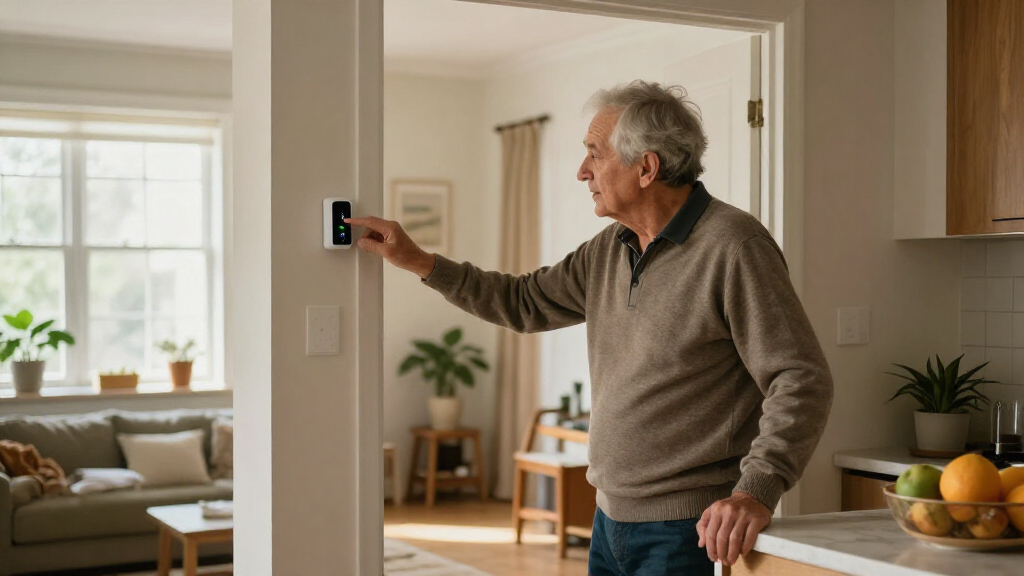
HomePal uses a mix of commercially available and custom sensors to record indicators such as movement, sleep, daily activities and phone use. Motion and door sensors track activity around the home, while smart television plugs estimate screen use. Sleep sensors monitor rest patterns, and smart speakers may collect speech-related information. Phone-call patterns are also being examined as a possible indicator of social connection.
The researchers intend to compare the collected data with loneliness assessments conducted every two weeks. The team is using an AI model to explore which observed behaviors are most closely associated with participants’ reported feelings. The study, published in the journal Assessment, describes development of the system and its data collection; the source report does not provide a validated accuracy result for a loneliness classifier.
The project’s stated aim is to identify changes that could merit a conversation or follow-up from the older adult, family members or care providers. The researchers stress that the system is intended to flag patterns, not make a diagnosis. They are continuing to analyze the data, develop models and adjust the sensors.
Turning Home Routines Into Care Signals
Loneliness can be difficult for health professionals to recognize during an occasional clinic visit, particularly if a patient does not raise the subject. A system that tracks behavior over time could, if later research supports its use, offer caregivers another source of information about changes in an older adult’s routine. The potential value would be in prompting a timely check-in, not replacing a person’s account or a professional assessment.
HomePal’s approach also illustrates a practical tension: continuous monitoring may reveal changes that brief appointments miss, but collecting information about movement, sleep, speech and phone use creates privacy questions. Whether such a tool would help people in practice will depend on its accuracy, how caregivers use alerts, and whether older adults are comfortable with the data collection.
As an affiliate, we earn on qualifying purchases.
How the HomePal Trial Works
The prototype was installed in the homes of 70 adults aged 65 and older who lived independently in the metro Atlanta area. Over three months, it collected household behavior data for comparison with assessments of loneliness administered every two weeks. The source report does not give the study’s participant demographics beyond age and location, or detail how many participants completed the full period.
HomePal combines several sensor types rather than relying on a single signal. The researchers are examining whether patterns across activity, sleep, screen use, speech and calls correspond with what participants report. Mohamed Kamel, the study’s lead author and a computer science doctoral student at VCU, described the goal as finding whether everyday behavior could offer early signs of loneliness or social withdrawal. The project brings together researchers in computer science and nursing, including former VCU nursing professor Chung, who led the assessments.
“The main idea is to see whether everyday behavior at home can give early signs that an older adult may be experiencing loneliness or social withdrawal.”
— Mohamed Kamel, VCU computer science doctoral student and study lead author
sleep monitoring sensors for seniors
As an affiliate, we earn on qualifying purchases.
As an affiliate, we earn on qualifying purchases.
Accuracy, Alerts and Privacy Remain Open
The available report does not state how accurately HomePal can identify loneliness, which sensor signals are most informative, or how often the system might produce misleading alerts. Researchers are still comparing the data with participants’ reported feelings and developing their AI models. The system’s performance across people with different routines, health conditions or living arrangements is also not established in the source material.
Privacy protections are still being considered. Team member Nadeem said the system could be modified to use sensors that process and store data on local networks, and that researchers could choose what information is shared with caregivers. The report does not describe a final product’s data policy, consent process, security design or the specific information that would be retained. HomePal is not presented as a diagnostic device, and a sensor pattern alone cannot confirm that a person is experiencing loneliness.
As an affiliate, we earn on qualifying purchases.
Researchers Continue Model Testing
The team plans to keep analyzing HomePal’s sensor data against the biweekly loneliness assessments, refine its AI models and adjust the device setup as the researchers learn which data may be useful. A key next step is to test how well any model’s results match the assessment responses; the report provides no timeline for completing that work or for a commercial launch.
The researchers have described a possible future product that could be installed around a home and show caregivers or family members a daily score or trend. That remains a goal, not a confirmed product. Further findings would be needed to establish whether such scores are reliable and useful, and how a deployed system would handle consent, privacy and follow-up.
voice-activated smart speakers for seniors
As an affiliate, we earn on qualifying purchases.
As an affiliate, we earn on qualifying purchases.
Key Questions
What is HomePal?
HomePal is a research prototype that combines home sensors to collect information about activity, sleep, screen use, speech and phone patterns. Researchers are studying whether those behaviors may correspond with older adults’ reported loneliness.
Has HomePal been shown to diagnose loneliness?
No. The researchers say the system is intended to identify patterns that may merit follow-up, not diagnose loneliness. Its accuracy has not been established in the report.
Who took part in the HomePal trial?
The prototype was deployed for three months in the homes of 70 adults aged 65 and older who were living independently in metro Atlanta. The team planned to compare sensor data with loneliness assessments collected every two weeks.
What happens to the data?
The research team is analyzing the collected information, but the report does not specify a final data policy for a future product. A team member said HomePal could be adapted to process or store data locally and to limit what is shared with caregivers.
Source: rss
Halloween Picks
halloween
As an affiliate, we earn on qualifying purchases.