
Adding a humidifier to your furnace can boost indoor comfort, improve air quality, and help prevent dry skin and static electricity. However, over-humidification can lead to mold growth and dust mites, so it’s important to observe humidity levels and maintain the unit regularly. Using clean water and checking settings ensures safe, effective operation. Want to discover how to get the most benefits while avoiding common mistakes? Keep exploring for helpful tips.

Get health and wellness essentials delivered free — and shop member deals
- Fast, free delivery on millions of items
- Access to Prime Big Deal Days deals on October 6–7
- Prime Video, Amazon Music and more included
Key Takeaways
- Installing a humidifier on your furnace improves indoor air quality and comfort during winter by adding moisture to dry air.
- Benefits include reducing skin irritation, dry eyes, static electricity, and protecting household items from damage.
- Risks involve over-humidification, mold growth, and bacteria buildup if not properly maintained or monitored.
- Regular cleaning, using distilled water, and maintaining humidity levels between 30-50% ensure safe, effective operation.
- Proper care and monitoring maximize benefits while minimizing potential health issues and home damage.
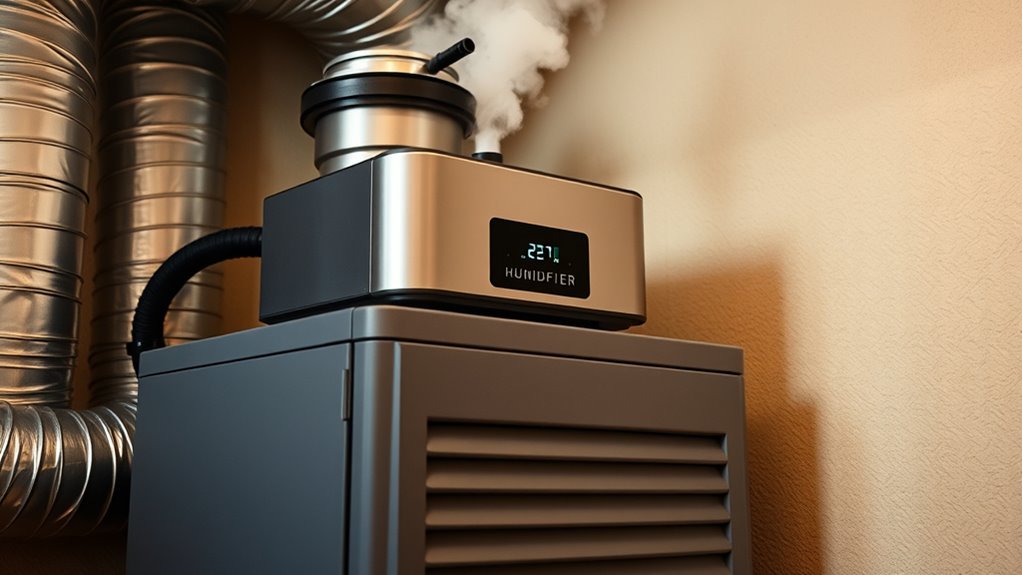
Adding a humidifier to your furnace can considerably improve your indoor air quality and comfort during cold months. When you install a humidifier, you’re fundamentally adding moisture to the dry air that often accompanies heating systems, especially in winter. Dry air can cause skin irritation, dry eyes, sore throats, and respiratory issues. By increasing humidity levels, you’ll find that breathing becomes easier, your skin stays more hydrated, and you may even notice a reduction in static electricity. Furthermore, maintaining ideal humidity can help preserve wooden furniture, musical instruments, and other household items that tend to crack or warp in overly dry environments. Proper humidity levels also support better immune function and reduce the likelihood of colds and respiratory infections.
However, integrating a humidifier into your furnace isn’t without its drawbacks. One potential downside is the risk of over-humidification, which can lead to excess moisture in the air. Too much humidity creates a damp environment conducive to mold growth, dust mites, and bacteria, which can trigger allergies or respiratory problems. If you don’t regularly monitor and adjust the humidity levels, you might end up with more harm than good. Additionally, humidifiers require maintenance—regular cleaning to prevent mold and bacteria buildup—and if neglected, they can become a source of indoor air pollution. Some models may also produce noise, which could be disruptive, especially during sleep.
Proper care and maintenance are crucial to ensure your humidifier functions effectively and safely. You should regularly check the water levels and clean the unit according to the manufacturer’s instructions, typically weekly. Using distilled or filtered water can help reduce mineral buildup and prevent the dispersal of impurities into your indoor air. It’s also important to install a humidity monitor in your home so you can keep humidity levels between 30% and 50%. This range helps prevent the issues associated with both dryness and excess moisture. Setting your humidifier to auto mode, if available, can help maintain consistent humidity without overdoing it. Keeping indoor air quality in check ensures a healthier living environment.
While adding a humidifier to your furnace offers many benefits, it’s essential to stay vigilant about proper operation and maintenance. When used correctly, it can make your home more comfortable, healthier, and protect your belongings. Just remember to regularly check humidity levels, clean the unit, and adjust settings as needed. With these precautions, you’ll enjoy a cozy winter environment that’s less dry, healthier, and more comfortable for everyone in your household.
As an affiliate, we earn on qualifying purchases.
Frequently Asked Questions
How Often Should I Replace the Humidifier Filter?
You should replace your humidifier filter every 1 to 3 months, depending on usage and water quality. Check the filter regularly for signs of dirt, mold, or mineral buildup, and replace it when it looks dirty or clogged. Regular changes guarantee there’s no mold growth and that your humidifier runs efficiently. If you notice decreased moisture output, it’s probably time for a new filter to maintain ideal humidity levels.
Can a Humidifier Cause Mold Growth in My Home?
Yes, a humidifier can cause mold growth if you don’t maintain it properly. Excess moisture creates a damp environment, encouraging mold and bacteria to thrive. To prevent this, you should clean your humidifier regularly, change filters as recommended, and keep indoor humidity levels balanced. Proper maintenance guarantees your home stays comfortable without risking mold issues, protecting your health and home’s integrity.
Is Professional Installation Necessary for a Furnace Humidifier?
You should consider professional installation for a furnace humidifier. For example, a homeowner tried installing it themselves but faced leaks and poor performance. A certified technician ensures proper setup, preventing issues like water damage or mold. They understand the system and local codes, making sure your humidifier operates safely and efficiently. So, investing in expert installation saves you time, money, and potential headaches down the line.
What’s the Ideal Humidity Level for Indoor Comfort?
You should aim for indoor humidity levels between 30% and 50% for ideal comfort. Maintaining this range helps prevent dry skin, irritation, and respiratory issues, especially in winter. Use a hygrometer to monitor humidity accurately. If it’s too low, consider turning on your humidifier or increasing its output. If it’s too high, reduce humidifier settings to avoid mold growth and condensation problems.
How Do I Troubleshoot a Malfunctioning Furnace Humidifier?
Think of your furnace humidifier as a delicate garden needing tuning. First, check the power supply and make certain the water valve is open. Clean any mineral buildup and replace filters if clogged. If it still doesn’t work, inspect the float switch or wiring connections. Sometimes, a quick reset or call to a professional can bring your humidifier back to life, turning your home’s atmosphere from arid to lush.
As an affiliate, we earn on qualifying purchases.
Conclusion
Adding a humidifier to your furnace can improve your home’s comfort and air quality, but it requires proper maintenance to avoid issues. For example, Sarah noticed her skin felt less dry after installing one, but neglecting regular cleaning led to mold growth. By staying attentive to care and monitoring humidity levels, you can enjoy the benefits without the drawbacks. With a little effort, your home stays cozy, healthy, and comfortable all winter long.
As an affiliate, we earn on qualifying purchases.
As an affiliate, we earn on qualifying purchases.
Fall Picks
fall essentials
As an affiliate, we earn on qualifying purchases.