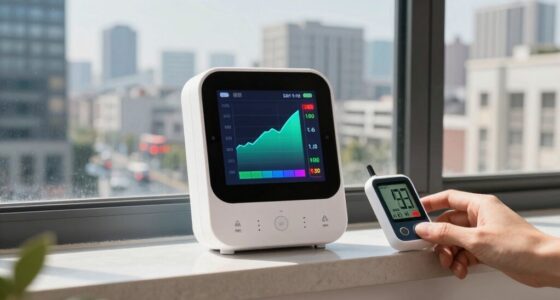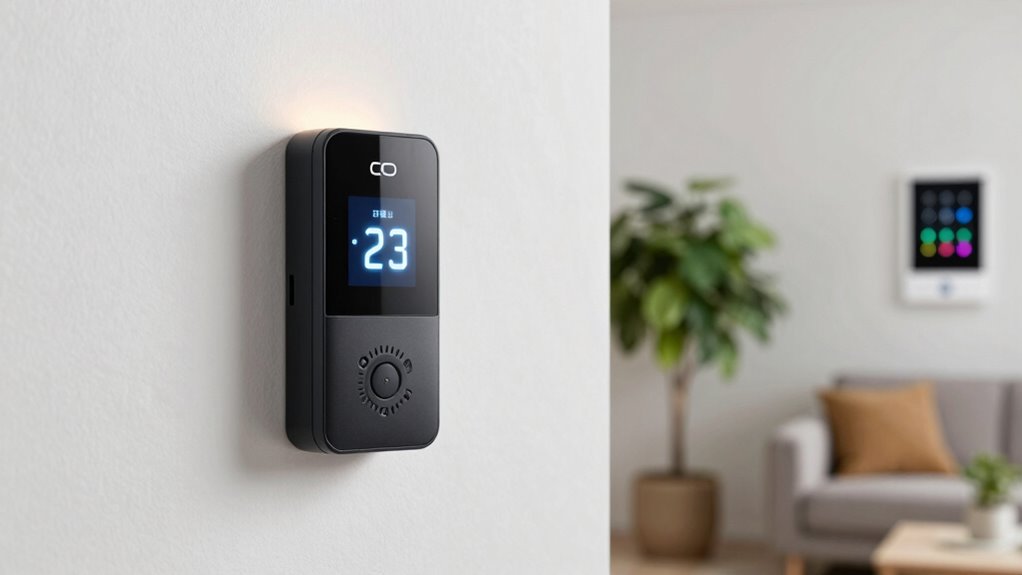

CO detectors and air quality monitors serve different but vital roles in protecting your health. A CO detector warns you of dangerous carbon monoxide levels, which can come from appliances or car exhaust, helping you evacuate or ventilate quickly. An air quality monitor tracks pollutants like VOCs, particulate matter, and humidity, giving you ongoing insights into your environment. To understand how these devices work together to keep you safer, explore more about their functions.
Key Takeaways
- CO detectors specifically identify carbon monoxide gas, providing alarms to prevent poisoning, while air quality monitors measure multiple pollutants for overall air health.
- CO detectors focus on a single, deadly threat, whereas air quality monitors offer comprehensive data on VOCs, particulate matter, humidity, and CO2 levels.
- CO detectors typically have alarm systems for immediate alerts, while air quality monitors provide real-time data without necessarily sounding alarms.
- CO detectors are essential in homes with fuel-burning appliances, whereas air quality monitors are ideal for ongoing environmental assessment in various settings.
- Both devices enhance safety but serve different roles: CO detectors prevent poisoning, while air quality monitors help manage overall indoor air quality.
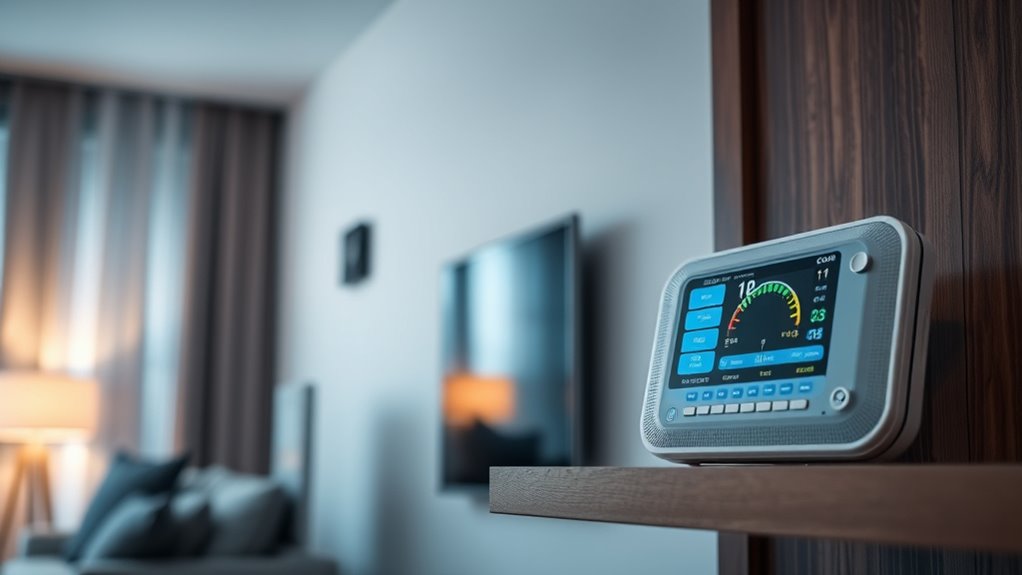
When it comes to ensuring a safe and healthy environment at home or in the workplace, understanding the differences between CO detectors and air quality monitors is essential. Both devices serve important roles, but they are designed to address distinct concerns. A carbon monoxide (CO) detector is primarily focused on identifying the presence of carbon monoxide gas, a colorless, odorless, and potentially deadly substance produced by combustion sources like gas furnaces, water heaters, or car exhaust. When CO levels rise to dangerous levels, the detector sounds an alarm, prompting you to evacuate or ventilate the area immediately. Its job is straightforward: provide early warning for CO poisoning and prevent tragic accidents.
On the other hand, air quality monitors take a broader approach. They assess the overall cleanliness of the air by measuring various pollutants and particles present in the environment. These devices typically track substances like volatile organic compounds (VOCs), particulate matter (PM2.5 and PM10), humidity, temperature, and sometimes even carbon dioxide (CO2). Their purpose is to give you a detailed picture of indoor air quality, helping you identify triggers for allergies, asthma, or general discomfort. For example, if your air quality monitor detects high levels of VOCs from cleaning products or elevated particulate matter from outdoor pollution seeping inside, you can take steps to improve ventilation or reduce pollutant sources. indoor air quality can significantly impact your health and well-being.
Understanding these differences means recognizing each device’s unique job. CO detectors are specialized tools designed to alert you to a specific, deadly threat. They are vital in homes with fuel-burning appliances or attached garages, where CO buildup can occur unnoticed. Air quality monitors, however, are more versatile. They help you monitor ongoing air conditions, identify sources of indoor pollution, and maintain a healthier environment overall. If you’re concerned about combustion gases, a CO detector is your best choice. But if you want to keep tabs on multiple pollutants or improve your indoor air quality, an air quality monitor provides valuable insights.
In essence, both devices aim to protect your health, but they do so through different mechanisms and focus areas. CO detectors act as life-saving alarms for a specific hazard, while air quality monitors serve as comprehensive tools for ongoing environmental awareness. Knowing which one to use depends on your specific needs and the risks present in your environment. By understanding their roles, you can better decide how to safeguard your space effectively.

Feelfunn 8000 BTU Portable Air Conditioner, 3-in-1 Cools 350 Sq.Ft, Quiet AC with Fan & Dehumidifier, LED Display, Remote, 24H Timer, Window Kit, for Bedroom/Office/Dorms
【8000 BTU Fast Cooling】Powerful 8000 BTU ASHRAE (5000 BTU SACC) portable air conditioner cools bedrooms, living rooms, offices,...
As an affiliate, we earn on qualifying purchases.
Frequently Asked Questions
Can a CO Detector Also Monitor Other Indoor Air Pollutants?
No, a CO detector can’t monitor other indoor air pollutants. It’s specifically designed to detect carbon monoxide leaks, providing alerts if dangerous levels are present. If you want to monitor pollutants like dust, VOCs, or humidity, you need a dedicated air quality monitor. These devices measure various airborne contaminants and give you a better picture of your indoor environment’s overall air quality.
How Often Should I Calibrate My Air Quality Monitor?
You should calibrate your air quality monitor at least once every six months. Imagine opening your windows on a fresh spring day—your monitor’s readings might drift over time, just like the breeze shifts the scent of blooming flowers. Regular calibration guarantees your device stays accurate, helping you breathe easier and keep your indoor environment safe. If you live in a polluted area or use your monitor heavily, consider calibrating more frequently.
Are There Portable Options for Both CO Detection and Air Quality Monitoring?
Yes, there are portable options for both CO detection and air quality monitoring. You can find compact devices that easily fit in your pocket or bag, allowing you to monitor CO levels or air quality on the go. These portable units are ideal for outdoor activities, travel, or checking different indoor spaces. Look for models with real-time data, easy calibration, and user-friendly interfaces to get accurate, convenient readings wherever you are.
What Is the Typical Lifespan of a CO Detector?
A typical CO detector lasts about 5 to 7 years. You should regularly check the device for any alerts or malfunctions, and replace it when it reaches its expiration date. Keep in mind that sensors can become less accurate over time, so timely replacement guarantees your safety. It’s a good idea to follow the manufacturer’s recommendations and test the detector monthly to ensure it’s functioning properly.
Do Air Quality Monitors Require Professional Installation?
No, air quality monitors usually don’t require professional installation. You can often set them up yourself by following the manufacturer’s instructions. Most monitors are designed for easy placement, whether on a table, desk, or mounted on a wall. Just make certain you position them in an area representative of your typical indoor environment and avoid obstructions. This way, you’ll get accurate readings without needing professional help.

Uthfy Evaporative Air Cooler, 3-IN-1 Swamp Cooler with 5.3 Gallon Water Tank, 6 Ice Packs, Remote, 12H Timer, 120°Oscillation, Portable Cooling Fan with 3 Speeds for Bedroom Home Office Garage
High-Performance Air Cooling
As an affiliate, we earn on qualifying purchases.
Conclusion
So, whether you’re just trying to avoid a smoky surprise or playing scientist with fancy air gadgets, remember: CO detectors keep you breathing easy when disaster strikes, while air quality monitors let you obsess over every tiny particle. One is the hero in emergencies, the other the over-caffeinated guardian of your indoor air. Choose wisely—after all, one keeps you alive, and the other just makes you feel guilty for that last Netflix binge.

Uthfy 4800 CFM Swamp Cooler, 40IN Evaporative Air Cooler with 10.6 Gal Water Tank, 3 Speeds, 120°Oscillation, 3 Ice Packs, Outdoor Garage Air Conditioner for Patio, Yard, Factory
【Large air volume & wide oscillation】Boasting a huge 4800 CFM airflow and 120° wide oscillation, this portable evaporative...
As an affiliate, we earn on qualifying purchases.

Auertech 48" 6500CFM Swamp Cooler Outdoor, 19 Gal Large Swamp Cooler Air Conditioner with 120°Oscillation, 3 Speed, 8 Ice Pack, Metal Frame Portable Evaporative Air Cooler for Garage, Warehouse
[ 19-Gal Tank & 8 Ice Packs ] Cool longer, refill less! The large swamp cooler with 19-gallon...
As an affiliate, we earn on qualifying purchases.