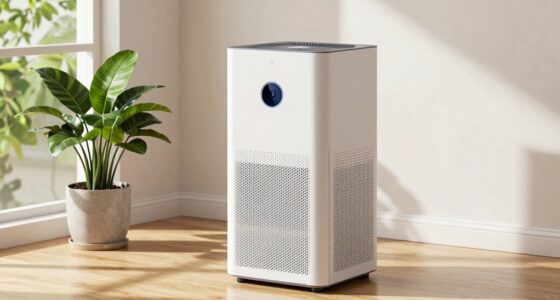
HEPA filters are designed to trap tiny airborne particles and work the same for both smoke and allergies. For smoke, they aim to remove ultrafine particles and often include activated carbon to address odors and VOCs. For allergies, the filters focus on larger allergens like pollen and pet dander. While the technology stays consistent, understanding the different goals helps you choose the right setup—if you keep exploring, you’ll find how to optimize your air quality for your needs.
Key Takeaways
- HEPA filters trap 99.97% of particles as small as 0.3 microns, regardless of the application.
- For smoke, HEPA filters often combine with activated carbon to absorb odors and VOCs.
- Allergies are primarily caused by larger particles like pollen and dust mites that HEPA filters effectively remove.
- Smoke filtration emphasizes tiny ultrafine particles (<0.1 microns), while allergy filtering targets larger allergens.
- Despite the same core technology, filters are optimized based on specific pollutants and desired outcomes.

Have you ever wondered if a HEPA filter works differently for smoke compared to allergies? The simple answer is no. A HEPA filter doesn’t change its fundamental design or function based on what it’s filtering out. Instead, it’s a versatile tool that captures tiny particles, regardless of their source. But the purpose behind using a HEPA filter for smoke versus allergies differs, which influences how effective it feels in your space. When it comes to smoke, you’re dealing with particles that are often much smaller than typical allergens, like pollen or pet dander. Smoke particles can be so tiny that they are considered ultrafine, often less than 0.1 microns. HEPA filters, however, are rated to trap 99.97% of particles as small as 0.3 microns, which includes most smoke particles, though some ultrafine particles might slip through slightly. Still, a high-quality HEPA filter markedly reduces the visible and invisible pollutants in the air, making it easier to breathe during or after a smoky event like a fire or cigarette smoke exposure. High-efficiency filtration technology allows these filters to target the smallest airborne pollutants effectively.
When you’re filtering for allergies, the goal shifts slightly. You want to capture larger particles like pollen, pet dander, mold spores, and dust mites, which are typically bigger than smoke particles. HEPA filters excel here because they can trap these larger allergens efficiently, reducing your symptoms and creating a more comfortable environment. The key difference is that with allergies, you’re often more concerned about the presence of specific allergens that trigger your immune response, so a HEPA filter’s ability to remove these from the air can directly alleviate symptoms. While the filter’s core technology remains the same, the effectiveness can depend on factors like airflow rate, filter quality, and maintenance. For smoke, you might want a purifier with an activated carbon layer combined with HEPA filtration to adsorb odors and volatile organic compounds (VOCs). For allergies, a pure HEPA filter often suffices, as the primary concern is particle removal. So, although both applications rely on the same filtering principle, your goal influences how you choose or prioritize features in an air purifier. Ultimately, whether you’re battling smoke or allergies, a HEPA filter is a powerful tool—but understanding its strengths helps you get the best results for your specific needs.

LEVOIT Air Purifier for Home Allergies and Pets Hair Smokers in Bedroom, H13 True HEPA Filter, 24db Filtration System Cleaner Odor Eliminators, Remove 99.97% Dust Smoke Mold Pollen, Core 300, White
- AHAM Verified for Performance: Independently tested for air quality and efficiency
- Powerful Filtration System: 56W motor with 143 CFM CADR
- Effective for Large Rooms: Cleans 222 sq ft 4.8 times/hour
As an affiliate, we earn on qualifying purchases.
Frequently Asked Questions
Can a HEPA Filter Handle Both Smoke and Allergens Simultaneously?
Yes, a HEPA filter can handle both smoke and allergens simultaneously. HEPA filters are designed to capture tiny particles, including smoke particles and common allergens like pollen, dust, and pet dander. By using a HEPA filter, you can improve indoor air quality for multiple concerns at once. Just guarantee your air purifier has enough capacity and proper filtration stages to effectively combat both smoke and allergens together.
Are There Specific HEPA Filters Designed for High Smoke Exposure?
Yes, there are HEPA filters designed for high smoke exposure. Imagine a filter that acts like a fierce trap, capturing tiny smoke particles before they slip into your lungs. These specialized filters often combine HEPA with activated carbon layers, which absorb smoky odors and chemicals. You’ll want one rated for high dust and smoke loads, ensuring your air stays fresh and safe even during heavy wildfires or prolonged indoor smoke.
How Often Should HEPA Filters Be Replaced for Smoke Versus Allergies?
You should replace your HEPA filter every 6 to 12 months for smoke, especially if you notice persistent odors or reduced air quality. For allergies, it’s best to change it every 12 months or sooner if you see visible dirt or experience symptoms. Regularly check your filter’s condition, and follow the manufacturer’s recommendations. Frequent replacements guarantee peak filtration, whether you’re tackling smoke particles or allergy triggers.
Do HEPA Filters Remove All Types of Smoke Particles?
Did you know HEPA filters can trap 99.97% of particles as small as 0.3 microns? They do remove most smoke particles, including large soot and ash. However, ultrafine particles like some VOCs and gases can slip through. So, while HEPA filters markedly reduce smoke, for complete removal of all smoke components, consider combining them with activated carbon filters.
Are There Differences in Noise Levels Between Filters for Smoke and Allergies?
You might notice noise differences between filters designed for smoke and allergies, but generally, the noise level depends on the fan’s speed and design rather than the type of filter. Higher speeds tend to be louder, regardless of the purpose. If noise is a concern, look for models with adjustable settings or quieter fan technology. Ultimately, both filters operate quietly at lower speeds, so choose one that balances filtration efficiency with your comfort.

MOOKA Air Purifier for Bedroom Home Dorm 430 Ft², Compact HEPA Air Cleaner
- True HEPA Filter with 360° Air Intake: Removes dust, smoke, pollen, pet dander
- Compact & Portable Design: Powered via USB for versatile use
- Universal Voltage Compatibility: Works with 110-240V power sources
As an affiliate, we earn on qualifying purchases.
Conclusion
Ultimately, choosing a HEPA filter tailored to your needs allows you to create a more refined and comfortable environment. Whether it’s gently easing the effects of smoke or subtly enhancing allergy relief, understanding the subtle differences helps you make a wise choice. With the right filter, you’re gently nurturing your space, allowing it to become a sanctuary of cleaner, fresher air. In doing so, you subtly elevate your everyday experience, embracing a quieter, more serene atmosphere.
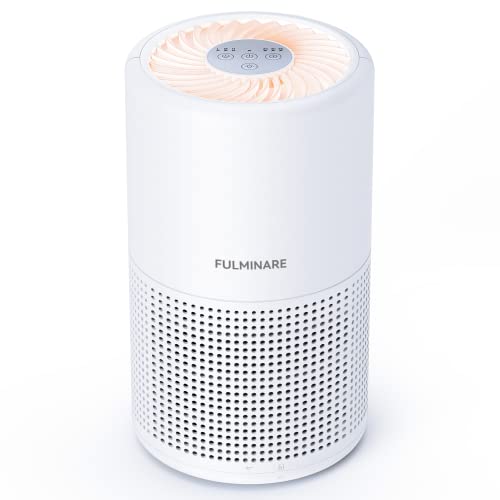
Air Purifiers for Bedroom, FULMINARE H13 True HEPA Air Filter, Quiet Air Cleaner With Night Light, Portable Small Air Purifier for Home, Office, Living Room
- Efficient Particle Filtration: H13 HEPA filter for clean air
- High Circulation Rate: 360° air outlet, refreshes 5x/hour
- Suitable for 215 sq ft rooms: Effective in small to medium rooms
As an affiliate, we earn on qualifying purchases.

VOOPNU Air Purifiers for Bedroom, High Efficiency Filter, 1076 Ft², Black
- Easy-to-Use Control Panel: Intuitive design for simple operation
- Compact and Powerful: Covers 1076 ft² in a small size
- 360° Airflow Design: Ensures even air purification
As an affiliate, we earn on qualifying purchases.