
Humidity problems travel from room to room because moisture naturally moves through the air, walls, vents, and open spaces. When you don’t control the humidity source, it spreads easily, making localized issues harder to manage. Poor insulation and leaks can also allow moisture to migrate, causing hidden mold or damage. To keep humidity in check across your home, understanding how moisture moves is essential—continue exploring to learn how to prevent this from happening.
Key Takeaways
- Moisture-rich air naturally moves through open doors, vents, and gaps between rooms, spreading humidity throughout the home.
- High humidity areas can increase overall moisture levels, causing the problem to migrate to adjacent or connected spaces.
- Lack of proper ventilation allows humid air to flow into cooler, less ventilated rooms, promoting mold growth there.
- Leaks, poor insulation, and structural gaps enable moisture to seep between rooms, facilitating humidity transfer.
- Activities generating moisture, like cooking or laundry, release humid air that disperses throughout the home, affecting multiple rooms.
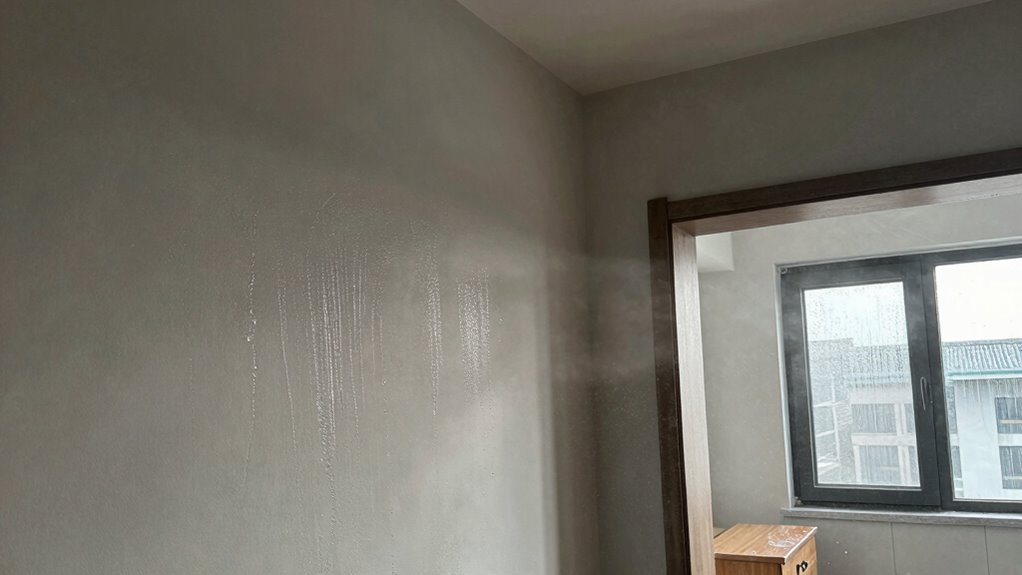
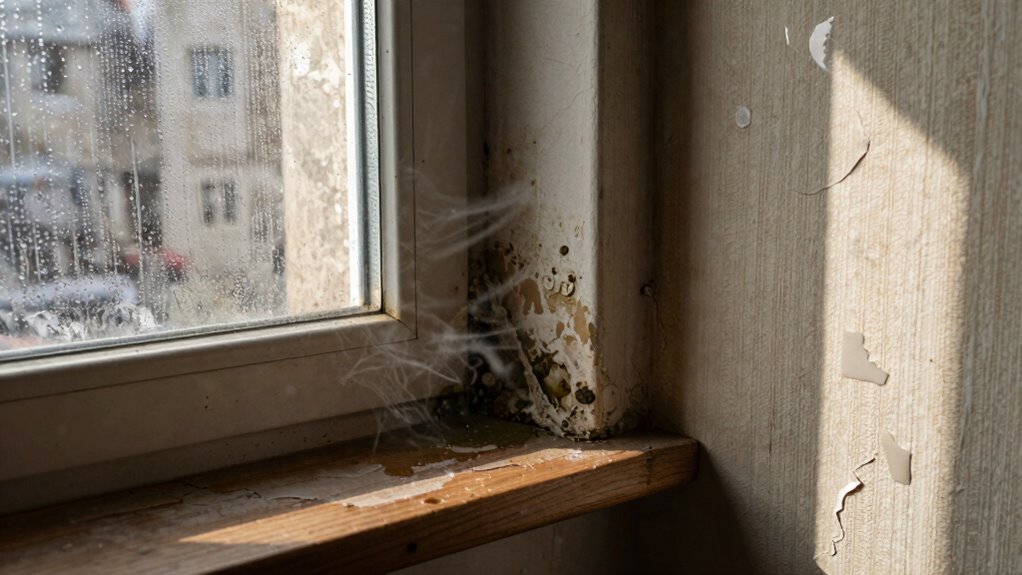
Humidity problems don’t stay confined to just one room; they often spread throughout your home, making it difficult to maintain a comfortable environment. When humidity levels are too high, moisture seeps into walls, furniture, and air, creating an ideal breeding ground for mold and mildew. This moisture doesn’t recognize room boundaries, so if one space has excess humidity, it can quickly affect neighboring areas. That’s why managing humidity isn’t just about fixing one spot — it requires a thorough approach.
High humidity spreads throughout your home, fostering mold and mildew; managing it requires a comprehensive, proactive approach.
One of the most effective ways to control humidity and prevent mold growth is through proper dehumidifier maintenance. If you have a dehumidifier, neglecting regular upkeep can diminish its efficiency, allowing humidity to persist and travel from room to room. You should regularly clean the filters, check for leaks, and ensure the unit is functioning correctly. An efficient dehumidifier keeps moisture levels in check, reducing the chances of mold forming on walls, ceilings, or furniture. When maintained properly, it acts as a barrier, preventing humidity from migrating across rooms. Proper dehumidifier upkeep is essential to keep your entire home dry and mold-free.
But even with a dehumidifier, humidity can still spread if you don’t address the sources of excess moisture. Activities like cooking, laundry, or even breathing can contribute to elevated humidity levels. If these aren’t managed, the moisture will seep into the air and travel through vents, doorways, and open spaces, affecting other rooms. To prevent this, use exhaust fans, open windows when possible, and keep indoor plants in check. These measures help control the moisture source, reducing the overall humidity load in your home. Moisture sources can be tricky to identify, but addressing them is crucial for effective humidity control.
Understanding how humidity travels can also help you implement better mold prevention strategies. Moisture that accumulates in one room can easily migrate to cooler, less ventilated areas, causing hidden mold problems. By maintaining consistent dehumidifier upkeep, you ensure your home’s air stays dry and mold-resistant. Additionally, sealing leaks and improving insulation can keep humidity from seeping into walls and ceilings, which are often hard to dry out once mold begins to develop. Proper ventilation techniques are also essential for controlling indoor air quality.
In essence, controlling humidity isn’t a one-and-done task. You need regular dehumidifier upkeep, attention to moisture sources, and an awareness of how humidity moves through your home. These steps will help you create a healthier, more comfortable living space, free from the risk of mold and dampness spreading from room to room. When you stay proactive, you keep moisture levels in check and protect your home’s structure and your health.

PSOS Dehumidifier, Dehumidifiers for Home, 98 OZ Water Tank, (1000 sq.ft) Quiet Dehumidifier for Basement Bedroom Bathroom with Humidity Display, Auto Shut Off, Relaxing 7 Color Ambient Light(Gray)
【Upgrade High Efficient Home Dehumidifier】PSOS dehumidifier utilize dual semiconductor condensation technology, ensuring quiet operation while effectively extracting moisture…
As an affiliate, we earn on qualifying purchases.
As an affiliate, we earn on qualifying purchases.
Frequently Asked Questions
Can Humidity Issues Affect My Home’s Structural Integrity?
Yes, humidity issues can threaten your home’s structural integrity. Excess moisture encourages mold growth, which damages walls and wooden structures over time. It also leads to furniture damage and can weaken building materials, causing potential structural problems. By controlling humidity levels, you prevent these issues, protecting your home’s foundation and ensuring a healthier, more stable environment. Regular maintenance and proper ventilation are key to avoiding long-term damage.
How Do Outdoor Weather Changes Impact Indoor Humidity Transfer?
Outdoor moisture and weather fluctuations gently influence your indoor environment, often leading humidity transfer between rooms. When outdoor air becomes more humid or dryer, it subtly seeps through windows, doors, or ventilation, balancing indoor moisture levels. As weather shifts, these natural exchanges cause humidity to migrate, making some rooms feel damp or dry. You can manage this by sealing leaks and using dehumidifiers, keeping your home’s comfort steady despite changing outdoor conditions.
Are Certain Building Materials More Prone to Humidity Problems?
Certain building materials are more prone to humidity problems because of their material susceptibility and moisture retention qualities. Materials like drywall, wood, and carpets tend to absorb and retain moisture more than concrete or tile. This moisture can then transfer from room to room, especially if ventilation is poor. To prevent humidity issues, choose materials less vulnerable to moisture and ensure proper insulation and ventilation throughout your home.
What Role Do HVAC Systems Play in Spreading Humidity?
HVAC systems play a significant role in spreading humidity through air circulation and filtration systems. When your system moves air between rooms, it can carry excess moisture, increasing humidity levels elsewhere. Poor filtration may also fail to remove airborne moisture effectively, allowing humidity problems to travel. To prevent this, make sure your HVAC system is well-maintained, with proper filtration and balanced airflow, helping control humidity across all rooms.
Can Household Plants Influence Humidity Levels Between Rooms?
Household plants can influence humidity levels between rooms like tiny fountains, thanks to plant transpiration and indoor evaporation. When plants release moisture, they increase humidity locally, and that moisture can drift into adjacent rooms, especially if doors are open or there’s good air circulation. So, if you notice humidity spreading, your green friends might be unwitting contributors, making your home feel like a tropical getaway or a dry desert depending on their number and type.

Demiwise MERV 8 Air Vent Filters Kit 20×100 Inch|Cut to Fit (60+ Filters) Filter Material,High-Grade Electrostatic Filter Media with 48 Hooks for Home Floor, Ceiling, HVAC Furnace Vents & Grilles
Complete MERV 8 Air Vent Filters Kit:This 20×100 inch 0.2inch ultra-thin & breathable electrostatic filter is premium furnace…
As an affiliate, we earn on qualifying purchases.
As an affiliate, we earn on qualifying purchases.
Conclusion
Just like a whisper carried by the wind, humidity knows no boundaries within your home. When one room’s moisture spirals out of control, it’s only a matter of time before it softly invades the next, weaving a web of dampness. To keep your home’s air balanced, address humidity issues promptly and holistically. Remember, a single drop of moisture can ripple through the entire house, turning a small problem into a widespread one—so stay vigilant.

Zinsser 02774 PERMA-WHITE Mold & Mildew Proof Interior Paint, Quart, Eggshell White
Self-Priming formula – requires no sanding
As an affiliate, we earn on qualifying purchases.
As an affiliate, we earn on qualifying purchases.

TempPro TP50 Digital Hygrometer Indoor Thermometer Room Thermometer and Humidity Gauge with Temperature Humidity Monitor(Previously ThermoPro)
Wellness Indicator: This humidity meter with humidity level icon indicates air conditions – DRY/COMFORT/WET, allowing this humidity sensor…
As an affiliate, we earn on qualifying purchases.
As an affiliate, we earn on qualifying purchases.