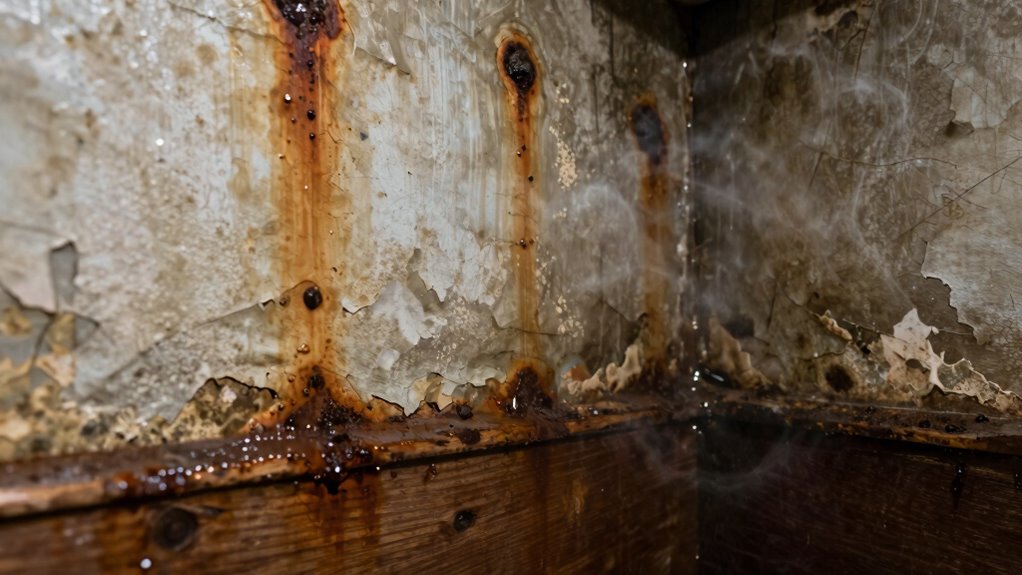

Musty air often begins with excess moisture, not mold panic, because damp environments create the perfect conditions for smells to develop. When humidity levels rise or ventilation fails, moisture traps in corners and walls, leading to musty odors. These smells are signals that your home needs better airflow and moisture control. If you want to understand how to keep your space fresh and mold-free, you’ll find helpful tips that clarify the process.
Key Takeaways
- Musty odors often result from excess moisture, which creates the ideal environment for mold growth.
- Elevated humidity levels trap dampness, leading to musty smells before mold becomes visible.
- Poor ventilation causes moisture buildup, causing odors without immediate mold detection.
- Musty air signals moisture issues that can lead to mold if left unaddressed, not the presence of mold itself.
- Managing indoor humidity and airflow prevents moisture accumulation and reduces the risk of mold development.
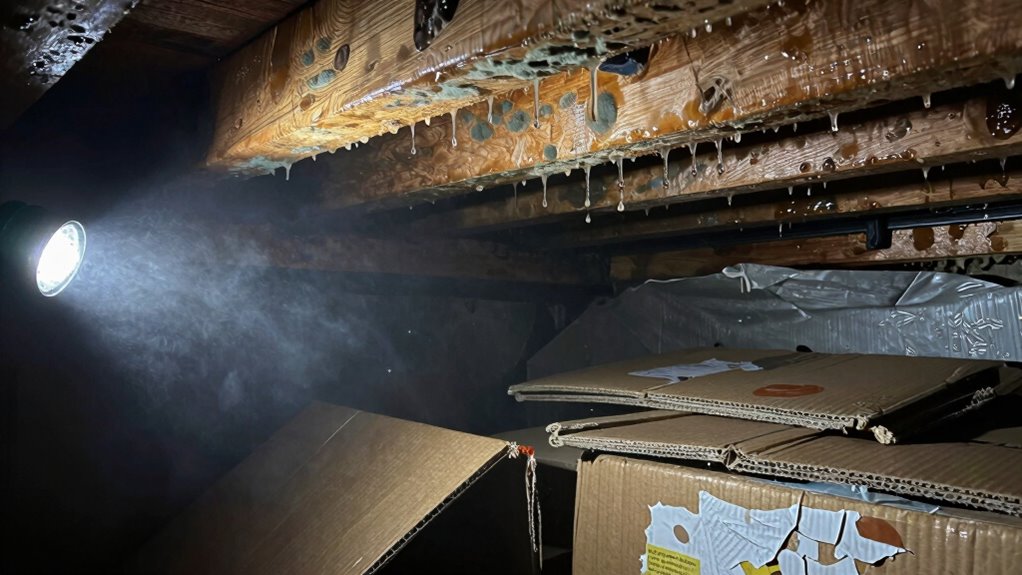
Musty air often begins with excess moisture lurking in your home. When humidity levels rise, they create the perfect environment for musty smells to develop, but this doesn’t always mean you’re facing a mold crisis. Instead, it’s often a sign that your ventilation strategies need attention. Poor airflow traps moisture inside, allowing it to settle in hidden corners, behind furniture, or within wall cavities. To combat this, you should prioritize improving ventilation. Opening windows regularly, using exhaust fans in bathrooms and kitchens, and ensuring your HVAC system circulates air effectively can markedly reduce indoor humidity. Proper ventilation not only disperses stale air but also helps carry away excess moisture, preventing it from lingering and contributing to that damp smell.
Humidity control plays a vital role here. You may not realize it, but maintaining balanced humidity levels—ideally around 30-50%—keeps moisture from becoming excessive. Using dehumidifiers in damp areas like basements or laundry rooms can help keep humidity in check, especially during humid seasons. Simple measures such as fixing leaks, sealing gaps around windows, and insulating pipes also prevent unnecessary moisture intrusion that can elevate indoor humidity. When you actively manage humidity, you’re directly reducing the conditions that lead to musty odors, minimizing the risk of mold growth, and creating a healthier environment for everyone in your home. Additionally, understanding indoor humidity levels can help you better assess when moisture might be a concern before it escalates. Recognizing how moisture intrusion occurs can further empower you to prevent moisture buildup. Being aware of moisture management techniques ensures you’re taking proactive steps to sustain a dry and healthy living space.
It’s helpful to also monitor ventilation effectiveness, as poor airflow can often be an underlying cause of persistent moisture issues. It’s natural to feel alarmed when you notice a musty smell, but often, it’s a sign of humidity issues rather than mold. Mold requires sustained moisture to thrive, and if you address the moisture problem early—by improving airflow and controlling humidity—you can often prevent mold from taking hold altogether.

2500 Sq.Ft Dehumidifier for Basement with Drain Hose Max 34 Pints, VEAGASO Dehumidifiers for Home, Large Room, Bathroom, Bedroom, Three Modes, Intelligent Humidity Control, Dry Clothes, 24HR Timer
Three Smart Modes Dehumidifiers – Our dehumidifier for basements come with 3 smart modes that make choosing between…
As an affiliate, we earn on qualifying purchases.
As an affiliate, we earn on qualifying purchases.
Frequently Asked Questions
Can Musty Air Cause Long-Term Health Issues?
Musty air can contribute to long-term health issues, especially if it’s caused by mold or poor indoor air quality. Breathing in mold spores or allergens may lead to respiratory problems, allergies, or asthma over time. To prevent this, focus on mold prevention by controlling moisture levels and ensuring proper ventilation. Addressing musty air promptly helps maintain a healthy indoor environment and reduces potential health risks.
How Quickly Can Mold Develop After Moisture Exposure?
Mold can develop in just 24 to 48 hours once moisture levels are high enough. When you expose surfaces to sustained dampness, mold growth accelerates at an astonishing rate, transforming from a tiny speck into a full-blown colony. This rapid development underscores how vital it is to control moisture, as even brief exposure can lead to mold taking hold and causing persistent musty odors and potential health hazards.
Are Some Materials More Prone to Mold Than Others?
Yes, some materials are more prone to mold than others. Materials like drywall, carpet, and wood have higher susceptibility because they retain moisture and provide a favorable environment for mold growth. Conversely, mold-resistant materials, such as certain plastics, metal, or treated surfaces, offer better mold resistance. Your choice of materials influences how quickly mold can develop, especially in moist conditions, so opt for those with lower susceptibility for better protection.
What Are the Cheapest Ways to Reduce Indoor Humidity?
To reduce indoor humidity cheaply, consider using dehumidifier options like small portable units or DIY solutions such as silica gel packs. Improve ventilation techniques by opening windows, using exhaust fans, or installing vents in damp areas. These methods help moisture escape, preventing mold growth and musty air. Regularly fixing leaks and avoiding overwatering plants also keep humidity levels low without spending much money.
Can Air Purifiers Eliminate Musty Odors Effectively?
Air purifiers can help reduce musty odors, but they have limitations, especially with persistent smells. They mainly filter airborne particles and may not fully eliminate odors embedded in fabrics or walls. To effectively tackle musty air, use odor absorption methods like activated charcoal or baking soda alongside your air purifier. Combining these approaches improves odor removal, ensuring your indoor air smells fresher and more inviting.

Broan-Nutone® Bathroom Exhaust Fan, 50 CFM Modern Grille, Energy Star Fan, 2.0 Sones
50 CFM BATHROOM EXHAUST FAN: 50 CFM is sufficient ventilation to remove, moisture, odor and pollutants from your…
As an affiliate, we earn on qualifying purchases.
As an affiliate, we earn on qualifying purchases.
Conclusion
So, stay savvy about moisture’s meddling and monitor your moisture levels. By managing dampness and drying out the air, you prevent mold mishaps before they multiply. Remember, moisture’s the main culprit behind musty odors, not mold panic. Stay vigilant, ventilate vigorously, and keep your space dry to dodge damp disaster. Don’t let moisture mold your mood—master moisture management and maintain a fresh, fragrant home free of fuss.

16 in 1 Air Quality Monitor Indoor 7" Large Display 9 AQI+7 Alerts, CO2 Monitor Air Quality Tester for CO2, TVOC, PM2.5 PM1.0 PM10, HCHO Temperature Humidity AQI & Time Air Quality Meter for Home
【16-in-1 Air Quality Monitor Indoor】Experience the ultimate indoor air quality monitoring with our 16-in-1 Air Quality Monitor, offering…
As an affiliate, we earn on qualifying purchases.
As an affiliate, we earn on qualifying purchases.

Weiworld Heat Recovery Ventilator with Ceramic Heat Exchanger, Wall-Mounted Fresh Air System with WiFi/Remote Control for Home, Attic, Garage – Supply, Exhaust & Recirculation Ventilation Fan
Heat Recovery Ventilator (HRV) for single room ventilation: Equipped with a high-efficiency ceramic heat exchanger that recovers up…
As an affiliate, we earn on qualifying purchases.
As an affiliate, we earn on qualifying purchases.