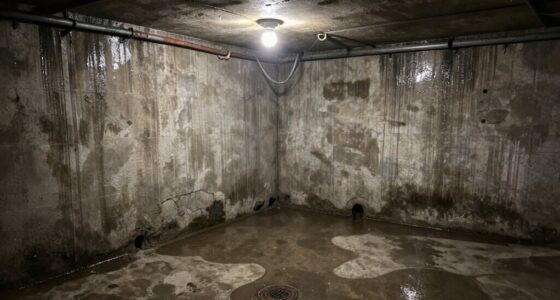
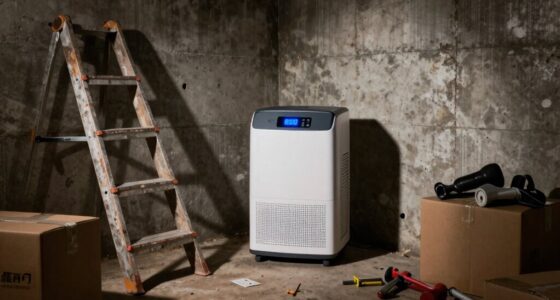
Musty basements usually need more than one fix because moisture, poor airflow, and structural flaws are all interconnected issues. You can’t simply fix one problem, like adding ventilation, without addressing the moisture source or sealing leaks. Effective long-term solutions involve a combination of moisture barriers, ventilation improvements, and structural repairs. By tackling these causes together, you create a dry, fresh space. Continue exploring to discover how these solutions work hand in hand for lasting results.

Get health and wellness essentials delivered free — and shop member deals
- Fast, free delivery on millions of items
- Access to Prime Big Deal Days deals on October 6–7
- Prime Video, Amazon Music and more included
Key Takeaways
- Musty odors are caused by multiple interconnected issues like moisture, mold, and poor ventilation, requiring several solutions.
- Addressing only one problem, such as ventilation, won’t resolve underlying moisture or structural leaks.
- Combining moisture barriers, structural repairs, and ventilation creates a comprehensive, long-lasting solution.
- Fixing structural flaws prevents water intrusion, which is essential alongside moisture control methods.
- A holistic approach targets all interconnected causes to effectively eliminate musty odors and dampness.

Musty basements often require more than one fix because the underlying causes of the odor and moisture issues are usually interconnected and complex. You can’t just remove the smell without addressing the root problems that create it. Moisture build-up, poor airflow, and structural flaws all contribute to that damp, musty scent. To really solve the problem, you need to take a thorough approach that tackles these issues from multiple angles.
One of the most effective starting points is improving ventilation. Poor airflow traps moisture and stale air, making odors linger longer. Installing exhaust fans, upgrading windows, or adding vents can help increase air circulation. With better ventilation, you allow moist air to escape and fresh air to circulate, reducing humidity levels and discouraging mold growth. But ventilation alone isn’t enough because moisture can still seep in through walls or floors, especially if those barriers aren’t properly sealed.
That’s where moisture barriers come into play. These barriers—like plastic sheeting or specialized waterproof paints—are vital to stopping water from penetrating the foundation or walls. By creating a physical barrier, you prevent additional moisture from seeping into the basement, which can noticeably cut down on dampness and mold issues. Properly installed moisture barriers work hand-in-hand with ventilation improvements to keep the environment dry and airy.
However, addressing just one aspect won’t fully resolve the problem. If you only add ventilation without sealing leaks or installing barriers, moisture can still infiltrate from outside or through structural cracks. Conversely, if you only focus on moisture barriers but neglect proper airflow, trapped humidity will continue to foster mold and odors. That’s why a combined effort—installing moisture barriers AND improving ventilation—is essential for a lasting fix.
In some cases, you might also need to repair or replace damaged foundations, fix leaks, or improve drainage around your property. These steps reduce water intrusion at its source, making your other efforts more effective. Combining these repairs with the strategic use of ventilation improvements and moisture barriers creates a multi-layered defense against moisture and odor problems.
Additionally, understanding the interconnectedness of moisture, airflow, and structural integrity can help homeowners develop more comprehensive solutions. Ultimately, solving a musty basement isn’t about applying a quick fix; it’s about understanding how interconnected these issues are and addressing them collectively. By improving ventilation, installing moisture barriers, and tackling structural problems, you give yourself the best chance at a dry, fresh-smelling basement that stays comfortable and healthy over time.
basement moisture barrier waterproof paint
As an affiliate, we earn on qualifying purchases.
As an affiliate, we earn on qualifying purchases.
Frequently Asked Questions
How Long Does It Typically Take to Fix a Musty Basement?
Fixing a musty basement usually takes anywhere from a few days to a few weeks, depending on the severity. You’ll need to improve basement ventilation and install moisture barriers to prevent future issues. First, you’ll clear any existing mold and improve airflow, then seal leaks and add moisture barriers. This process requires time to guarantee proper drying and sealing, so patience is key for a long-lasting solution.
Are There DIY Solutions for Basement Mold Problems?
Dealing with basement mold is no small feat—it’s like fighting an invisible enemy! You can try DIY mold removal by scrubbing affected areas with a mixture of bleach and water, but always wear protective gear. Ventilation techniques are essential; open windows and run fans to dry out moisture. However, for persistent mold, consider professional help, as DIY solutions may not fully eliminate hidden spores.
What Are the Health Risks Associated With a Musty Basement?
A musty basement can harm your health by deteriorating air quality and increasing mold spores in the air. Breathing in mold spores can cause allergic reactions, respiratory issues, and asthma flare-ups. Prolonged exposure may lead to more serious health problems. It’s essential to address the underlying moisture problems and clean mold thoroughly to protect yourself and your family from these risks. Regular ventilation and mold prevention are key to maintaining a healthy basement environment.
How Often Should I Inspect My Basement for Mold?
You should inspect your basement for mold at least once every three to six months. Imagine the faint, lingering basement odor as a warning sign—it’s your cue to check for hidden mold. Use good ventilation strategies, like opening windows or running a dehumidifier, to keep moisture levels down. Regular inspections help catch mold early, preventing health risks and preserving your home’s air quality.
Can Waterproofing Completely Prevent Basement Moisture Issues?
Waterproofing considerably reduces basement moisture issues, but it can’t guarantee complete prevention. You need to enhance basement drainage to divert water away from your foundation and install effective ventilation systems to reduce humidity inside. Combining these measures helps keep your basement dry and mold-free. Regular inspections and maintenance are also essential, as moisture can find other ways in. So, while waterproofing is crucial, it’s not a standalone solution.
basement exhaust fan ventilation kit
As an affiliate, we earn on qualifying purchases.
As an affiliate, we earn on qualifying purchases.
Conclusion
Dealing with a musty basement often requires more than one fix because mold, moisture, and poor ventilation can all contribute simultaneously. Addressing just one issue rarely solves the problem entirely. Did you know that up to 60% of indoor air quality problems stem from mold and moisture in basements? By tackling these issues together—like fixing leaks, improving airflow, and using dehumidifiers—you’ll create a healthier, fresher space that stays dry and mold-free longer.
As an affiliate, we earn on qualifying purchases.
basement dehumidifier with drain
As an affiliate, we earn on qualifying purchases.
As an affiliate, we earn on qualifying purchases.
Fall Picks
fall essentials
As an affiliate, we earn on qualifying purchases.