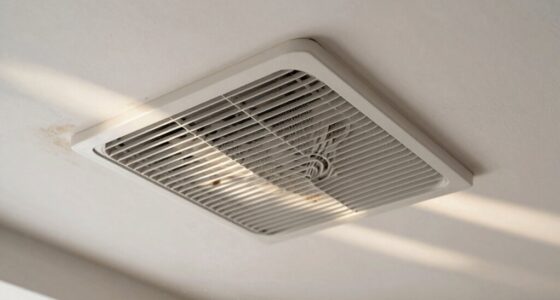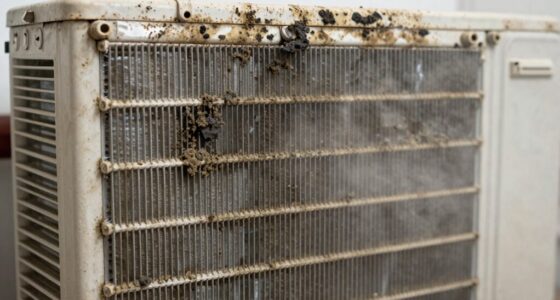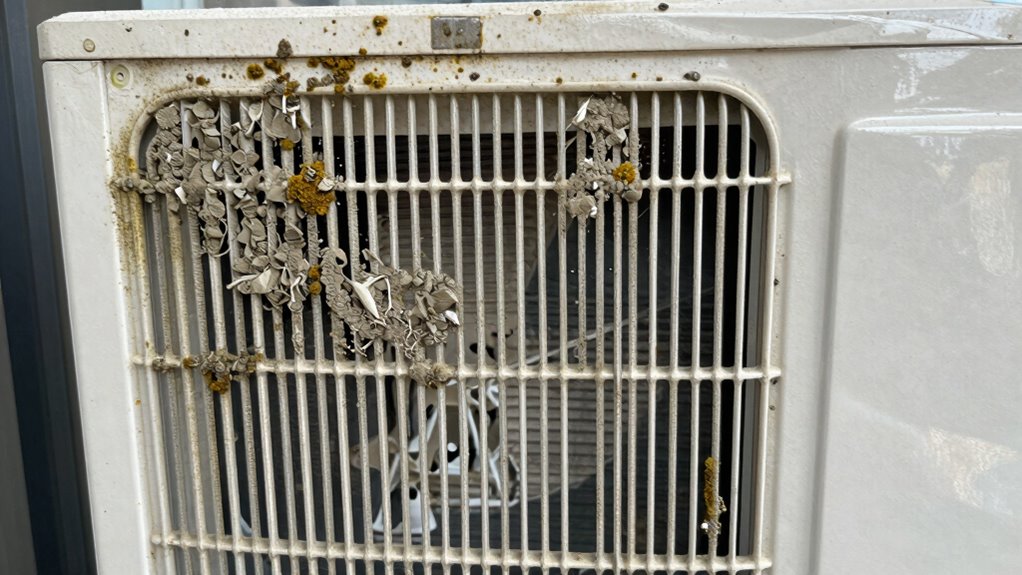

When your coils get dirty, your airflow slows down, causing uneven temperatures and hot or cold spots. Contaminants like mold and dust build up, which can worsen indoor air quality and trigger allergies. Dirty coils force your HVAC system to work harder, reducing efficiency and increasing energy costs. This strain can cause premature wear and tear, shortening your system’s lifespan. Keep your coils clean to maintain steady comfort and airflow—there’s more to discover on how to keep your home healthier.
Key Takeaways
- Dirty coils block airflow, causing uneven indoor temperatures and reduced comfort.
- Grime buildup hampers heat exchange, leading to inefficient cooling or heating.
- Restricted airflow from dirty coils can create hot or cold spots indoors.
- Contaminants on coils increase airborne allergens, affecting indoor air quality and comfort.
- Poor airflow due to dirty coils strains the system, decreasing efficiency and indoor climate stability.

Keeping your air conditioning coils spotless is essential for maintaining indoor comfort. When coils gather dirt, dust, and debris, it directly impacts the air quality inside your space. Poor air quality can cause respiratory issues, allergies, and general discomfort, especially for those with sensitivities. Dirty coils restrict airflow, forcing your system to work harder to circulate air effectively. This not only diminishes your comfort but also leads to increased energy consumption, which can substantially raise your utility bills. By keeping your coils clean, you ensure that your HVAC system performs efficiently, providing consistent cooling without overexertion. Regular maintenance also prevents the buildup of mold and bacteria, which can thrive on dirty coils and further degrade indoor air quality.
Keeping coils clean improves air quality, system efficiency, and overall indoor comfort.
Air quality is a crucial factor in your overall comfort, and dirty coils are a common culprit in degrading it. When coils are coated with grime, they become breeding grounds for mold, bacteria, and other airborne allergens. These contaminants can circulate throughout your indoor environment, exacerbating allergies and respiratory problems. Regular coil cleaning helps remove these harmful particles, improving the air quality and creating a healthier living or working space. You’ll notice fresher, cleaner air, which makes a noticeable difference in how comfortable your environment feels daily.
Energy efficiency is another essential aspect affected by dirty coils. When coils are coated with dirt and debris, heat exchange becomes less effective. Your air conditioner has to work harder to reach and maintain your desired temperature, consuming more energy in the process. Over time, this extra effort can lead to increased wear and tear on your system, potentially shortening its lifespan. By keeping your coils clean, you allow your system to operate at peak efficiency, reducing energy waste and lowering your utility bills. Clean coils also help prevent unnecessary strain on components, minimizing repair costs and extending the overall life of your HVAC system.
Furthermore, a well-maintained coil system ensures consistent airflow throughout your space. When airflow is restricted, certain areas may feel warmer or cooler than others, creating discomfort and uneven temperatures. Clean coils facilitate smooth airflow, helping your cooling system distribute conditioned air evenly. This not only enhances comfort but also maintains a balanced indoor climate, avoiding hot spots or overly cold zones. Proper airflow is also vital for indoor air quality, ensuring contaminants are effectively filtered out and circulated away from occupants. Additionally, regular coil maintenance can prevent the buildup of dirt that may harbor microorganisms, further supporting a healthier environment. Regular inspections and cleanings are crucial for maintaining system efficiency, especially in environments with high dust or pollutant levels.

Finxcel Coil Cleaning Brush for HVAC & AC – Evaporator & Condenser Coil Cleaner Tool, 135° Stainless Steel Pins, Heavy-Duty for Tight Spaces, Safe for Delicate Fins, ACME Pole Compatible
SAVE ON EXPENSIVE HVAC SERVICE CALLS This coil cleaning brush removes dirt and debris from evaporator and condenser…
As an affiliate, we earn on qualifying purchases.
As an affiliate, we earn on qualifying purchases.
Frequently Asked Questions
How Often Should I Clean My Air Conditioner’s Coils?
You should clean your air conditioner’s coils at least once a year, but coil maintenance may require more frequent cleaning if you live in a dusty area or have pets. Regular cleaning frequency helps maintain efficient airflow and cooling. Keep an eye on the coils for dirt buildup, and schedule cleaning based on your environment’s conditions. Proper coil maintenance guarantees your AC runs smoothly and keeps your indoor comfort ideal.
Can Dirty Coils Cause Higher Energy Bills?
Yes, dirty coils can cause higher energy bills because they reduce your air conditioner’s energy efficiency. When coils are dirty, the system works harder to cool your space, increasing power consumption. Regular coil maintenance helps maintain ideal airflow and heat transfer, which keeps your system running smoothly. By keeping your coils clean, you save money on energy costs and extend the lifespan of your AC unit.
What Are Signs of Dirty Coils Affecting Airflow?
You’ll notice signs of dirty coils affecting airflow through coil buildup causing airflow restriction. This often results in reduced airflow from your vents, making your home feel less comfortable. You might also hear your system working harder or notice uneven cooling or heating. When coils are dirty, airflow struggles to pass through efficiently, leading to decreased system performance and increased energy consumption. Regular maintenance can prevent coil buildup and keep airflow smooth.
Are There DIY Methods to Clean Coils Safely?
Yes, you can clean coils safely with DIY coil cleaning tips. Always turn off your system and wear gloves and safety goggles for protection. Use a gentle coil cleaner or a mixture of water and mild detergent, avoiding harsh chemicals. Carefully spray or brush the coils to remove dirt and debris, ensuring proper airflow. Follow all DIY safety precautions to prevent damage or injury, and consider consulting your unit’s manual for specific instructions.
How Do Dirty Coils Impact Indoor Air Quality?
You might be surprised to learn that dirty coils can increase airborne pollutants by up to 50%, worsening your indoor air quality. When coils are grimy, they trap dust, mold, and bacteria, which then circulate in the air you breathe. Additionally, coil corrosion from dirt buildup can release particles that further pollute the air. Regular cleaning helps reduce these pollutants, keeping your indoor environment healthier and fresher.
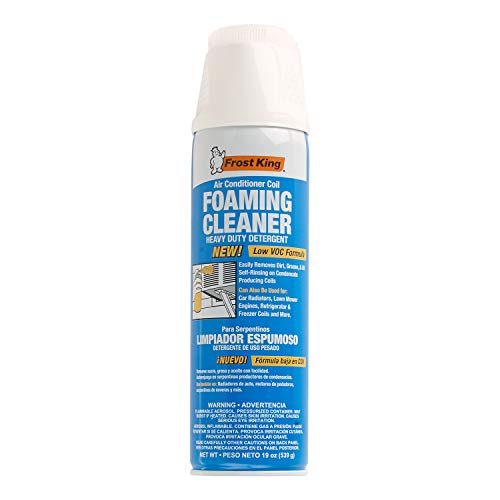
Frost King ACF19 Foam Coil Cleaner, 1.18 Pound (Pack of 1), 19 Ounce
Heavy-duty foam dissolves stains, removes grease & oil, and loosens dirt
As an affiliate, we earn on qualifying purchases.
As an affiliate, we earn on qualifying purchases.
Conclusion
Neglecting to clean your coils can profoundly impact your indoor comfort, reducing airflow and efficiency. Dirty coils block heat transfer, causing your system to work harder and raising energy bills. Remarkably, studies show that clogged coils can decrease airflow by up to 30%, making your home less comfortable and increasing wear on your system. Regular coil maintenance not only improves airflow but also extends the lifespan of your HVAC, saving you money in the long run.

gohantee Hvac Service Wrench Tools Air Conditioner Valve Ratchet Wrench 3/16” to 3/8” 5/16'' x 1/4'' with 2 Hexagon Bit Adapter Kit for Air Refrigeration Tools and Equipment Repair Tools Clearance
[Hvac Service Wrench] Air conditioning wrench with 4 different sizes: 3/16" 1/4" 5/16" and 3/8". Quick-flip reversing lever…
As an affiliate, we earn on qualifying purchases.
As an affiliate, we earn on qualifying purchases.

BERlOVE Foaming AC Coil Cleaner: High-Efficiency Formula, Quick Dust Removal, Ideal for Dust & Grease Removal on Evaporator Coils & Condensers for HVAC Technicians & DIY Use 3-Pack
Powerful Foaming Action for Deep, Efficient Cleaning:BERlOVE Foaming AC Coil Cleaner, features advanced high-expansion foam technology that penetrates…
As an affiliate, we earn on qualifying purchases.
As an affiliate, we earn on qualifying purchases.