
The “Fan On” thermostat setting can be quite helpful for improving indoor air quality. It keeps air circulating continuously, which helps filter out dust, allergens, and odors, creating a more comfortable home environment. However, it may lead to higher energy bills and uneven temperatures if not managed properly. Regular maintenance and smart usage can optimize benefits. If you’re curious about how to maximize your HVAC system’s efficiency, there’s more essential information to weigh.
Key Takeaways
- The “Fan On” setting improves air circulation and indoor air quality by continuously filtering dust and allergens.
- Continuous fan operation helps maintain consistent temperatures, reducing hot and cold spots in the home.
- It can increase energy consumption and utility bills compared to the “Fan Auto” setting, so efficiency should be considered.
- Regular HVAC maintenance is crucial to prevent issues like uneven temperatures and excessive dust circulation with continuous fan use.
- Humidity control is essential; maintaining levels between 30-50% ensures comfort and optimal HVAC performance when using the fan continuously.
Understanding the “Fan On” Setting
When you set your thermostat to “Fan On,” the fan runs continuously, regardless of whether your heating or cooling system is actively working. This setting can help circulate air throughout your home, but it also means that your HVAC system works harder to maintain the desired temperature. Regular HVAC system maintenance is vital to guarantee everything operates efficiently under this setting. If you notice unusual noises or inconsistent temperatures, you might need to check your thermostat calibration. An improperly calibrated thermostat can lead to unnecessary energy usage and discomfort. Understanding how the “Fan On” setting impacts your HVAC system helps you make informed choices about your home’s climate control, ensuring peak performance and comfort year-round. Additionally, using proper maintenance techniques for your HVAC system can assist you in finding professional HVAC services for maintenance and repairs. Proper maintenance can also enhance your system’s overall efficiency, leading to a more comfortable living environment and reduced energy costs. Running the fan continuously can improve air quality by helping to filter out dust and allergens, contributing to a healthier home environment. Moreover, maintaining your HVAC system can significantly improve energy efficiency, leading to lower utility bills and a more sustainable home.
Benefits of Using the “Fan On” Setting
Using the “Fan On” setting can considerably improve air circulation in your home, making every room feel more comfortable. It also helps with humidity control, preventing dampness that can lead to mold growth. By keeping the fan running, you create a more consistent and pleasant indoor environment. Additionally, this setting can enhance HVAC optimization, allowing your heating and cooling systems to operate more efficiently and effectively. Furthermore, maintaining a comfortable environment is crucial for senior care, as it can significantly impact the well-being of older adults living in your home. Keeping the air clean with air purifiers can further enhance your home’s air quality, contributing to a healthier living space. Moreover, ensuring proper airflow dynamics can lead to better temperature regulation throughout your home. In fact, modern smart appliances can be integrated with your HVAC system to optimize performance and energy efficiency.
Improved Air Circulation
By opting for the “Fan On” setting, you can considerably enhance air circulation throughout your home. This setting allows your system’s fan to run continuously, distributing air more evenly across all rooms. Here are some benefits you’ll enjoy:
- Consistent temperatures: Smart thermostats can help maintain balanced temperatures, reducing hot or cold spots. Additionally, utilizing energy-efficient cloud servers can help optimize your home’s energy consumption. This is similar to how safer riding habits can improve your experience when commuting on e-bikes or e-scooters. Furthermore, employing performance cookies can help analyze and improve your website’s functionality.
- Improved air quality: Continuous airflow helps filter dust and allergens, contributing to a healthier environment.
- Enhanced comfort: You’ll feel more comfortable as the air circulates, making seasonal adjustments less drastic.
- Energy efficiency: While it may use more energy, the improved circulation can lead to lower heating and cooling costs in the long run.
Additionally, maintaining consistent airflow can support eco-friendly natural pools in outdoor spaces by reducing humidity levels. Embrace the “Fan On” setting for a cozier and fresher living space.
Enhanced Humidity Control
While the “Fan On” setting can seem like a simple adjustment, it considerably enhances humidity control in your home. When you keep the fan running continuously, it helps to circulate air more effectively, preventing moisture buildup in specific areas. This is especially beneficial during humid months when excess moisture can lead to mold growth or discomfort. If you have a smart thermostat equipped with humidity sensors, it can automatically adjust your system based on the humidity levels it detects. By using the “Fan On” setting, you’re not just maintaining a cooler environment; you’re also creating a healthier living space. Additionally, maintaining proper airflow is crucial to optimize the performance of your air purification system, as effective voiceover techniques can enhance the overall quality of your indoor ambiance. Furthermore, studies show that sound therapy can reduce anxiety and promote relaxation, which can be beneficial in a comfortable indoor environment. Moreover, financial education can empower homeowners to make informed decisions about their energy usage and home maintenance. Furthermore, using protective styling techniques like crochet can help ensure that your indoor spaces remain comfortable during high humidity. So, consider this setting as a simple yet effective way to manage humidity levels effectively.
Potential Drawbacks of the “Fan On” Setting

While the “Fan On” setting can improve air circulation, it also comes with some drawbacks you should consider. You might notice increased energy consumption, leading to higher utility bills. Additionally, this setting can cause uneven temperature distribution and circulate excessive dust throughout your home. Furthermore, maintaining proper water chemistry is essential for ensuring the overall comfort and safety of your indoor environment. Creating a calm, clutter-light home can also enhance your overall indoor experience. It’s also worth noting that proper air filtration systems can significantly reduce the amount of dust and allergens in your living space. It’s also important to remember that seasonal checklists can help you manage and mitigate these potential issues effectively.
Increased Energy Consumption
Using the “Fan On” setting may seem like a great way to maintain consistent airflow throughout your home, but it can lead to increased energy consumption. When you leave your fan running continuously, you’re likely to notice a spike in your energy bills. Here are some energy-saving tips to contemplate:
- Use Smart Thermostats: They can optimize your HVAC system’s efficiency.
- Limit Fan Usage: Only run the fan when necessary to avoid waste.
- Regular Maintenance: Ensure your HVAC system is running efficiently to save energy.
- Set Timers: Use timers to control when the fan operates, reducing unnecessary energy use.
Uneven Temperature Distribution
When you set your thermostat fan to “On,” you might inadvertently create uneven temperature distribution throughout your home. This happens due to altered airflow patterns that can lead to some rooms feeling warmer or cooler than others. If your thermostat isn’t calibrated correctly, it can exacerbate these inconsistencies.
| Room | Temperature | Airflow Pattern |
|---|---|---|
| Living Room | 72°F | Strong |
| Bedroom | 68°F | Weak |
| Kitchen | 75°F | Moderate |
| Bathroom | 70°F | Variable |
Excessive Dust Circulation
Setting your thermostat fan to “On” can lead to excessive dust circulation in your home, especially if you have pets or live in a dusty environment. This constant airflow can stir up allergens and debris, impacting your indoor air quality. To manage this issue, consider the following:
- Regular Air Filter Maintenance: Change your air filters frequently to capture dust before it circulates.
- Optimize Thermostat Placement: Ensure your thermostat isn’t near vents or windows, where dust accumulates more.
- Use HEPA Filters: Upgrade to high-efficiency filters that trap smaller particles.
- Clean Your Home: Regularly dust and vacuum to minimize allergens that get circulated.
How the “Fan On” Setting Affects Energy Efficiency
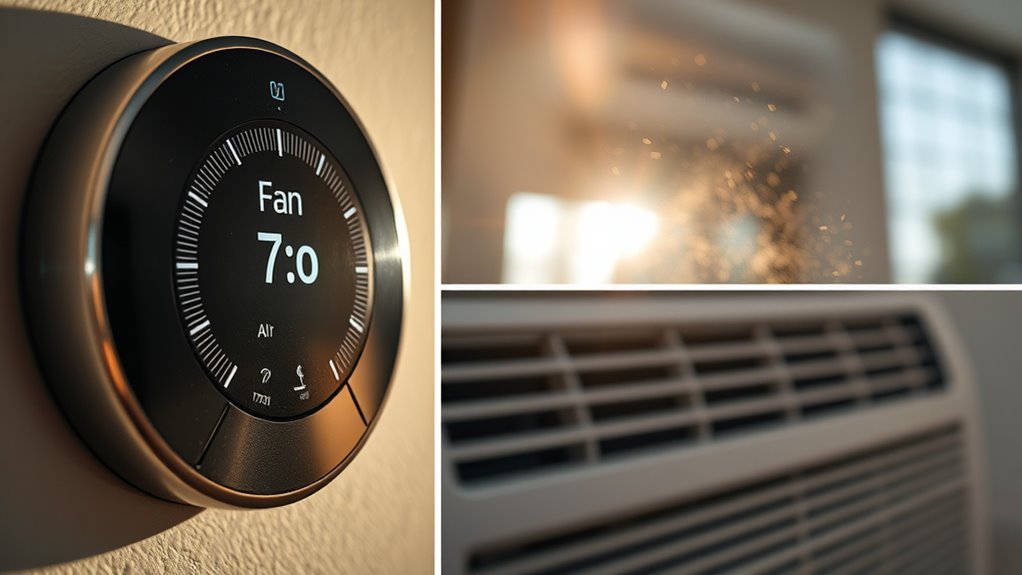
Although many homeowners may not realize it, the “Fan On” setting on your thermostat can considerably impact your energy efficiency. When you choose this setting, the fan runs continuously, which can lead to increased energy consumption. While it helps with thermostat calibration by maintaining a more consistent temperature, it also generates more fan noise, potentially making your living space less comfortable.
Here’s a quick comparison of energy efficiency with different fan settings:
| Setting | Energy Usage |
|---|---|
| Fan On | High |
| Fan Auto | Moderate |
| Cooling Only | Low |
| Heating Only | Low |
| Off | None |
Choosing the right fan setting can improve your energy efficiency and save you money on utility bills.
Impact on Indoor Air Quality

Choosing the “Fan On” setting can substantially impact your indoor air quality. By keeping the fan running continuously, you can enhance the effectiveness of your air purifier and promote better circulation of air throughout your home. Here are a few ways it can benefit you:
Choosing the “Fan On” setting boosts air purifier efficiency and improves air circulation in your home.
- Consistent Filtration: The continuous operation helps filter out dust, allergens, and pollutants.
- Allergy Relief: A steady airflow can reduce allergens like pollen and pet dander, providing much-needed relief.
- Temperature Balance: It promotes uniform temperature distribution, preventing hot or cold spots.
- Odor Reduction: The constant movement of air helps disperse and minimize unpleasant odors.
The Role of Humidity in Temperature Regulation

Humidity plays a crucial role in how you feel temperature-wise in your home, as it directly affects your comfort and the efficiency of your HVAC system. Proper humidity control helps maintain a temperature balance that keeps you comfortable year-round. When humidity levels are too high or too low, you might feel hotter or colder than the actual temperature.
| Humidity Level | Comfort Level | HVAC Efficiency |
|---|---|---|
| Low (<30%) | Dry and uncomfortable | Poor cooling |
| Ideal (30-50%) | Comfortable | Prime performance |
| High (>50%) | Muggy and sticky | Increased strain |
Comparing “Fan On” to “Fan Auto” Settings
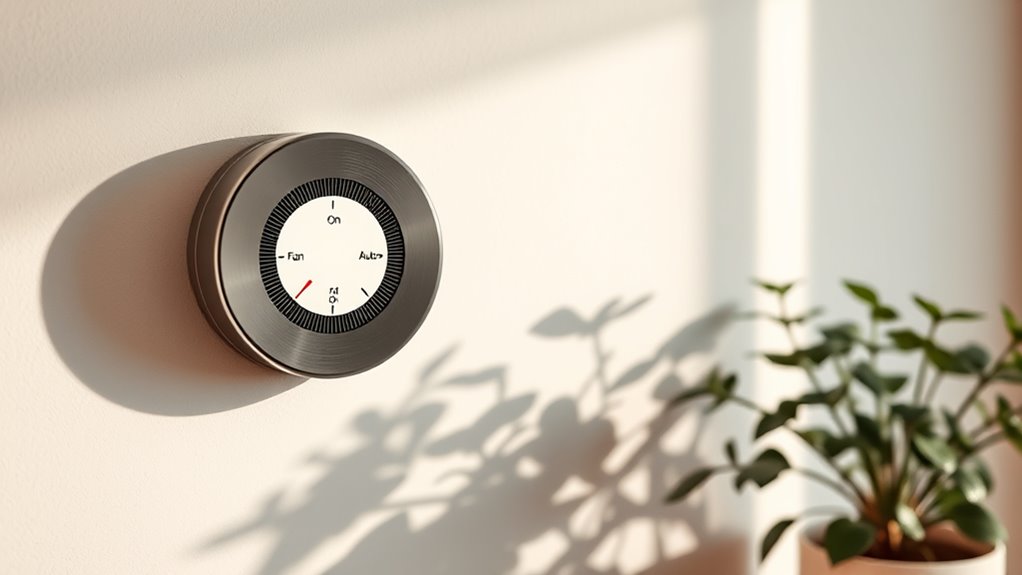
Understanding how humidity impacts your comfort can help you make informed decisions about your thermostat settings. When comparing “Fan On” to “Fan Auto,” consider these key points:
Humidity plays a crucial role in your comfort, influencing thermostat settings and air quality.
- Air Quality: “Fan On” circulates air continuously, improving air quality, while “Fan Auto” runs only when cooling or heating.
- Humidity Control: “Fan On” can trap humidity, making it feel warmer, whereas “Fan Auto” helps reduce humidity levels by cycling the fan.
- Energy Efficiency: “Fan Auto” is generally more energy-efficient, saving you money on utility bills compared to constant fan operation.
- Air Filter Maintenance: Both settings require regular air filter maintenance, but “Fan On” may necessitate more frequent checks due to continuous use.
Recommendations for Optimal Thermostat Use

To optimize your thermostat use, start by setting it to a comfortable temperature that matches your lifestyle. Consider investing in a smart thermostat; it can learn your schedule and adjust accordingly, ensuring maximum comfort and energy savings. During the day, when you’re not home, raise the temperature a few degrees to save on cooling costs. At night, lower it for better sleep quality. Use the fan setting wisely—if you choose “Fan On,” remember it runs continuously, which can increase energy use. Instead, use “Fan Auto” for efficiency. Regularly check and replace filters to maintain airflow and system efficiency. By following these recommendations, you’ll enjoy a comfortable environment while keeping energy costs down.
Making the Right Choice for Your Home
When deciding on the best thermostat settings for your home, consider how your family’s daily routine impacts your comfort and energy usage. Effective thermostat programming can make a big difference, so keep these tips in mind:
- Set a Schedule: Program your thermostat to match your family’s daily activities, reducing energy when you’re not home.
- Use the Fan Setting Wisely: Decide if the “Fan On” setting benefits your air circulation without raising energy costs.
- Regular HVAC Maintenance: Keep your system running efficiently with routine check-ups and filter changes.
- Monitor Your Energy Bills: Track changes in your bills to see if your settings are working as intended.
Frequently Asked Questions
How Does the “Fan On” Setting Affect My HVAC System Lifespan?
The “fan on” setting can impact your HVAC system’s lifespan by increasing component wear. While it helps maintain consistent temperatures and improves air quality, it may reduce system efficiency over time. With the fan running continuously, components like the blower motor experience more strain, leading to potential breakdowns. To balance comfort and longevity, consider using the “auto” setting during less extreme weather while reserving “fan on” for specific needs.
Can Using “Fan On” Increase Noise Levels in My Home?
When you flip the switch to “fan on,” it’s like inviting a constant hum into your home. While the fan operation keeps the air circulating, it does ramp up HVAC noise levels. You’ll hear that gentle whirring, which can be soothing or annoying, depending on your preference. If you crave quiet, consider the trade-off; you might find that the peaceful silence starts to feel like a distant memory with the fan running continuously.
Is the “Fan On” Setting Suitable for All Climates?
The “fan on” setting isn’t suitable for all climates. In humid areas, it can increase moisture in your home, leading to mold growth. However, in dry climates, it helps with air circulation and can improve comfort. Consider energy efficiency too; running the fan constantly can raise your energy bills. Assess your climate compatibility before choosing this setting to make certain you’re optimizing both comfort and efficiency in your home.
Will “Fan On” Help With Pet Dander and Allergens?
Imagine a diligent gardener tending to a garden filled with vibrant flowers. By keeping the fan on, you’re like that gardener, gently circulating air to lift airborne particles and reduce allergen circulation. This setting can indeed help with pet dander and allergens, as it continuously filters the air, trapping those pesky particles. So, if you want a fresher environment for both you and your furry friends, keeping the fan on may be your best bet.
How Often Should I Clean My Air Filters With “Fan On” Setting?
You should clean your air filters every 1 to 3 months, especially if you’re using the “fan on” setting. This frequent air filter maintenance helps maintain HVAC efficiency by ensuring your system runs smoothly and effectively. Dust and allergens can accumulate quickly, so regular checks and cleanings are essential. If you have pets or allergies, consider checking your filters more often to keep your indoor air quality at its best.
Conclusion
In choosing the “fan on” setting, you’re balancing comfort and efficiency. You’ll enjoy consistent airflow, improved air quality, and a more stable temperature. However, you might face higher energy bills, increased humidity, and potential wear on your system. By weighing these factors, you can make an informed decision that suits your home’s needs. Remember, it’s not just about cooling or heating—it’s about creating the perfect environment for you and your family to thrive.