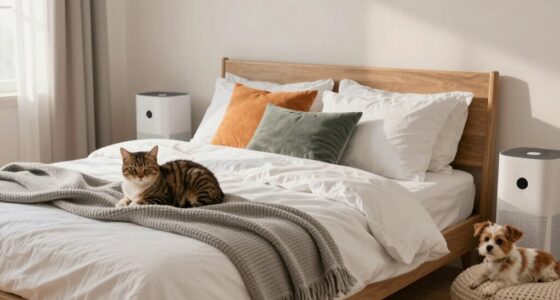
To guarantee your indoor air is comfortable without dryness, focus on maintaining balanced humidity levels between 40-50%. Use humidifiers to add moisture during dry seasons and dehumidifiers to reduce excess dampness. Keep your space well-ventilated with fresh air and air purifiers to improve air quality. Also, regulate your room temperature to prevent irritation and comfort issues. Stay with us to discover simple tips for creating a cozy, healthy environment your loved ones will appreciate.
Key Takeaways
- Maintain indoor humidity levels between 40-50% using humidifiers or dehumidifiers to prevent dryness and excess moisture.
- Ensure proper ventilation with fresh air exchange to reduce indoor dryness and improve air quality.
- Use air purifiers with HEPA filters to remove airborne allergens and particles, enhancing comfort.
- Keep the indoor temperature stable and warm, avoiding fluctuations that can cause discomfort or dryness.
- Regularly clean and maintain heating and humidification devices to prevent dryness-related skin and respiratory issues.
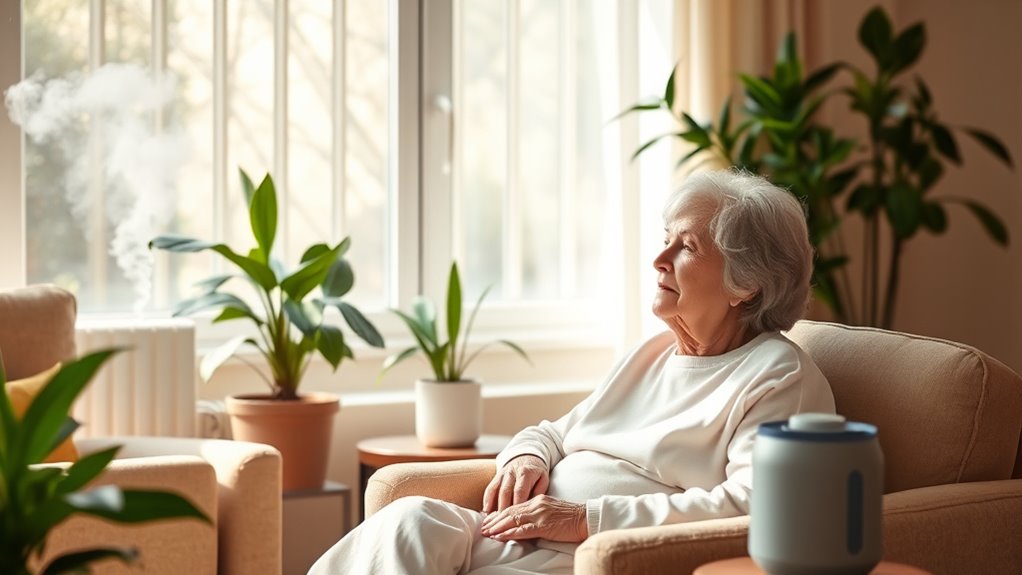
Have you ever wondered how clean indoor air can make a real difference for seniors? As you age, respiratory health becomes more sensitive, and the quality of the air you breathe influences comfort, health, and overall well-being. Poor indoor air can exacerbate allergies, asthma, and other respiratory issues, making everyday activities more difficult. That’s why guaranteeing the air inside your home is both clean and comfortable is so essential. But it’s equally important to avoid dry air, which can cause skin irritation, sore throats, and breathing discomfort. Striking the right balance between cleanliness and humidity creates an environment that supports health without leading to dryness.
Clean indoor air supports seniors’ health by balancing freshness and humidity for comfort and well-being.
First, consider the importance of proper ventilation. Fresh air is your best friend when it comes to reducing indoor pollutants, dust, and allergens. Regularly opening windows or using exhaust fans helps circulate air and bring in oxygen-rich outdoor air. If outdoor air quality isn’t ideal, using an air purifier with HEPA filters can trap airborne particles, allergens, and some bacteria. This is especially helpful in reducing dust mites and pet dander, which are common triggers for respiratory issues among seniors. Keep in mind that maintaining a clean environment also involves frequent dusting and vacuuming, preferably with a vacuum equipped with a HEPA filter, to prevent the buildup of allergens. Additionally, understanding the role of air quality and how it impacts health can empower you to make better choices for your indoor environment.
Next, managing humidity levels is crucial for creating a comfortable indoor climate. Too little humidity leads to dry skin, irritated nasal passages, and sore throats. Too much moisture, on the other hand, can promote mold growth and dust mites, which worsen respiratory problems. Ideally, aim for a humidity level between 40 and 50 percent. Using a humidifier can add moisture during dry winter months or in climates with low humidity. Just be sure to clean the device regularly to prevent mold and bacteria from spreading. Conversely, a dehumidifier can help reduce excess moisture if your indoor environment feels damp or mold-prone. Maintaining this balance ensures that air feels comfortable without causing dryness or excess dampness.
Finally, keep an eye on indoor temperature. Warm, stable temperatures make the air feel more comfortable and reduce the likelihood of respiratory irritation. Avoid rapid temperature fluctuations, which can cause discomfort and stress on the body. Using space heaters or thermostats with timers can help maintain consistent warmth, especially in colder months. All these factors—ventilation, humidity, and temperature—work together to create an indoor atmosphere that’s both clean and gentle on aging lungs. When you prioritize these elements, you’re not just improving air quality—you’re enhancing comfort, health, and peace of mind for seniors living in your home.
Frequently Asked Questions
How Often Should Indoor Air Quality Be Tested in Elderly Homes?
You should test indoor air quality at least every three to six months in elderly homes. Regular testing helps you identify pollutants, allergens, and humidity levels that could impact residents’ health. If there are signs of mold, odors, or respiratory issues, test more frequently. Keeping tabs on air quality guarantees a comfortable, safe environment, reducing risks like dryness, allergies, or respiratory problems for your elderly residents.
What Are Natural Ways to Humidify Indoor Air Safely?
You can naturally humidify indoor air by placing bowls of water around your home or hanging damp towels in rooms. Houseplants also help add moisture while improving air quality. Using a humidifier with a water reservoir can be safe if you keep it clean and at appropriate humidity levels. Avoid over-humidifying, as too much moisture can promote mold growth, which isn’t safe for seniors.
Can Certain Houseplants Improve Indoor Air for Seniors?
Yes, certain houseplants can improve indoor air for seniors by increasing humidity and filtering pollutants. Plants like pothos, spider plants, and peace lilies release moisture into the air, helping combat dryness. They also remove toxins, making the environment healthier. Just guarantee you choose non-toxic varieties and keep them well-maintained to prevent mold or allergies. Incorporating these plants creates a fresher, more comfortable living space for seniors.
Are There Specific Air Purifiers Recommended for Elderly Individuals?
You get what you pay for, so choose air purifiers with HEPA filters to effectively remove dust, pollen, and pet dander, which can trigger allergies or respiratory issues. Look for models with easy-to-use controls, quiet operation, and low maintenance. Brands like Blueair, Dyson, and Coway offer reliable options. Always check for certifications and features that suit your specific needs, ensuring cleaner, healthier air without added dryness.
How Does Indoor Humidity Affect Elderly Respiratory Health?
Indoor humidity directly impacts your respiratory health by influencing mucus production and airway comfort. If humidity levels are too low, you might experience dry throat, irritated sinuses, and increased vulnerability to respiratory infections. Maintaining a balanced humidity—around 40-50%—helps keep your airways moist and reduces discomfort. Use a humidifier or dehumidifier as needed, and regularly monitor humidity levels to create a healthier, more comfortable indoor environment for your respiratory well-being.
Conclusion
So, seek serene, suitable solutions to soften dry air and strengthen your senior loved ones’ spirits. By balancing breathable, beautiful indoor environments, you’ll boost comfort and curb complications. Creating calm, cozy, and comfortable spaces isn’t just caring; it’s a commitment to their continued comfort and health. Remember, small steps make a significant difference—so nurture their nest with fresh, friendly air, and watch their well-being wonderfully flourish.