
TL;DR
An astrophysicist shares her personal journey witnessing her first total solar eclipse in 2017 and a subsequent one in 2024. She describes how these events changed her perspective on the universe and her passion for celestial phenomena.
An astrophysicist describes her emotional and transformative experiences witnessing her first total solar eclipse in 2017 and a subsequent eclipse in 2024, emphasizing their profound impact on her appreciation of the universe.
The scientist, originally from Italy, traveled from the UK to Tennessee in 2017 to witness her first total solar eclipse, which she described as a moment that changed her perspective. Despite her extensive background in astrophysics, she had never experienced totality before. The event was marked by a brief but intense moment of darkness, during which she observed the corona and felt a deep emotional response. Clouds threatened to obscure the view, but she managed to see the eclipse in its full glory for about 50 seconds.
In 2024, she traveled to Mazatlán, Mexico, to witness the second eclipse, which lasted over four minutes. She noted differences in the corona due to the solar cycle and described the profound silence and emotional impact of the event, which reinforced her fascination with celestial phenomena. She now considers herself an ‘eclipse hunter,’ planning future trips for upcoming eclipses in Spain, including the longest eclipse of the century in 2027.
Why It Matters
This personal account highlights how witnessing a total solar eclipse can profoundly affect individuals, deepening their appreciation for astronomy and the universe. For the scientific community and the public, these events demonstrate the rare alignment of celestial bodies and the cultural significance attributed to such phenomena. They also underscore the importance of understanding celestial mechanics and fostering curiosity about space.
As an affiliate, we earn on qualifying purchases.
Background
Total solar eclipses occur when the moon perfectly covers the sun, a rare alignment made possible because the sun and moon appear nearly the same size from Earth. The last total eclipse visible from the UK was in 1999, with the next not expected until 2090. The 2017 eclipse was part of the Great American Eclipse, visible across the US, while the 2024 eclipse was part of the same event series, visible in Mexico and the US. These eclipses are significant both scientifically and culturally, often inspiring awe and curiosity.
“I had expected to witness a rare astronomical event, but I gained a new appreciation for the incredible coincidences that make the eclipses possible.”
— the scientist herself
“Once again came the feeling of overwhelming appreciation for our extraordinary universe.”
— the scientist herself

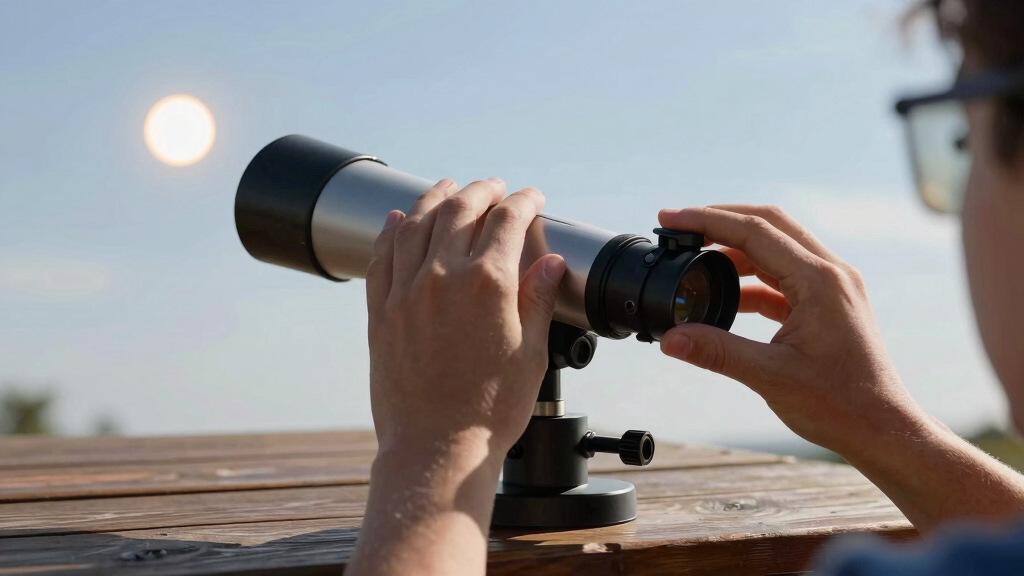
Celestron – EclipSmart Safe Solar Eclipse Telescope and Camera Filter – Meets ISO 12312-2:2015(E) Standards – Works with Your Telescope, Spotting Scope, or DSLR Camera – Observe + Photograph Eclipses
- Solar Safe Filter: Meets ISO 12312-2:2015(E) standards
- Universal Compatibility: Fits telescopes, spotting scopes, DSLR cameras
- Secure, Adjustable Fit: Adjust side panels and elastic band
As an affiliate, we earn on qualifying purchases.
As an affiliate, we earn on qualifying purchases.
What Remains Unclear
It remains unclear how many people experienced similar emotional transformations during eclipses worldwide, and whether such personal reflections influence broader scientific engagement or cultural perceptions. The long-term psychological or cultural impacts of witnessing totality are still being explored.

Rainbow Symphony Solar Eclipse Viewer, Replaces Eclipse Glasses, CE & ISO Certified, Safe for Direct Sun Viewing, Made in USA, 5 Pack
- Optimal Solar Observation: Sharp orange image for safe viewing
- Certified Safety Standards: CE & ISO certified, filters UV/IR/light
- Versatile Sky Exploration: Observe sunspots, transits, celestial events
As an affiliate, we earn on qualifying purchases.
As an affiliate, we earn on qualifying purchases.
What’s Next
The scientist plans to travel to Spain for upcoming eclipses in 2026 and 2027, including the longest eclipse of the century. Further research and personal accounts may deepen understanding of the emotional and scientific significance of these celestial events.

Philip's Little Book of Eclipses: An essential companion to solar and lunar events
As an affiliate, we earn on qualifying purchases.
As an affiliate, we earn on qualifying purchases.
Key Questions
What makes a total solar eclipse different from a partial eclipse?
A total solar eclipse occurs when the moon completely covers the sun, creating a temporary darkness and revealing the sun’s corona. A partial eclipse only covers part of the sun, resulting in less dramatic visual effects.
Why are total eclipses so rare and difficult to see?
Total eclipses are rare because they require a precise alignment of the Earth, moon, and sun. They occur approximately every 18 months somewhere on Earth, but are visible only from specific locations, making them infrequent for any given spot.
What are the scientific benefits of observing eclipses?
Eclipses allow scientists to study the sun’s corona, solar wind, and other phenomena that are otherwise difficult to observe. They also provide opportunities to test theories of celestial mechanics and gravity.
How can I safely view a solar eclipse?
Use approved eclipse glasses or solar telescopes designed for solar viewing. Never look directly at the sun without proper protection, as it can cause permanent eye damage.