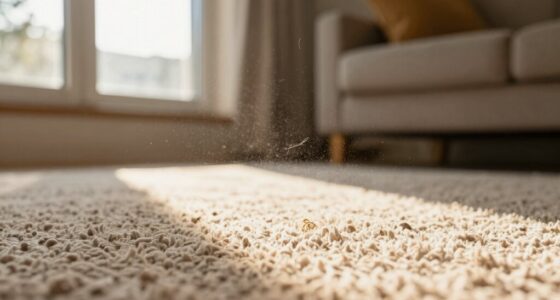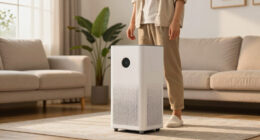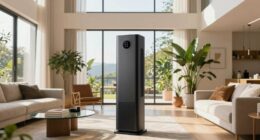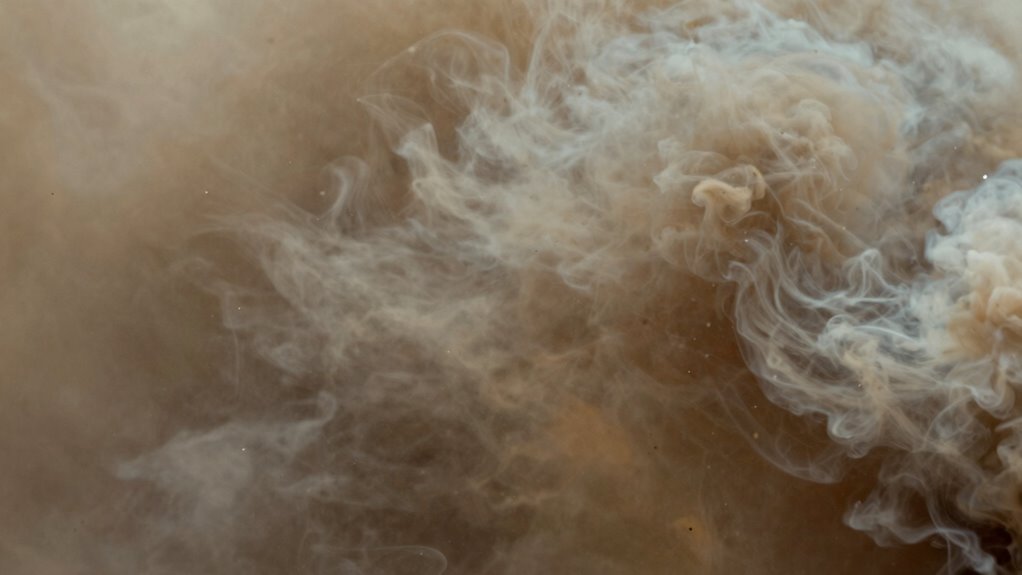

Wildfire smoke contains tiny particles called particulate matter, often less than 2.5 micrometers in diameter. These microscopic particles easily penetrate deep into your lungs and bloodstream, causing breathing problems and health risks. Their small size makes filtering them out challenging, especially outdoors. To protect yourself, you need effective masks and indoor air purifiers. If you want to understand why these particles are so dangerous and how to stay safe, keep exploring this topic.
Key Takeaways
- Wildfire smoke contains particles smaller than 2.5 micrometers that can penetrate deep into lungs and bloodstream.
- These tiny particles bypass natural defenses, causing respiratory and cardiovascular health issues.
- Their small size makes filtering and protection, like masks and air purifiers, more challenging.
- Because they travel long distances, exposure can occur far from the wildfire source.
- Tiny particles significantly worsen air quality, increasing health risks during wildfire events.
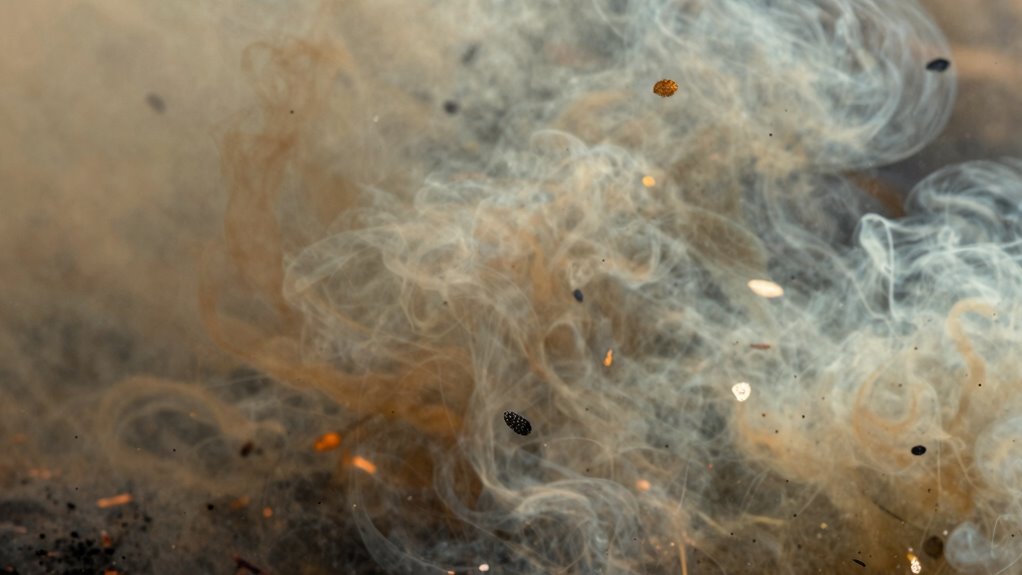
When wildfires rage, they release vast amounts of smoke particles into the air, which can travel hundreds of miles away from the blaze. These tiny particles, known as particulate matter or PM, are the main reason wildfire smoke is so difficult to handle. Because they’re so small—often less than 2.5 micrometers in diameter—they can easily penetrate deep into your lungs and even enter your bloodstream. This makes the air quality plummet during wildfire events, leaving you breathing in a mixture of ash, chemicals, and other pollutants. As a result, your ability to breathe comfortably diminishes, and the air becomes less safe to inhale.
Wildfire smoke releases tiny particles that can deeply penetrate lungs and bloodstream, worsening air quality and health.
The impact on health effects is significant. When you breathe in wildfire smoke particles, they can trigger a range of health issues, especially for sensitive groups like children, the elderly, and those with pre-existing respiratory or cardiovascular conditions. Short-term exposure can cause coughing, throat irritation, shortness of breath, and eye discomfort. For people with asthma or chronic bronchitis, wildfire smoke can exacerbate symptoms or even lead to emergency room visits. Long-term exposure, even if less intense, can contribute to the development of chronic respiratory problems and increase the risk of heart disease. The tiny nature of these particles allows them to bypass your body’s natural defenses, infiltrating your lungs and, in some cases, entering your bloodstream. Particulate matter plays a crucial role in determining how dangerous wildfire smoke can be to your health.
Air quality during wildfire events is a critical concern because it directly influences health effects. The presence of smoke particles can cause dangerous spikes in air pollution levels, often prompting health warnings and advisories. When you see alerts about poor air quality, it’s a signal to limit outdoor activities, especially strenuous exercise, and to stay indoors as much as possible. Using air purifiers with HEPA filters can help reduce indoor particle concentrations, but the best way to protect yourself is by minimizing exposure altogether. Wearing masks designed to filter out fine particles, like N95 respirators, can also provide some defense when you need to go outside. Additionally, understanding how air quality and particulate matter interact can help you better assess risks during fire events. Recognizing how particle size influences filtration efficiency can assist in choosing appropriate protective measures, such as masks and air filtration systems. Staying informed about air pollution levels and how they fluctuate during wildfire seasons can empower you to make safer choices.
Understanding how wildfire smoke particles affect air quality and health effects helps you take proactive steps during fire events. Recognizing that these tiny particles are more than just a nuisance—they’re a serious health hazard—reminds you to stay informed and prepared. By paying attention to air quality reports and taking protective measures, you can reduce your risk of adverse health effects and breathe a little easier until the danger passes.
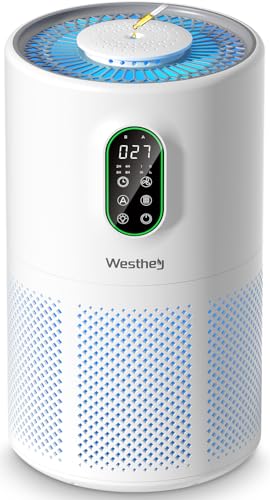
Air Purifiers for Home Large Room up to 1650 ft², WESTHEY H13 True HEPA Air Purifier for Bedroom with Night Light, Air Quality Monitor, Fragrance Sponge, Air Cleaner for Wildfire Smoke Dander Dust
WESTHEY AP02 AIR PURIFIER FOR HOME: The air purifiers feature a 360°surround air intake design with a high-efficiency…
As an affiliate, we earn on qualifying purchases.
As an affiliate, we earn on qualifying purchases.
Frequently Asked Questions
How Do Wildfire Smoke Particles Affect Indoor Air Quality?
Wildfire smoke particles considerably worsen indoor air quality, making it hard to breathe and potentially causing health issues. To protect yourself, use indoor air purification systems with effective particle filtration techniques, like HEPA filters, which trap tiny smoke particles. Keep windows closed during smoky conditions, and replace filters regularly. These steps help reduce smoke infiltration and improve air quality, ensuring a safer, healthier environment inside your home.
Can Wildfire Smoke Particles Cause Long-Term Health Issues?
Wildfire smoke particles can cause long-term health issues because they penetrate deep into your lungs, reaching the alveoli. This lung penetration increases the risk of respiratory problems and cardiovascular disease. The toxicity of these particles varies, with some being more harmful than others. Repeated exposure can lead to chronic health conditions, especially if you have existing health issues. Protect yourself by minimizing exposure and using proper filtration.
What Are the Best Methods to Filter Wildfire Smoke Indoors?
Think of your home as a fortress against wildfire smoke. To bolster your defenses, you should choose an air purifier with high effectiveness ratings, capable of capturing tiny particles and filtering out VOCs. Use techniques like sealing gaps and running the purifier continuously. Regularly replace filters to maintain peak performance. These steps create a clean sanctuary, reducing harmful smoke particles and VOCs, so you breathe easier inside your home.
Do Wildfire Smoke Particles Vary by Type of Vegetation Burned?
Wildfire smoke particles do vary by vegetation composition, affecting particle diversity and size. Different plants release unique compounds and particle types when burned, influencing smoke’s toxicity and behavior. For example, burning trees like pines releases more resin-based particles, while grasses produce finer, lighter particles. This variability impacts how smoke affects health and how effectively your filters work, so understanding vegetation type helps in choosing the best indoor filtration methods.
How Do Wildfire Smoke Particles Travel Across Long Distances?
You might wonder how wildfire smoke particles travel long distances. Particle dispersion occurs when atmospheric transport carries tiny particles through the air, often propelled by wind currents. These particles can travel hundreds or even thousands of miles, depending on weather conditions like wind speed and direction. As they disperse, they spread across regions, impacting air quality far from the original wildfire source, making particle transport a key factor in wildfire smoke’s reach.

3M Particulate Respirator 8511, Pack of 10, N95, NIOSH APPROVED, Cool Flow Exhalation Valve, Disposable, Braided Comfort Strap, M Noseclip, Personal Protective Equipment
NIOSH APPROVED: For at least 95% filtration efficiency against certain non-oil based particles like dust.
As an affiliate, we earn on qualifying purchases.
As an affiliate, we earn on qualifying purchases.
Conclusion
You might not realize it, but wildfire smoke particles are tiny—some are less than 2.5 micrometers in diameter, allowing them to penetrate deep into your lungs. This small size makes them particularly harmful, contributing to respiratory issues and cardiovascular problems. Notably, during intense wildfires, the concentration of these particles can soar to levels 10 times higher than safe limits, highlighting just how dangerous and pervasive these microscopic particles truly are. Stay vigilant and protect your health during wildfire season.

MOOKA Air Purifiers for Home Large Room up to 1076ft², H13 True HEPA Air Filter Cleaner, Odor Eliminator, Remove Smoke Dust Pollen Pet Dander, Night Light, B-D02L White
MOOKA B-D02L AIR PURIFIER FOR LARGE ROOM: With the high-efficiency filtration system, the air purifier covers an area…
As an affiliate, we earn on qualifying purchases.
As an affiliate, we earn on qualifying purchases.

3M N95 Respirator 8511, Cool Flow Valve, 10 Pack, NIOSH-APPROVED, Advanced Filter Media For Easy Breathing, Comfortable For Long Periods Of Wear, Helps Filter Pollen, Mold Spores & Dust (8511PB1-A-PS)
NIOSH-APPROVED N95 for at least 95 percent filtration efficiency against certain non-oil-based particles and aerosols
As an affiliate, we earn on qualifying purchases.
As an affiliate, we earn on qualifying purchases.