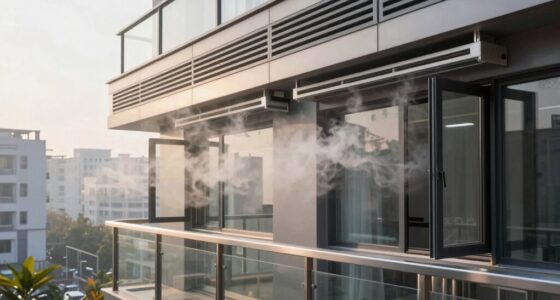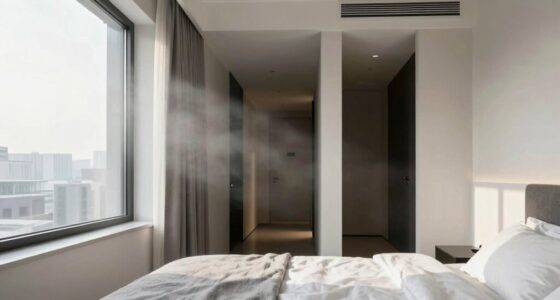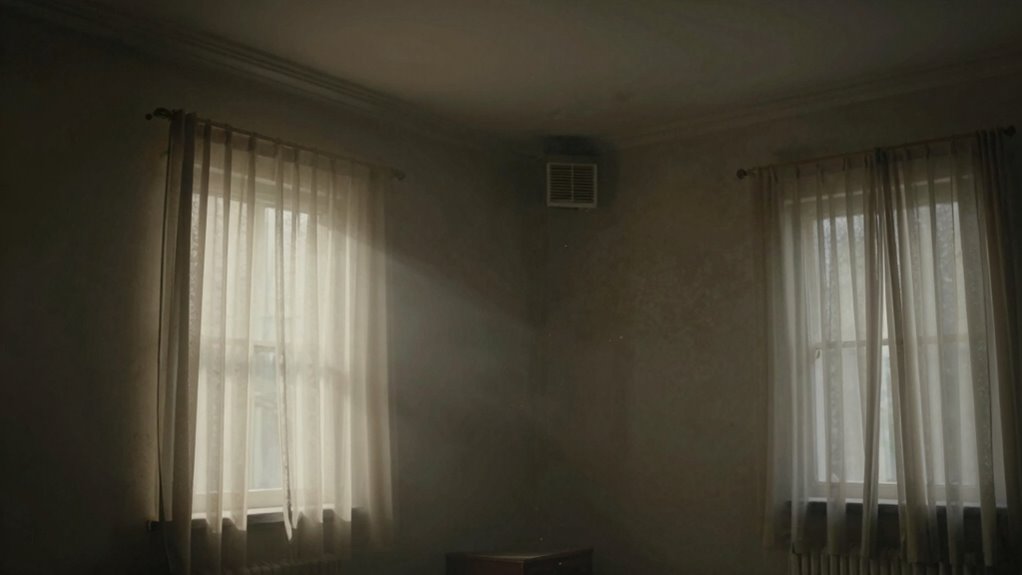

If you notice persistent odors, stuffy air, or high humidity despite airing out the room, it may have bad air exchange. Symptoms like headaches, drowsiness, or difficulty concentrating can also signal poor ventilation. Look for visual clues like condensation, mold, or drooping indoor plants, and pay attention to any lingering smells. Using air quality sensors can help confirm issues, and exploring solutions will become clearer as you continue exploring this topic.

Get health and wellness essentials delivered free — and shop member deals
- Fast, free delivery on millions of items
- Access to Prime Big Deal Days deals on October 6–7
- Prime Video, Amazon Music and more included
Key Takeaways
- Detect persistent stale odors despite airing out the room.
- Observe condensation or mold growth on windows and walls.
- Notice symptoms like drowsiness, headaches, or difficulty concentrating.
- Use air quality sensors to measure CO₂ levels and pollutants.
- Check for high humidity, yellowed plants, or signs of excess moisture.

Have you ever stepped into a room and immediately noticed a stale or stuffy smell? That’s often a sign that the air isn’t circulating properly, and your space may have poor air exchange. When air isn’t refreshed regularly, pollutants, odors, and humidity can build up, making the environment uncomfortable and potentially unhealthy. One way to get a better sense of your room’s air quality is to pay attention to how the space feels and smells, but it’s also smart to use tools like air quality sensors. These devices can detect levels of carbon dioxide and other pollutants, giving you a clear picture of whether your room’s air exchange is adequate.
Indoor plants are another helpful indicator. If you’ve got a few thriving plants, but still notice a lingering smell or stuffy atmosphere, it’s a sign that the air isn’t being replaced often enough. Conversely, if your indoor plants look yellowed or droopy despite regular watering, that could mean poor air circulation is affecting their health. Plants naturally absorb pollutants and improve air quality, but they can only do so much if the air exchange is severely lacking. Their health can serve as a subtle warning that your space needs better ventilation. Additionally, incorporating indoor air quality improvement strategies can enhance the overall environment.
You might also notice physical signs that suggest inadequate air exchange. For example, feeling drowsy, headache-prone, or experiencing difficulty concentrating can all be linked to stale air. These symptoms often occur because carbon dioxide levels rise when fresh air isn’t coming in and stale air isn’t going out. Using an air quality sensor can objectively measure these levels, helping you determine if your room’s ventilation needs improvement. If CO₂ levels are consistently high, it’s time to evaluate ways to boost airflow—whether by opening windows, adding ventilation fans, or improving your HVAC system. Proper ventilation can significantly reduce these discomforts and promote better health. Recognizing the importance of air exchange can motivate you to take proactive steps towards a healthier indoor environment.
In addition, check for visible signs like condensation on windows, mold spots, or a persistent smell that refuses to fade. These are clear indicators of poor air exchange, often accompanied by high humidity and inadequate ventilation. Recognizing indoor air quality issues can help you take targeted steps to improve your environment. If you recognize these signs, it’s a good idea to assess your space’s ventilation system and consider integrating indoor plants that can help absorb excess moisture, or installing air quality sensors for continuous monitoring. Improving air exchange isn’t just about comfort; it’s essential for your health and well-being, so paying close attention to these signs can help you maintain a fresher, healthier environment. Additionally, understanding the importance of proper ventilation can guide you in making more informed decisions about your indoor air quality.
air quality sensor for CO2 levels
As an affiliate, we earn on qualifying purchases.
As an affiliate, we earn on qualifying purchases.
Frequently Asked Questions
Can Air Purifiers Improve Poor Air Exchange?
Yes, air purifiers can improve poor air exchange. They enhance indoor air quality by filtering out pollutants, allergens, and odors, which boosts air purifier effectiveness. While they don’t increase ventilation directly, they help you breathe easier and improve indoor air quality when combined with proper ventilation methods. If you notice stale or stuffy air, using an air purifier can considerably make your space feel fresher and healthier.
How Often Should Ventilation Systems Be Checked?
You should check your ventilation systems at least twice a year, like tuning a musical instrument before a concert. Regular ventilation maintenance guarantees your air exchange standards stay on point. If you notice stuffiness, odors, or dust buildup, it’s time for a check-up. Keeping your system in tune helps maintain fresh air flow, preventing stale air from lingering like a cloud over your space.
Are There Specific Signs of Mold Related to Bad Air Exchange?
Yes, there are signs like mold growth and musty odors that indicate bad air exchange. When air isn’t circulating properly, moisture can build up, creating an ideal environment for mold to develop. If you notice persistent musty smells or visible mold spots, it’s a clear sign your room isn’t ventilating well. Improving airflow and checking your ventilation system can help prevent mold growth and freshen the space.
Do Plants Help Improve Indoor Air Quality?
Think of indoor plants as natural air filters, turning your space into a refreshing gust. They actively absorb toxins and boost oxygen levels, providing real indoor plant benefits. By adding a few leafy friends, you’re inviting cleaner, healthier air into your home. These green companions work silently, improving air quality naturally and creating a more inviting, vibrant environment that feels as fresh as a spring breeze.
What Are the Health Risks of Poor Air Exchange?
Poor air exchange can lead to health risks like headaches, fatigue, and respiratory issues because indoor pollutants build up and air circulation decreases. When fresh air doesn’t replace stale indoor air, harmful substances such as mold, dust, and volatile organic compounds remain in your space. This can worsen allergies and asthma, making you feel worse over time. Ensuring good ventilation helps improve air quality and reduces these health risks.
As an affiliate, we earn on qualifying purchases.
Conclusion
If you suspect poor air exchange, don’t ignore it—your lungs might as well be trying to breathe through a dense fog of stale, stagnant air. Poor ventilation can turn a simple room into a suffocating trap, risking your health like a silent, invisible predator. Act now: open windows, improve airflow, and breathe freely, or risk living in a never-ending, suffocating smog that could make even the bravest hold their breath in despair.
indoor air purifier for mold and odors
As an affiliate, we earn on qualifying purchases.
As an affiliate, we earn on qualifying purchases.
As an affiliate, we earn on qualifying purchases.
Fall Picks
fall essentials
As an affiliate, we earn on qualifying purchases.