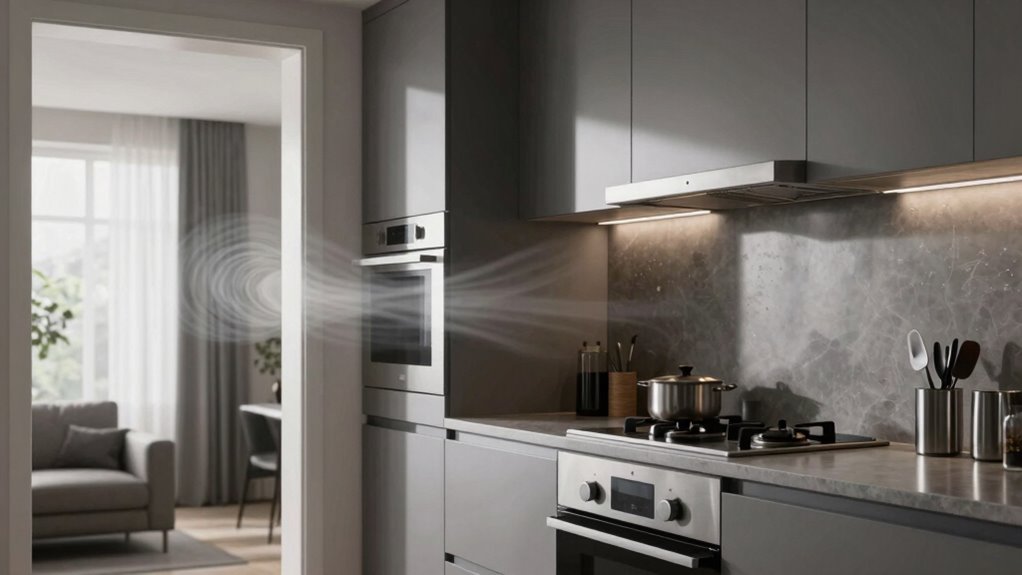

When your house develops negative pressure, outside air gets pulled inside through small openings like vents or gaps around windows and doors. This happens when exhaust fans, fireplaces, or other ventilation systems remove air without replacing it, creating a vacuum effect. As a result, odors from basements, attics, or outdoor sources can be sucked in, making your home smell unpleasant. Understanding how this works can help you learn how to prevent or manage it effectively.
Listen free for 30 days with Audible
Thousands of audiobooks and originals — cancel anytime.
As an affiliate, we earn on qualifying purchases.
Key Takeaways
- Negative pressure occurs when indoor air is lower than outdoor pressure, pulling outside odors into the home.
- Exhaust fans and appliances venting air out create a vacuum effect, causing odors to infiltrate through openings.
- Modern airtight homes can trap negative pressure if ventilation isn’t balanced, drawing in odors from basements or outdoors.
- Small gaps around windows, doors, or walls act as entry points for odors when negative pressure exists.
- Proper ventilation systems like ERVs or HRVs help balance pressure and prevent unwanted odor infiltration.

Have you ever noticed your house feeling drafty or stuffy without any obvious reason? You might think it’s just the weather or poor insulation, but often, it’s due to negative pressure inside your home. Negative pressure occurs when the air pressure inside your house is lower than outside, causing outside air to be pulled in through any available openings. This imbalance makes your house act like a giant vacuum, drawing in odors, pollutants, and even unconditioned air from the outdoors or unsealed spaces. It’s a sneaky issue that can affect your comfort, indoor air quality, and energy efficiency.
You might not realize that everyday activities contribute to creating negative pressure. When you run exhaust fans in the kitchen or bathroom, for example, you’re intentionally pulling air out of your home. While these fans are necessary for ventilation, they can inadvertently cause a significant drop in indoor pressure if not balanced with proper fresh air intake. Similarly, using a fireplace or wood stove can create negative pressure as they draw air from inside to fuel combustion, pulling in outside air and odors through gaps and cracks. Even opening a window on one side of your house while sealing the other can cause uneven pressure, leading to that familiar feeling of drafts or stale air.
Your house’s design and construction also play a role. Modern homes tend to be airtight to improve energy efficiency, but this tight sealing can trap negative pressure if ventilation isn’t properly managed. When your home is too sealed, any activity that exhausts air—like running a dryer or HVAC system—can cause a vacuum effect. The resulting negative pressure pulls in smells from basements, attics, or even outside sources like trash or pet areas through tiny openings in walls, floors, or around windows and doors. These odors can become pervasive, making your home unpleasant and sometimes even affecting your health. Recent advances in nanotechnology are also being explored to develop better air filtration and sealing materials to combat such issues.
Fixing negative pressure involves balancing your home’s ventilation. Installing an energy recovery ventilator (ERV) or heat recovery ventilator (HRV) can help bring in fresh air without losing energy. Ensuring that exhaust fans are properly vented and that fresh air intakes are unblocked is vital. Sometimes, simply cracking a window slightly or installing a controlled ventilation system can prevent your home from acting like a vacuum. Recognizing the signs—such as lingering odors, difficulty opening windows, or uneven airflow—can help you address the problem before it worsens. Ultimately, understanding and managing negative pressure keeps your indoor air fresh, odors at bay, and your home comfortable.
As an affiliate, we earn on qualifying purchases.
Frequently Asked Questions
Can Negative Pressure Cause Health Issues in Homes?
Yes, negative pressure can cause health issues in your home. When your house pulls in outside air, it may bring in pollutants, allergens, or mold spores, which can worsen respiratory problems or trigger allergies. You might also experience headaches or fatigue from poor indoor air quality. To prevent this, guarantee proper ventilation and balance your home’s airflow, reducing the risks associated with negative pressure.
How Can I Tell if My House Has Negative Pressure?
Did you know that over 60% of homes experience negative pressure at some point? To tell if your house has it, check for drafty doors or windows, especially near exhaust fans or vents. You can also hold a lit incense stick or tissue near vents; if the smoke moves inward, your house might be pulling air in. Installing a manometer can give a precise reading of your home’s pressure levels.
Does Negative Pressure Affect Indoor Air Quality?
Yes, negative pressure can affect your indoor air quality. When your house has negative pressure, it pulls in outdoor air, which may carry pollutants, allergens, and odors. This can lead to stuffy air, increased dust, and even the infiltration of outdoor fumes or mold spores. You might notice more respiratory issues or an unpleasant smell. To improve air quality, guarantee proper ventilation and balance your home’s airflow.
Are Certain House Designs More Prone to Negative Pressure?
Yes, certain house designs are more prone to negative pressure. For example, homes with tight seals, fewer vents, or modern energy-efficient features can trap air inside, creating negative pressure. If your house has limited exhaust fans or poorly balanced ventilation, it can lead to this issue. You should consider adjusting your ventilation system or adding vents to help maintain balanced air pressure and improve indoor air quality.
Can Sealing Leaks Worsen Negative Pressure Problems?
Sealing leaks can indeed worsen negative pressure issues in your home. When you close gaps to prevent drafts, you reduce airflow, making your house more prone to pulling in odors and pollutants through existing small openings. It’s a coincidence that efforts to improve insulation can unintentionally trap stale air or odors inside. To balance sealing and ventilation, consider installing an exhaust fan or air exchange system for better airflow control.
home negative pressure mitigation
As an affiliate, we earn on qualifying purchases.
As an affiliate, we earn on qualifying purchases.
Conclusion
Understanding negative pressure helps you understand your home’s breathing. It explains why odors sneak in, why indoor air feels stale, and why proper ventilation matters. It’s about controlling airflow, balancing pressure, and sealing leaks. When you recognize negative pressure’s role, you can prevent odors, improve air quality, and create a healthier living space. Remember: control the flow, balance the pressure, and seal the leaks—because a well-ventilated home is a happy, fresh home.
As an affiliate, we earn on qualifying purchases.
As an affiliate, we earn on qualifying purchases.
College move-in / dorm season Picks
dorm essentials
As an affiliate, we earn on qualifying purchases.