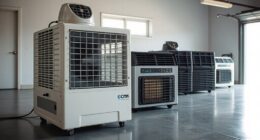
After renovation, you should open windows and doors immediately to create cross-ventilation and remove VOCs. Running exhaust fans and air purifiers with activated carbon can accelerate the process, ideally for 24 to 48 hours or longer depending on the materials used. Keep ventilating daily, even weeks later, to ensure lingering fumes dissipate. If you stay committed, you’ll discover effective strategies to maintain healthier indoor air longer.

Get health and wellness essentials delivered free — and shop member deals
- Fast, free delivery on millions of items
- Access to Prime Big Deal Days deals on October 6–7
- Prime Video, Amazon Music and more included
Key Takeaways
- Ventilate immediately after renovation by opening windows and doors to create cross-ventilation for several hours.
- Use exhaust fans and air purifiers with activated carbon filters to speed up VOC removal during the first 24-48 hours.
- Continue maximizing airflow and running air purifiers for at least one week, especially in spaces with new paint or adhesives.
- Monitor odors and discomfort; extend ventilation if VOCs persist after one week.
- Maintain periodic window opening and good air quality practices long-term to prevent VOC buildup.

When you undertake a renovation, you’re often exposed to volatile organic compounds (VOCs) released from paints, adhesives, and other building materials. These compounds can linger in the air long after the work is done, posing health risks like headaches, dizziness, or even longer-term issues such as respiratory problems. That’s why understanding the proper ventilation timeline is vital for guaranteeing your indoor air is safe to breathe. Ventilation isn’t just about opening windows; it’s a strategic process that helps remove VOCs efficiently and reduce their impact on your health.
Right after completing your renovation, it’s best to start ventilating immediately. Open all windows and doors to create cross-ventilation, which helps push out contaminated air and bring in fresh air. If possible, use fans to increase airflow, directing it outdoors. This initial step is essential because VOCs are most concentrated right after the work finishes. The goal is to dilute the indoor air and start the cleanup process as quickly as possible. Keep these windows open for at least several hours, especially in well-ventilated spaces, to kickstart VOC removal.
Start ventilating immediately after renovation by opening windows and doors to remove VOCs quickly.
However, simply opening windows might not be enough, especially in enclosed or poorly ventilated areas. In such cases, running exhaust fans or air purifiers equipped with activated carbon filters can markedly accelerate VOC removal. These devices actively trap and neutralize airborne chemicals, speeding up the process beyond what passive ventilation can achieve. It’s a good idea to keep these running for at least 24 to 48 hours after your renovation activities conclude, depending on the intensity of the work and the materials used.
The length of the ventilation period depends on several factors, including the size of the space, the amount of VOCs released, and the type of materials involved. For instance, freshly painted rooms or newly glued flooring may require longer airing out—up to a week or more—especially if you notice lingering odors. During this period, continue to maximize airflow as much as possible. If you’re using air purifiers, keep them running continuously for the first few days. After a week, you can start evaluating whether the smell and symptoms have diminished, but it’s wise to extend the ventilation if you still detect strong odors or experience discomfort.
Ultimately, patience is key. Properly ventilating your space for an adequate period guarantees VOCs dissipate effectively, safeguarding your health. Even after the initial airing out, keeping windows open periodically and maintaining good indoor air quality practices will help prevent VOC buildup in the future. For improved indoor air quality, consider proper ventilation strategies to maintain a healthy environment. By following a thoughtful ventilation timeline, you’re making sure your renovated space is not only beautiful but also safe and healthy to occupy.
air purifier with activated carbon filter
As an affiliate, we earn on qualifying purchases.
As an affiliate, we earn on qualifying purchases.
Frequently Asked Questions
How Long Do VOCS Typically Linger After Renovation?
VOCs usually linger for a few days to several weeks after renovation, depending on factors like ventilation and material types. You should ventilate your space thoroughly, ideally for at least a week, to help reduce VOC levels. Using fans and opening windows accelerates off-gassing. Keep monitoring the air quality, and consider air purifiers with activated carbon filters for faster VOC removal. Patience guarantees a healthier, safer environment.
Are There Specific Ventilation Methods That Work Best?
You’ll find that using a combination of exhaust fans and open windows works best to clear out lingering VOCs. Exhaust fans actively draw out indoor air, speeding up the process, while open windows promote fresh air circulation. For faster results, consider using air purifiers with activated carbon filters, which can trap VOC particles effectively. Consistent ventilation over several days guarantees a safer, fresher environment after your renovation.
Can Ventilation Eliminate All Renovation-Related VOCS?
Ventilation can’t eliminate all renovation-related VOCs, but it markedly reduces their levels. You should run fans and open windows to improve airflow during and after renovations. Using exhaust fans helps pull VOCs outside faster. However, some VOCs may linger despite ventilation efforts, especially in poorly ventilated areas or with prolonged exposure. To protect yourself, combine good ventilation practices with other measures like air purifiers and choosing low-VOC materials.
What Are Signs of VOC Exposure During Renovation?
You might notice headaches, dizziness, or eye, nose, and throat irritation if you’re exposed to VOCs during renovation. You could also experience nausea, coughing, or fatigue. Sometimes, you’ll smell strong chemical odors or persistent fumes that won’t go away. If you experience any of these signs, it’s important to increase ventilation immediately, leave the area if possible, and seek fresh air to reduce your exposure and protect your health.
Is Professional Air Quality Testing Necessary Post-Renovation?
Think of professional air quality testing as your home’s health check-up after renovations. It’s often necessary, especially if you’re sensitive to chemicals or if the renovation involved strong VOC-emitting materials. You won’t want hidden fumes lingering like uninvited guests. Testing guarantees the air is safe, giving you peace of mind. Trust a professional to accurately detect any remaining VOCs, so you can enjoy your refreshed space without worry.
As an affiliate, we earn on qualifying purchases.
Conclusion
By following the ventilation timeline, you clear the air, reduce the VOCs, and restore your home’s freshness. You open windows to let in fresh air, activate fans to push out pollutants, and monitor your space to guarantee safety. You breathe easier, live healthier, and enjoy peace of mind. With each step, you create a cleaner, safer environment—because a well-ventilated home is a healthier home. Take control, stay consistent, and breathe freely.
As an affiliate, we earn on qualifying purchases.
As an affiliate, we earn on qualifying purchases.
Fall Picks
fall essentials
As an affiliate, we earn on qualifying purchases.