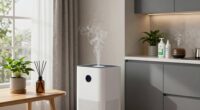
You might not realize how essential activated carbon is in removing odors. Its highly porous structure traps odor molecules on the surface, not just masks them. This natural process effectively neutralizes smells from cigarette smoke, cooking, pets, and more. Because of its vast surface area, carbon makes air purifiers much more efficient at cleaning the air you breathe. Keep exploring to uncover how this powerful material can improve your indoor environment even further.
Key Takeaways
- Activated carbon’s porous structure provides a large surface area essential for effective odor molecule adsorption.
- Carbon traps and neutralizes a wide range of odors, not just masks them with fragrances.
- Its natural properties make it a sustainable, chemical-free solution for odor removal.
- Carbon-based filters outperform other materials by directly removing odor-causing molecules.
- The effectiveness of odor control relies heavily on carbon’s surface area and pore structure.

You might think of carbon primarily as a greenhouse gas, but it plays an essential role in controlling odors in ways many people overlook. When it comes to air filtration, activated carbon is one of the most effective materials for odor absorption. If you’ve ever used a charcoal filter or an air purifier with carbon, you’ve already experienced its power firsthand. Carbon’s unique ability to trap and neutralize odor molecules makes it indispensable for improving air quality in homes, offices, and industrial settings.
Activated carbon effectively traps and neutralizes odor molecules, enhancing air quality in homes, workplaces, and industrial environments.
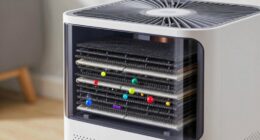
The secret to carbon’s effectiveness lies in its highly porous structure. Activated carbon has countless tiny pores that increase its surface area dramatically. This extensive surface allows it to attract and hold onto odor molecules through a process called adsorption. Unlike absorption, where molecules penetrate into a material, adsorption traps odor-causing compounds on the surface of the carbon. This mechanism is why carbon filters can efficiently remove a wide range of smells—from cigarette smoke and cooking odors to pet odors and mustiness.
When you use air filtration systems that incorporate activated carbon, you’re fundamentally deploying a powerful odor absorber. These filters are designed to target and eliminate the molecules that cause unpleasant smells, rather than merely masking them with fragrances. That’s why carbon-based air purifiers are so effective—they actually remove the source of the odor rather than just covering it up, leading to cleaner, fresher air. Additionally, the porous structure of activated carbon is a prime example of how material properties directly influence its practical applications. The surface area provided by this structure is critical for its ability to adsorb odors effectively.
Moreover, carbon’s role in odor absorption extends beyond household air purifiers. It’s widely used in industries dealing with chemical fumes, emissions, and waste management. In these environments, carbon filtration not only improves air quality but also helps meet health and safety standards. The versatility of activated carbon makes it invaluable in situations where controlling odors is critical, whether for maintaining a comfortable living space or ensuring compliance with environmental regulations.
Understanding how carbon works in air filtration helps you appreciate its significance. It’s not just about removing visible pollutants but about tackling the invisible molecules that cause odors. This capability makes carbon a cornerstone in odor control strategies. When you invest in air filtration systems with activated carbon, you’re choosing a technology that leverages natural properties to keep the air you breathe fresher and healthier. Its ability to serve as a highly effective odor absorber underscores why carbon matters more for odors than many people realize, playing a key role in maintaining clean, odor-free environments.

MOOKA Air Purifiers for Home Large Room up to 1076ft², H13 True HEPA Air Filter Cleaner, Odor Eliminator, Remove Smoke Dust Pollen Pet Dander, Night Light, B-D02L White
MOOKA B-D02L AIR PURIFIER FOR LARGE ROOM: With the high-efficiency filtration system, the air purifier covers an area…
As an affiliate, we earn on qualifying purchases.
As an affiliate, we earn on qualifying purchases.
Frequently Asked Questions
How Does Activated Carbon Differ From Other Odor Absorbers?
Activated carbon differs from other odor absorbers because it has a highly porous pore structure that offers superior adsorption efficiency. This extensive network of tiny pores captures a wide range of odor molecules more effectively than alternatives like baking soda or zeolite. You’ll notice that activated carbon’s large surface area allows it to trap and neutralize odors quickly, making it a more powerful and long-lasting solution for odor control.
Can Carbon Filters Eliminate All Types of Odors Effectively?
Carbon filters can effectively eliminate many odors, but they don’t remove all types completely. Their filtration efficiency depends on the odor’s nature and the filter’s quality. While they help reduce indoor smells, they may have a limited environmental impact compared to chemical alternatives. For best results, choose high-quality filters and replace them regularly to maintain peak odor control and minimize environmental impact.
What Are Common Household Sources of Odor-Causing Compounds?
You might think only cooking or pets cause odors, but common household sources like garbage cans, smoking areas, and even new furniture release odor-causing compounds. Natural deodorization and chemical absorption are effective because carbon filters trap these airborne molecules. By addressing these sources with proper filtration, you can greatly improve indoor air quality, making your home fresher and healthier without relying solely on sprays or artificial deodorizers.
How Long Do Carbon Filters Typically Last Before Replacement?
You should replace your carbon filter every 3 to 6 months, depending on usage and air quality. The carbon lifespan varies with how much odor or pollutants it absorbs, so regular filter maintenance is crucial. If you notice a decline in odor control or airflow, it’s time for a replacement. Keeping up with these intervals ensures your filter maintains peak performance and keeps your home smelling fresh.
Are There Health Risks Associated With Activated Carbon Use?
There are minimal health risks associated with activated carbon use in air purification, as long as you follow safety guidelines. Activated carbon effectively removes chemicals and odors, but avoid inhaling dust during handling. Proper chemical safety precautions, like wearing masks and gloves, help prevent irritation or allergic reactions. Overall, using activated carbon safely enhances air quality without significant health concerns, making it a reliable choice for chemical safety and odor control.

Activated Charcoal Odor Absorber for Strong Odors in Car, Closet, Shoe, Basement. 10 Activated Charcoal Bags Odor Absorbers for Home. Bamboo Charcoals Air Purifying Bag Charcoals Deodorizer Eliminator
10 CHARCOAL DEODORIZER BAGS WITH HOOKS. Our 3.5oz bamboo charcoal bag musty smell eliminators are the perfect size…
As an affiliate, we earn on qualifying purchases.
As an affiliate, we earn on qualifying purchases.
Conclusion
Now that you understand how essential carbon is in trapping odors, think of it as a sponge soaking up every smell that dares to escape. Just like a sponge that becomes heavy and saturated, your air filters need enough carbon to hold onto those pesky odors. Without enough, it’s like trying to catch rain with a leaky bucket—you’ll never truly clear the air. So, next time, choose wisely; your nose will thank you.

Dekiru 6 Pack Cut to Fit Activated Carbon Filter, Compatible with Honeywell HPA300 Air Purifiers, Charcoal Filters for Window, Vent, AC, Range Hood, Odor Removal
PERFECT PRE-CUT FIT FOR HONEYWELL AIR PURIFIERS: Our carbon filter is exclusively tailored for Honeywell HPA300, HA300, HPA304,…
As an affiliate, we earn on qualifying purchases.
As an affiliate, we earn on qualifying purchases.
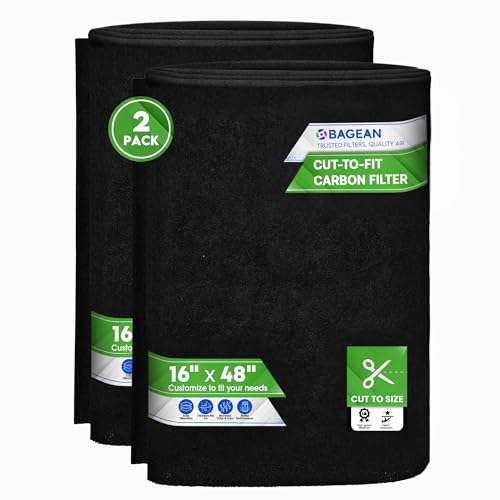
Cut to Fit Activated Carbon Filter Sheet 16” x 48” – Activated Carbon Air Filter for Air Purifiers Window AC Air Vent And More – Charcoal Filters Remove Odors & Freshens the Air (2-Pack)
FRESHEN THE AIR: Our activated carbon filter sheet freshens the air by removing odors ensuring a clean an…
As an affiliate, we earn on qualifying purchases.
As an affiliate, we earn on qualifying purchases.