
Your “new home smell” actually signals ongoing off-gassing from building materials, furniture, and finishes releasing chemicals like VOCs, including formaldehyde and benzene. These emissions can affect your air quality and pose health risks like headaches or respiratory issues. Ventilating regularly and choosing low-emission products can help reduce exposure. If you want to learn how to protect your indoor air and health better, there’s more you should know.
Key Takeaways
- The “new home smell” is caused by harmful chemical emissions, not just a pleasant scent.
- Off-gassing releases VOCs like formaldehyde, which can impact health and indoor air quality.
- Ventilation, air purifiers, and low-VOC products can significantly reduce chemical buildup.
- Off-gassing peaks in the first few weeks but can persist for months without proper mitigation.
- Being aware of and managing off-gassing improves home safety and promotes healthier living conditions.

When you move into a brand-new home, you might notice a strong, chemical-like smell lingering in the air—that’s off-gassing at work. This scent is often mistaken for the “new home smell,” but it’s actually a sign that chemical emissions are being released from building materials, furniture, and finishes. Off-gassing can impact your air quality, especially when ventilation isn’t sufficient to disperse these airborne chemicals. Many new materials are treated with adhesives, paints, varnishes, and sealants that emit volatile organic compounds (VOCs), which contribute to the smell and can affect your health.
New home smells often come from off-gassing of materials and finishes, impacting air quality and health.
The presence of chemical emissions in your living space isn’t just an odor issue; it’s a matter of indoor air quality. These emissions can include formaldehyde, benzene, and other harmful compounds that linger in the air for days or even weeks after moving in. Poor air quality caused by off-gassing can lead to headaches, respiratory irritation, allergies, or more serious health concerns over time. That’s why understanding what’s happening and how to mitigate it is so important.
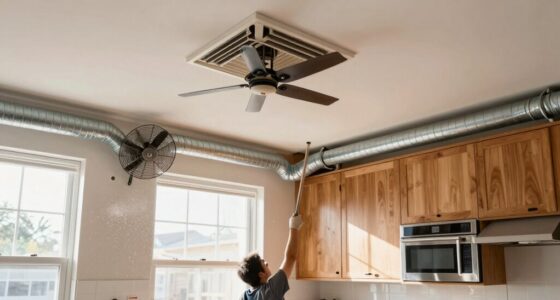
During the initial days and weeks in your new home, the chemical emissions are at their peak, making it essential to improve ventilation. Opening windows regularly allows fresh air to replace contaminated indoor air and helps disperse the volatile compounds. Using exhaust fans, air purifiers with activated carbon filters, and maintaining good airflow can significantly reduce the concentration of harmful chemicals in your indoor environment. It’s also wise to choose low-emission products whenever possible, opting for furniture, paints, and finishes labeled as low-VOC or zero-VOC. Additionally, selecting low-emission building materials can greatly improve indoor air quality in the long run.
You might be tempted to ignore the smell, thinking it’ll fade on its own, but that’s not always the case. Persistent off-gassing can linger for months if you don’t take steps to improve your air quality. Regularly testing your indoor air quality and being aware of the chemical emissions present can help identify potential hazards early and allow you to take appropriate action. Recognizing that volatile organic compounds are often the primary culprits behind these odors can motivate you to act sooner rather than later.
Considering the impact of VOCs on health can motivate you to take proactive measures. Recognizing that the “new home smell” is often tied to ongoing chemical emissions can help you make informed choices. Proper ventilation and selecting low-emission products can make a huge difference, turning your new house into a healthier, more comfortable home. Remember, your health and well-being depend on the air you breathe, so taking steps to manage off-gassing early on is well worth the effort.

MOOKA Air Purifiers for Home Large Room up to 1076ft², H13 True HEPA Air Filter Cleaner, Odor Eliminator, Remove Smoke Dust Pollen Pet Dander, Night Light, B-D02L White
MOOKA B-D02L AIR PURIFIER FOR LARGE ROOM: With the high-efficiency filtration system, the air purifier covers an area…
As an affiliate, we earn on qualifying purchases.
As an affiliate, we earn on qualifying purchases.
Frequently Asked Questions
How Long Does New Home Smell Typically Last?
The new home smell usually lasts from a few days to several weeks, depending on factors like furniture emissions and paint VOCs. You might notice the strongest odor during the first week, then it gradually diminishes. Proper ventilation helps speed up the process. Keep windows open, run fans, and consider air purifiers to reduce emissions faster, making your space more comfortable sooner.
Are There Health Risks Associated With Off-Gassing?
You might experience health risks from off-gassing, especially with prolonged VOC exposure. Imagine someone with asthma suddenly feeling worsened symptoms after moving into a new home. Indoor pollutants released during off-gassing can irritate eyes, throat, and lungs, posing risks for sensitive individuals. To minimize these dangers, make certain proper ventilation and choose low-VOC products. Being aware helps protect your health from potential indoor pollutants linked to off-gassing.
Can Off-Gassing Affect Indoor Air Quality Long-Term?
Yes, off-gassing can affect your indoor air quality long-term. When chemicals from new materials and furniture linger in your home, they can lead to increased chemical exposure, which may cause respiratory issues, headaches, or other health problems over time. Continuous exposure to these pollutants can degrade the air quality, making your living environment less healthy. It’s important to guarantee proper ventilation and choose low-emission products to minimize long-term impacts.
What Are the Best Ways to Reduce New Home Smell?
To reduce that new home smell, you should open windows regularly, use natural ventilation to let fresh air in, and turn on exhaust fans to remove indoor pollutants. Investing in air purifiers with HEPA filters helps capture off-gassing particles, while keeping humidity levels balanced prevents mold growth. Consistent airflow, cleaning, and patience will help your home smell fresher faster, creating a healthier, more comfortable living space.
Are Certain Building Materials More Prone to Off-Gassing?
Yes, certain building materials are more prone to off-gassing. Eco-friendly materials like bamboo, cork, and formaldehyde-free plywood tend to emit fewer VOC emissions. Conversely, traditional pressed wood products and synthetic materials often release higher levels of VOCs, contributing to that new home smell. To reduce off-gassing, choose eco-friendly options and guarantee good ventilation during and after construction or renovation.

EVOLVE Interior Paint & Primer, Eggshell (Cloud White), 1 Gallon – One-Coat Coverage, Excellent Hide, Low VOC, Low Odor, Washable Paint for Walls, Doors & Trim
PAINT + PRIMER IN ONE: Evolve’s paint-and-primer formula helps you get great coverage from the start, sealing your…
As an affiliate, we earn on qualifying purchases.
As an affiliate, we earn on qualifying purchases.
Conclusion
Understanding off-gassing and the new home smell helps you make smarter choices for your health and comfort. While that fresh scent might seem inviting, remember it’s just a temporary illusion masking potential hazards. Don’t let the grass look greener on the other side—be proactive and ventilate your space. Peace of mind comes from knowing you’re doing what’s best for your family, because sometimes, the best things in life are worth a little wait.

Air Formaldehyde (HCHO) DIY Test Kit (3 Kit) – Find Out How Much Formaldehyde is in The air Around You, Suitable for Detecting Formaldehyde Levels in The air of Various Indoor environments
OUR AIR FORMALDEHYDE (HCHO) DIY TEST KIT: for rapid detection of formaldehyde levels in the air, is an…
As an affiliate, we earn on qualifying purchases.
As an affiliate, we earn on qualifying purchases.

Comfort Zone Twin Window Fan with Reversible Airflow Control, 9 inch, Auto-Locking Expanders, 2 Speed Fan, Dual Fan, Exhaust, Airflow 9.84 ft/sec, Ideal for Home, Kitchen, Bedroom & Office, CZ319WT
DUAL SPEED SELECTION: Enjoy the flexibility of choosing between two air output options on this twin speed window…
As an affiliate, we earn on qualifying purchases.
As an affiliate, we earn on qualifying purchases.