
To improve indoor air quality quickly, start by regularly checking and replacing your air filters—clogged filters reduce airflow and trap pollutants. Inspect ductwork for leaks or dust, sealing any gaps with duct mastic or tape to boost efficiency. Also, schedule professional inspections to catch hidden issues early. These simple steps can make a noticeable difference in air quality and comfort fast. Keep exploring to uncover more tips for maintaining a ideal HVAC system.
Key Takeaways
- Regularly replace or clean air filters to remove airborne particles and improve indoor air quality.
- Inspect ductwork for leaks, tears, or gaps, and seal them to maintain efficient airflow.
- Schedule professional HVAC inspections to identify hidden issues early and ensure system efficiency.
- Keep vents and registers clean and unobstructed to promote proper air circulation.
- Perform routine system checks, such as testing thermostat settings and cleaning components, to optimize indoor comfort.
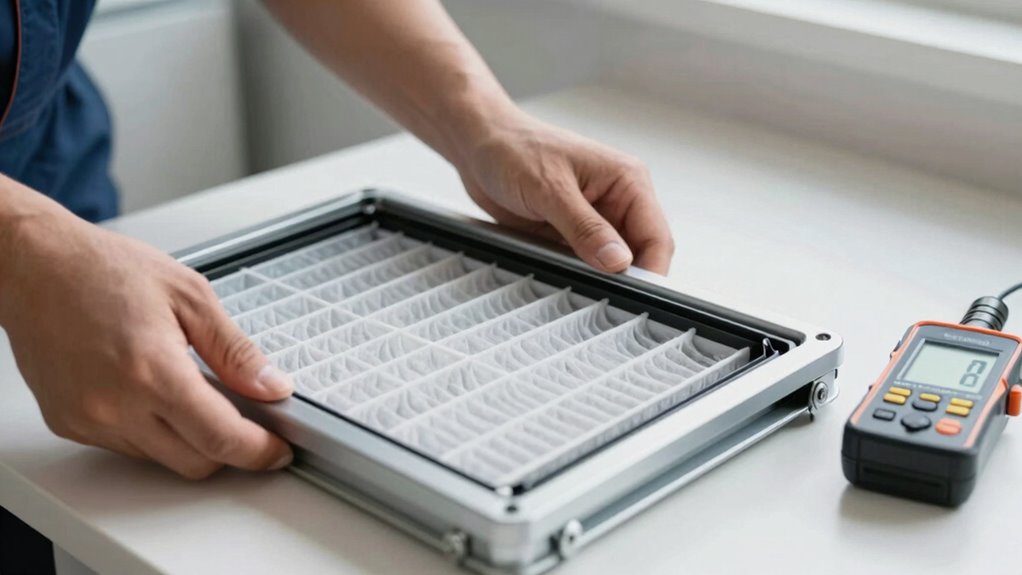
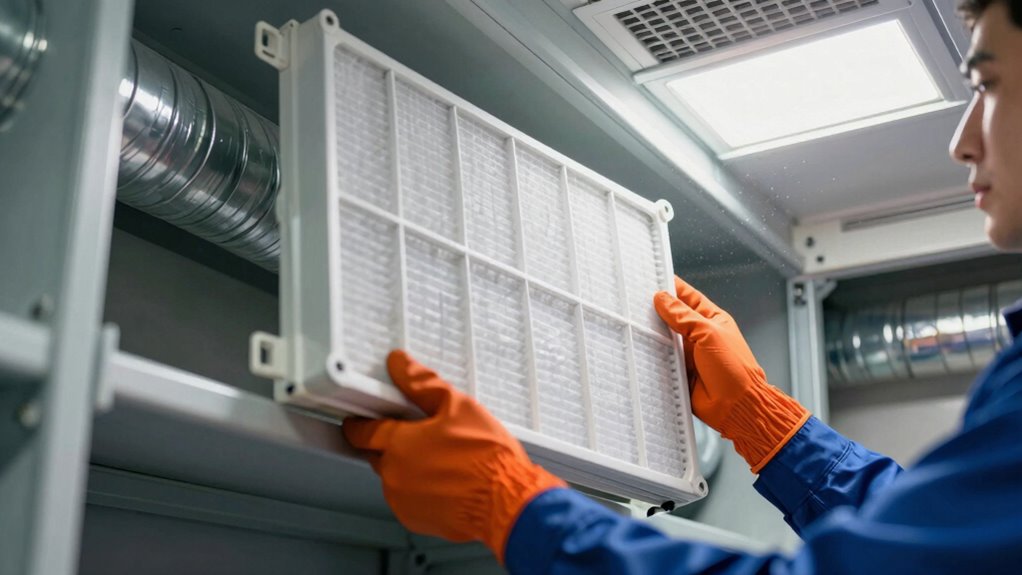
Have you ever wondered how to guarantee your heating, ventilation, and air conditioning system runs smoothly all year round? The key lies in simple, routine checks that can make a big difference in your indoor air quality. One of the most effective steps you can take is paying attention to air filter maintenance. Over time, filters trap dust, pollen, pet dander, and other airborne particles, but they become clogged and less efficient. Regularly replacing or cleaning your air filter ensures that your system can operate at its best, improving indoor air quality and reducing strain on your HVAC components. It’s a straightforward task: check your filter every month, especially during peak usage seasons, and swap it out when it looks dirty or clogged. Doing this not only helps your system run more efficiently but also prolongs its lifespan.
Alongside air filter maintenance, inspecting your ductwork can greatly enhance your indoor air quality. Duct sealing techniques are crucial in preventing leaks that allow conditioned air to escape and unfiltered air to enter your system. Leaky ducts can cause uneven heating or cooling, higher energy bills, and poor indoor air quality. You don’t need to be an expert to identify obvious leaks—listen for whistling sounds, look for visible tears or gaps, and check for dust or debris around seams. Sealing these leaks with appropriate duct mastic or metal foil tape ensures that conditioned air reaches your living spaces without escaping or being contaminated. This simple step improves airflow efficiency, reduces energy costs, and helps maintain a healthier indoor environment. Regular duct inspection and sealing can also prevent the buildup of dust and debris that can circulate in your indoor air. Additionally, understanding the importance of air quality management can motivate you to keep your system well-maintained. Regularly scheduling professional inspections can help identify hidden issues before they impact your indoor environment. Remember, proper system maintenance is essential for optimal indoor air quality and energy efficiency.
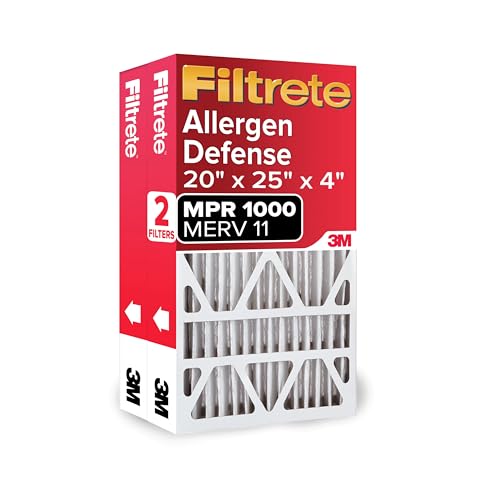
Filtrete 20x25x4 Air Filter MERV 11, MPR 1000 Micro Allergen Defense 2-Pack, Fits Honeywell & AprilAire, AC Furnace HVAC Filters for Home, Pleated Electrostatic (Actual Size 19.88 x 24.63 x 4.31 in)
DIFFERENT FROM NOMINAL SIZE: Slightly different from the nominal size, this air filter’s exact dimensions are 19.88 in…
As an affiliate, we earn on qualifying purchases.
As an affiliate, we earn on qualifying purchases.
Frequently Asked Questions
How Often Should I Replace My HVAC Filters?
You should replace your HVAC air filter every 1 to 3 months, depending on the air filter lifespan and your home’s conditions. A good rule of thumb is to check it monthly; if it looks dirty or clogged, it’s time for a replacement. Your replacement schedule might vary if you have pets, allergies, or live in a dusty area, so adjust accordingly to maintain best indoor air quality.
Can Indoor Plants Improve Air Quality?
Yes, indoor plants can improve air quality through natural air purification. They absorb pollutants like formaldehyde and benzene, enhancing your indoor environment. Plant benefits include increased humidity, reduced toxins, and boosted mood. To maximize these benefits, choose plants like snake plants or pothos, and guarantee they receive proper care. Incorporating plants into your space is an easy, effective way to enhance air quality naturally.
What’s the Ideal Humidity Level for Indoor Air?
Think of your home’s humidity like a delicate dance—too dry, and you risk respiratory discomfort; too moist, and mold thrives. The ideal indoor humidity level is between 40-60%. Proper humidity control maintains balanced moisture levels, preventing dry skin and allergies. Use a hygrometer to monitor, and consider humidifiers or dehumidifiers if needed, ensuring your indoor air stays comfortable and healthy.
Are Energy-Efficient HVAC Systems Worth the Investment?
Yes, energy-efficient HVAC systems are worth the investment because they save you money on energy bills and improve indoor air quality. With smart thermostats, you can better control temperature and humidity levels, enhancing comfort. Additionally, duct sealing guarantees efficient airflow, reducing energy waste. Over time, these upgrades pay for themselves through lower utility costs, making your home more comfortable and environmentally friendly.
How Do I Know if My HVAC System Needs a Professional Inspection?
Your HVAC system might be whispering for help if you notice uneven heating or cooling, strange noises, or persistent odors, signaling it’s time for a professional inspection. Regular HVAC maintenance keeps your system running smoothly and protects indoor air quality. Don’t ignore these signs; a professional check can prevent costly repairs, improve efficiency, and guarantee you breathe cleaner air, transforming your home into a healthier, more comfortable haven.

Romeda Aluminum Foil Tape, 2 inch x 65 Feet Foil Tape (3.9 mil), Silver Insulation Adhesive Metal Tape, High Temperature Heavy Duty HVAC Tapes for Ductwork, Dryer Vent, HVAC
THICKER: 3.9 mil / 0.1mm foil tape. Metal glosses, good insulation. The metal duct tape is too thin…
As an affiliate, we earn on qualifying purchases.
As an affiliate, we earn on qualifying purchases.
Conclusion
By regularly performing these simple HVAC checks, you’re setting yourself up to breathe easier and enjoy fresher indoor air in no time. Just remember, an ounce of prevention is worth a pound of cure—staying proactive keeps small issues from snowballing into costly repairs. So, don’t wait until problems arise; take these quick steps now to guarantee your home remains a haven of clean, healthy air. After all, a little effort goes a long way!

HVAC Inspection Checklist: Professional HVAC Maintenance & Service Record Book | Heating, Ventilation, & Air Conditioning System Inspection Log For … Record Logbook | Maintenance Tracker Forms
As an affiliate, we earn on qualifying purchases.
As an affiliate, we earn on qualifying purchases.

Breliter Inflatable Patch Repair Kit – Waterproof TPU Pool Repair Tape, Heavy Duty Repair Patch for Air Mattress, Bounce House, Inflatable Toys, Tent, Swimming Ring – 10 Packs of 2.5in x 2.5in, Square
Effort and Money Saver – Breliter Repair Patch Kit is a strong repair tool for Sealing the breakage…
As an affiliate, we earn on qualifying purchases.
As an affiliate, we earn on qualifying purchases.