
Smart humidifiers appeal to data-focused homes because they seamlessly integrate with your digital ecosystem, giving you real-time insights and precise control over indoor humidity. They help you make data-driven decisions, improve air quality, and reduce energy waste. With features like trend analysis and targeted adjustments, you stay proactive about your home’s comfort and health. Keep exploring to discover more ways smart humidifiers can enhance your environment and smarter living experience.

Get health and wellness essentials delivered free with Prime
- Fast, free delivery on millions of items
- Prime Video, Amazon Music and more included
- Member-only deals all year
Key Takeaways
- They provide real-time humidity data for precise environmental control.
- Integration with digital ecosystems enables coordinated device management.
- Data analysis helps identify air quality patterns for proactive adjustments.
- Enhanced monitoring reduces energy waste and promotes efficiency.
- Detailed feedback supports data-driven decisions for optimal comfort and health.
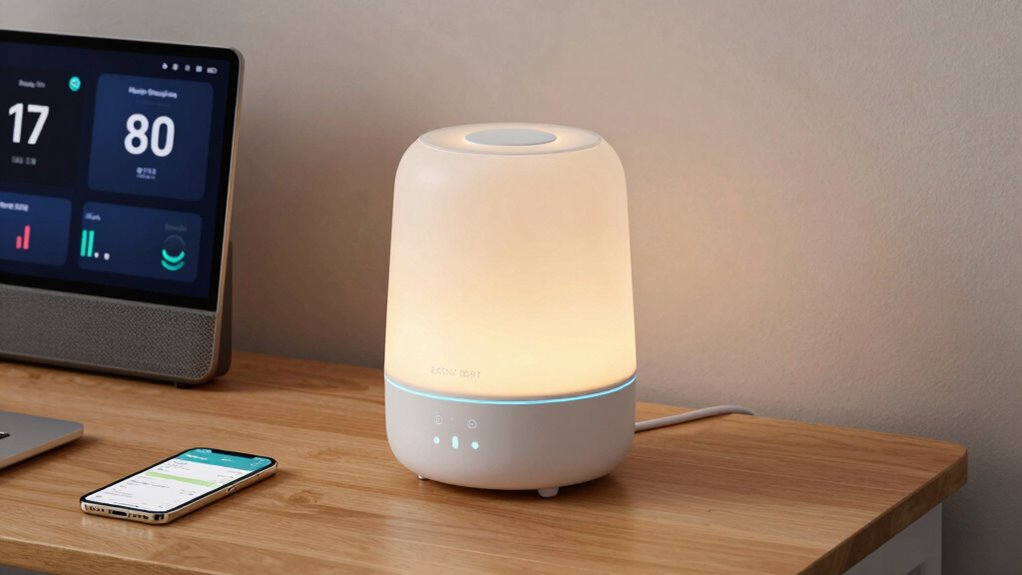
In today’s data-driven homes, smart humidifiers are transforming how you manage indoor air quality. These devices don’t just add moisture; they integrate seamlessly with your digital ecosystem to give you real-time insights and control. If you’re someone who values precise data, you’ll appreciate how smart humidifiers provide detailed feedback on indoor humidity levels, helping you enhance air quality effortlessly. Instead of guessing whether the air is too dry or too humid, you get clear, actionable information that allows you to make informed adjustments. This focus on data-driven decisions ensures your home environment stays comfortable and healthy without unnecessary energy expenditure. Additionally, their ability to analyze and interpret indoor air quality data allows for even more precise and effective humidity management. Understanding how digital monitoring works in these systems can help you better utilize their full potential. Moreover, the integration of home automation systems can further optimize air quality management by enabling coordinated adjustments across multiple devices.
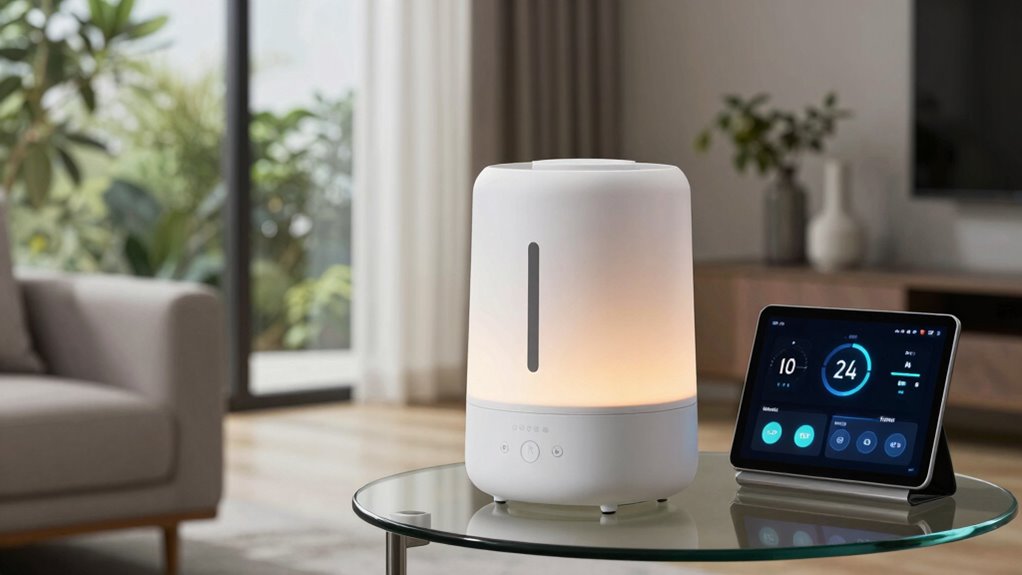
smart humidifier with app control
As an affiliate, we earn on qualifying purchases.
As an affiliate, we earn on qualifying purchases.
Frequently Asked Questions
How Do Smart Humidifiers Integrate With Existing Smart Home Systems?
Smart humidifiers seamlessly integrate with your existing smart home systems through Wi-Fi or Bluetooth, allowing you to control them via apps or voice assistants. You’ll want to guarantee user privacy by choosing devices with strong security features. Device interoperability is key, so look for humidifiers compatible with your smart home ecosystem. This integration lets you automate humidity levels, monitor air quality, and enjoy a more connected, comfortable living environment effortlessly.
What Security Measures Protect Data Collected by Smart Humidifiers?
Think of your smart humidifier’s data security like a vault protecting treasure. It uses data encryption to scramble your information, making it unreadable to outsiders. Additionally, trusted manufacturers follow strict privacy policies, ensuring your data isn’t shared without permission. Regular firmware updates also patch security vulnerabilities. These measures work together to keep your personal data safe, so you can enjoy a healthier home without worry.
Can Smart Humidifiers Be Controlled Remotely via Mobile Apps?
Yes, smart humidifiers can be controlled remotely via mobile apps. With mobile app integration, you can adjust settings, monitor humidity levels, and turn the device on or off from anywhere. This remote control capability offers convenience, allowing you to maintain ideal indoor conditions without being physically near the humidifier. Just make sure your device is connected to Wi-Fi and paired with the app for seamless control and customization.
What Are the Energy Consumption Differences Between Smart and Traditional Humidifiers?
Think of smart humidifiers as energy-efficient sailors steering the vast ocean of power consumption. They typically use less energy than traditional models, thanks to intelligent sensors and optimized settings that reduce unnecessary operation. Their advanced controls allow you to tailor humidity levels precisely, conserving power and enhancing energy efficiency. In contrast, traditional humidifiers often run continuously, consuming more power without adapting to your home’s real-time needs.
How Often Do Smart Humidifiers Require Maintenance or Software Updates?
Smart humidifiers typically require a maintenance schedule of cleaning every one to two weeks to prevent mold and mineral buildup. As for software update frequency, you should check for updates once a month or when prompted by the device. Keeping your smart humidifier updated guarantees peak performance and security. Regular maintenance and timely updates help you enjoy consistent humidity control and the latest features without interruptions.
As an affiliate, we earn on qualifying purchases.
Conclusion
In a data-focused home, smart humidifiers are like silent guardians, silently working behind the scenes to create the perfect environment. They blend technology with intuition, turning your house into a living, breathing space that adapts to your needs. Embracing these devices means you’re not just living in a home—you’re nurturing a smart sanctuary. As they weave data into comfort, you’ll find your space more harmonious, like a symphony where every note is perfectly tuned to your life.
smart humidifier for air quality monitoring
As an affiliate, we earn on qualifying purchases.
As an affiliate, we earn on qualifying purchases.
integrated smart home humidifier
As an affiliate, we earn on qualifying purchases.
As an affiliate, we earn on qualifying purchases.
Halloween Picks
halloween
As an affiliate, we earn on qualifying purchases.