To keep your home’s air fresh and healthy, you should open windows daily for at least 10-15 minutes to allow fresh air in and pollutants out. Regularly dust and vacuum with HEPA filters, ideally once a week, especially on hidden surfaces. Control humidity with a hygrometer and use dehumidifiers if needed, preventing mold and dust mites. Checking for water damage regularly helps avoid mold growth. Keep up with these simple steps to guarantee your family breathes easier—there’s more to learn behind this routine.

Get health and wellness essentials delivered free — and shop member deals
- Fast, free delivery on millions of items
- Access to Prime Big Deal Days deals on October 6–7
- Prime Video, Amazon Music and more included
Key Takeaways
- Ventilate daily by opening windows for 10-15 minutes to dilute indoor pollutants and refresh indoor air.
- Dust and vacuum weekly using HEPA filters to remove allergens like pet dander and dust mites.
- Monitor and maintain indoor humidity between 30-50% to prevent mold growth and dust mites.
- Check regularly for water damage or leaks; address issues promptly to avoid mold contamination.
- Use exhaust fans in kitchens and bathrooms during cooking and bathing to vent moisture and fumes.

Have you ever wondered how the air inside your home impacts your family’s health? The truth is, indoor air quality plays a bigger role than many realize. Poor air can lead to allergies, respiratory issues, or even long-term health problems. Luckily, you can take simple steps each week to improve the air your family breathes. Establishing a straightforward routine doesn’t require substantial effort, but it can make a noticeable difference over time.
Start by opening your windows regularly, ideally for at least 10-15 minutes each day. This simple act helps flush out indoor pollutants and brings in fresh air, diluting any harmful substances that may accumulate. Even during colder months, brief ventilation can greatly improve air quality without sacrificing comfort. If outdoor air quality is poor, consider using exhaust fans in the kitchen and bathroom to vent out moisture, cooking fumes, and odors that can linger indoors. These steps guarantee that pollutants like cooking fumes, pet dander, and dust don’t build up and cause health issues.
Open windows daily to refresh indoor air and reduce pollutants naturally.
Next, commit to dusting and vacuuming at least once a week. Dust can carry allergens and irritants such as pet hair, mold spores, and pollen. Use a vacuum equipped with a HEPA filter, which traps tiny particles more effectively than standard models. When dusting, focus on surfaces like shelves, blinds, and furniture, and don’t forget hidden spots like behind appliances or under beds. Maintaining a clean environment reduces the overall amount of airborne allergens that can trigger respiratory problems or allergies.
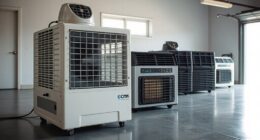
Controlling indoor humidity is another essential step. Aim to keep humidity levels between 30 and 50 percent. Use a hygrometer to monitor this, and if needed, run a dehumidifier or air conditioner during humid seasons. High humidity encourages mold growth and dust mites, both of which can worsen respiratory conditions. On the flip side, too dry air can cause irritation in your throat and skin. Regularly cleaning air filters and replacing them as recommended also guarantees your HVAC system helps improve air quality rather than circulating pollutants. Additionally, understanding indoor air pollutants and their sources can help you make more informed decisions about your home’s environment.
Finally, make it a habit to check for signs of mold, leaks, or water damage weekly. Addressing these issues promptly prevents mold spores from spreading, which can impact respiratory health and worsen allergies. If you notice persistent odors or dampness, investigate further. Sometimes, small actions like using an air purifier with a HEPA filter in common areas can provide additional relief, especially for family members with allergies or asthma.
Frequently Asked Questions
How Can I Identify Indoor Air Quality Issues in My Home?
You can identify indoor air quality issues by noticing symptoms like headaches, fatigue, or allergy flare-ups. Use an air quality monitor to detect pollutants and humidity levels. Check for mold, dust buildup, or strong odors, especially in damp areas. Regularly ventilate your home and keep it clean. If problems persist, consider professional testing to identify hidden issues, ensuring a healthier environment for your family.
Are There Natural Ways to Improve Indoor Air Without Chemicals?
Yes, you can improve indoor air naturally without chemicals. Keep your home well-ventilated by opening windows regularly, allowing fresh air to circulate. Use houseplants like spider plants or snake plants, which naturally filter toxins. Regularly dust and vacuum to reduce allergens, and avoid smoking indoors. Incorporate natural air purifiers like activated charcoal or beeswax candles to remove odors and pollutants, creating a healthier living environment for your family.
How Do Indoor Plants Affect Air Quality for Families?
Indoor plants can improve your home’s air quality by naturally filtering pollutants and increasing humidity. They absorb toxins like formaldehyde and benzene, helping to create a healthier environment for your family. Plus, caring for plants can reduce stress and boost mood. Just make sure to choose non-toxic varieties if you have pets or young children, and keep them healthy with proper light and watering for ideal air-purifying benefits.
What Are the Signs of Mold or Allergens Affecting Indoor Air?
You might notice a musty smell or unexplained allergy symptoms like sneezing, coughing, or itchy eyes. If you see visible mold patches, water stains, or discoloration on walls and ceilings, these are clear signs. Allergens can cause congestion or breathing issues, especially for sensitive family members. Stay alert to persistent odors or respiratory discomfort, as these clues often point to hidden mold or airborne allergens affecting your indoor air quality.
How Often Should I Replace or Clean Air Filters in My Home?
You should replace or clean your air filters every 1 to 3 months, depending on your home’s needs and the filter type. Check your filters regularly—at least monthly—to see if they’re dirty or clogged. If you have pets, allergies, or live in a dusty area, consider changing filters more often. Keeping filters fresh helps improve indoor air quality and keeps your HVAC system running efficiently.
Conclusion
By making this simple weekly routine a habit, you turn your home into a gust of clean air, a sanctuary rather than a trap. Think of your indoor air as the quiet heartbeat of your family’s well-being—nurturing, essential, and worth every small effort. Just as a garden flourishes with care, your home’s air quality blooms with regular attention. Embrace this routine, and watch your family breathe easier, living healthier and happier every day.
Fall Picks
fall essentials
As an affiliate, we earn on qualifying purchases.