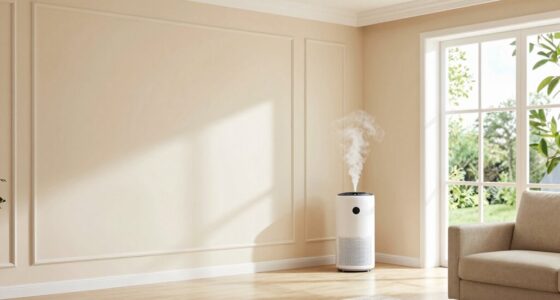
In winter, indoor air gets worse because you keep windows and doors tightly shut to stay warm, trapping dust, allergens, and pollutants inside. This reduces airflow, making the air stagnant and unhealthy. Heating systems can add to the problem by releasing pollutants and drying out the air, which causes discomfort. Low humidity also makes it easier for germs to spread and irritates your respiratory system. If you want to learn how to improve your indoor air quality, keep exploring.

Get health and wellness essentials delivered free — and shop member deals
- Fast, free delivery on millions of items
- Access to Prime Big Deal Days deals on October 6–7
- Prime Video, Amazon Music and more included
Key Takeaways
- Keeping windows and doors closed to conserve heat reduces natural ventilation, trapping indoor pollutants.
- Heating appliances emit pollutants like carbon monoxide and particulates, worsening indoor air quality.
- Cold outdoor temperatures lower indoor humidity, causing dryness and respiratory discomfort.
- Limited airflow causes pollutants from activities like cooking and cleaning to accumulate indoors.
- Stagnant, dry indoor air during winter increases health risks and decreases overall air quality.

Have you ever wondered how indoor air quality changes during winter? As temperatures drop outside, you might notice your home feels stuffier, your throat gets drier, or your allergies seem worse. These changes aren’t just coincidence—they’re rooted in how winter affects the air inside your home. During colder months, you tend to keep windows and doors shut tighter than usual to preserve heat. While that keeps your space warm and cozy, it also traps pollutants, dust, and allergens inside. Without proper ventilation, these particles accumulate, making the air much worse than in warmer months when fresh air can flow freely.
Heating systems, whether they’re furnaces, fireplaces, or space heaters, play a significant role in degrading indoor air quality. Many of these devices burn fuels that release pollutants such as carbon monoxide, nitrogen dioxide, and particulate matter. Even electric heaters can contribute indirectly by drying out the air, which can irritate your respiratory system and make you more sensitive to airborne irritants. As a result, the air becomes not only more polluted but also less comfortable to breathe. You might notice increased congestion, dry throat, or coughing, which often gets worse during winter.
Another factor is the reduction of natural ventilation. Outside air is usually fresher and cleaner, but when it’s freezing, you naturally keep it out. This means that indoor air becomes stagnant. Without regular airflow, pollutants linger longer, and humidity levels tend to plummet. Dry air can cause respiratory discomfort and dry out your mucous membranes, making you more vulnerable to colds and respiratory infections. This dry environment also fosters static electricity, which can stir up dust and allergens, further worsening the air quality. Additionally, humidification methods can help maintain a healthier indoor environment during the cold months.
Indoor activities during winter, like cooking and cleaning, can also increase indoor pollutant levels. Cooking releases fumes and particulate matter, especially if ventilation is inadequate. Cleaning products often contain volatile organic compounds (VOCs) that add to indoor pollution. When combined with poor ventilation, these substances stay trapped, intensifying indoor air pollution. So, even daily routines can contribute to worsening air quality if you’re not careful.
air purifier for indoor air quality
As an affiliate, we earn on qualifying purchases.
As an affiliate, we earn on qualifying purchases.
Frequently Asked Questions
How Does Humidity Affect Indoor Air Quality During Winter?
Humidity levels directly impact your indoor air quality during winter. When humidity is too low, your air becomes dry, causing irritation to your skin, eyes, and respiratory system. This dryness can also increase static electricity and make you more susceptible to colds. Maintaining ideal humidity, around 30-50%, helps keep the air comfortable, reduces airborne viruses, and prevents mold growth, creating a healthier indoor environment during colder months.
Can Winter Heating Systems Spread Indoor Pollutants?
Like a sponge soaking up everything around it, winter heating systems can spread indoor pollutants. When you turn on your furnace or heater, dust, pet dander, mold spores, and volatile organic compounds can circulate more freely. If filters aren’t clean or ventilation’s poor, these pollutants linger and spread, making the air unhealthy. Regular maintenance and proper ventilation help prevent these systems from becoming conduits for indoor pollution.
What Are the Health Risks of Poor Indoor Air in Winter?
Poor indoor air in winter can cause health issues like headaches, fatigue, and respiratory problems. You might experience allergy symptoms or worsen asthma due to increased pollutants and reduced ventilation. Cold, stagnant air also promotes mold growth and dust buildup, which can trigger allergies. To protect yourself, make sure proper ventilation, regularly clean your space, and use air purifiers. Staying aware of indoor air quality helps prevent long-term health risks.
How Can I Improve Ventilation Without Losing Heat?
Did you know that proper ventilation can reduce indoor air pollutants by up to 50%? To improve ventilation without losing heat, crack open a window slightly for short periods, or use exhaust fans in kitchens and bathrooms. You can also install heat recovery ventilators, which exchange indoor air while preserving warmth. These methods help maintain good air quality and keep your home warm and energy-efficient during winter.
Are There Specific Indoor Plants That Help Purify Winter Air?
Yes, certain indoor plants like snake plants, pothos, and peace lilies can help purify your winter air. They naturally filter toxins and increase humidity, making your home healthier. Just make certain you choose plants suited for lower light conditions and avoid overwatering. Regularly caring for these plants boosts air quality and adds a touch of nature indoors, helping you breathe easier even during the cold months.
As an affiliate, we earn on qualifying purchases.
Conclusion
Just like Scrooge’s ghostly visits remind us of the importance of change, winter’s indoor air warns us to pay attention now. As you cozy up inside, remember that poor air quality can silently affect your health and comfort. Don’t let winter’s chill hide hidden hazards. Take action—ventilate, humidify, and clean—to keep your indoor air fresh and safe. Because, in the end, your home’s air should be a haven, not a haunting.
carbon monoxide detector for home
As an affiliate, we earn on qualifying purchases.
As an affiliate, we earn on qualifying purchases.
As an affiliate, we earn on qualifying purchases.
Cold & flu season Picks
humidifiers
As an affiliate, we earn on qualifying purchases.