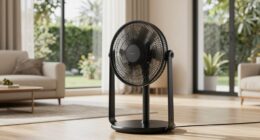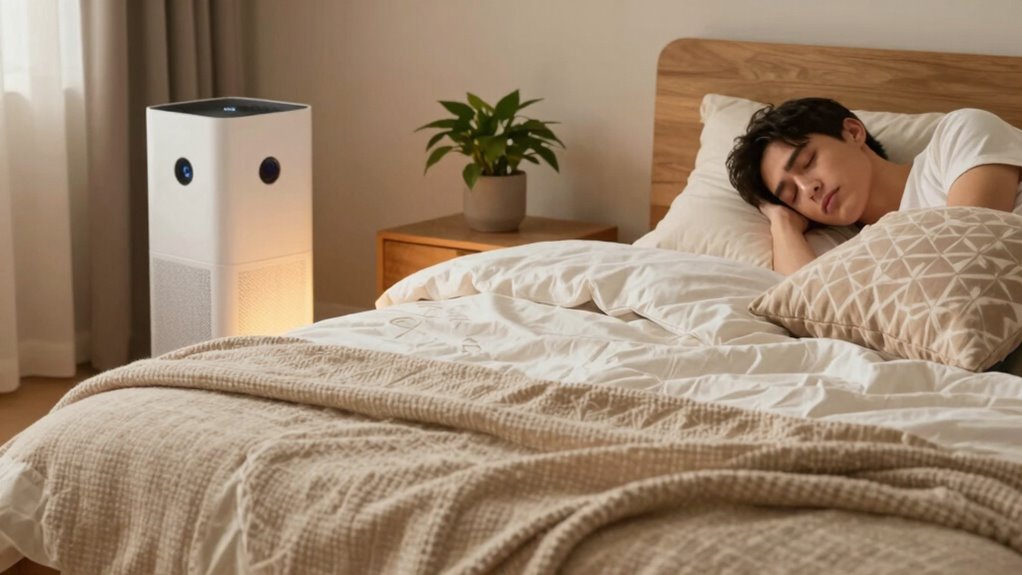

Poor indoor air quality can surprise you as a cause of snoring. Pollutants like dust, pet dander, mold spores, and VOCs irritate your airways and cause congestion, making breathing tougher and increasing vibrations that lead to snoring. Lack of proper ventilation and dry air worsen these effects by inflaming tissues. By improving airflow, controlling humidity, and reducing allergens, you can often see a difference. Keep exploring to discover how these simple changes can transform your sleep.
Key Takeaways
- Indoor pollutants like dust, pet dander, and mold trigger airway inflammation, increasing snoring risk.
- Poor ventilation traps irritants indoors, leading to airway congestion and vibrations during sleep.
- Dry indoor air causes tissue irritation, promoting inflammation and snoring, which humidifiers can help alleviate.
- Allergens and VOCs in indoor air swell nasal passages, narrowing airways and contributing to louder snoring.
- Regular cleaning, air purification, and humidity control reduce airway irritation and improve sleep quality.
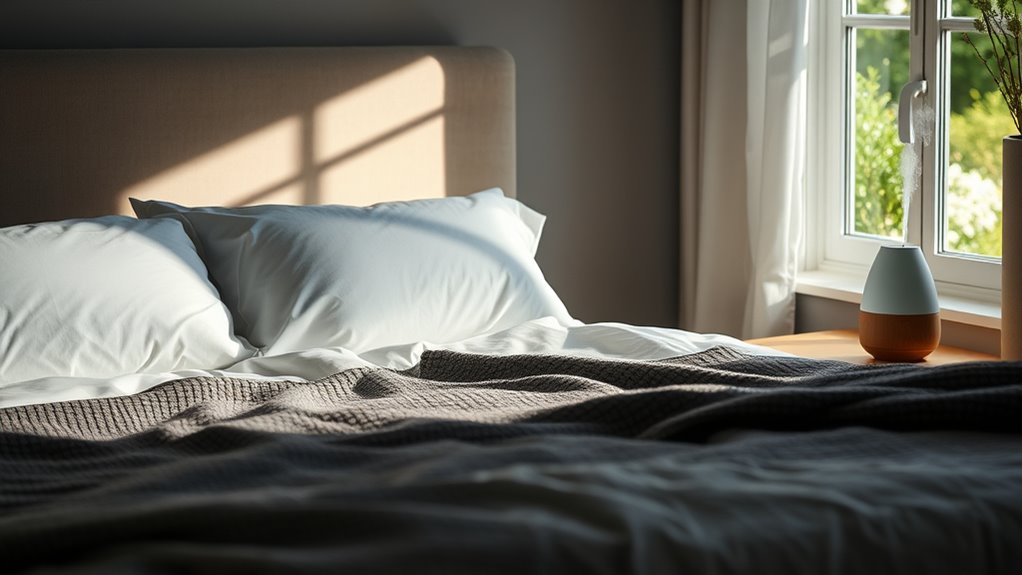
Poor indoor air quality can substantially contribute to snoring by irritating your airways and causing inflammation. When the air you breathe indoors is filled with pollutants, dust, and allergens, it sets the stage for airway congestion and irritation. These irritants can inflame the tissues lining your nose, throat, and sinuses, narrowing your air passages and making it harder for air to flow smoothly. As a result, your breathing becomes more labored, and the vibrations that produce snoring are more likely to occur. The more polluted the air, the greater the likelihood you’ll experience these issues, especially during sleep when your body is already relaxed and more vulnerable to airway obstructions.
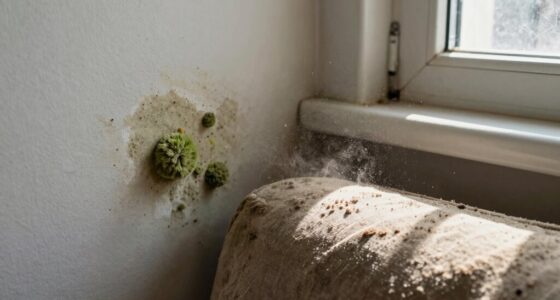
Common indoor pollutants like dust mites, pet dander, mold spores, and volatile organic compounds (VOCs) from cleaning products or furniture emit particles that can settle in your nasal passages and throat. If you’re sensitive or allergic, these substances can trigger immune responses that lead to swelling and increased mucus production, further blocking airflow. When your airways are inflamed or congested, you unconsciously breathe through your mouth more often, which can exacerbate snoring. Mouth breathing tends to dry out your throat and soft tissues, making them more prone to vibrate and produce that familiar snoring sound.
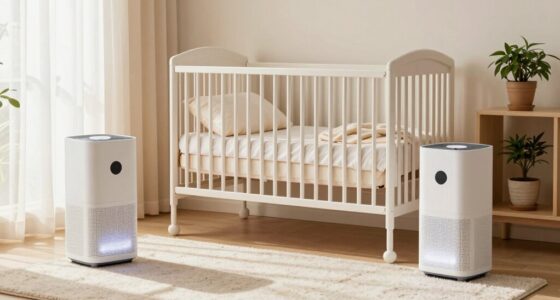
Poor ventilation compounds the problem. If your home lacks proper airflow, pollutants become trapped and accumulate, intensifying their impact. Without fresh air circulating, allergens and irritants linger longer, increasing inflammation and congestion. On the other hand, improving ventilation helps remove airborne irritants and brings in cleaner air, reducing the likelihood of airway inflammation and snoring. Using an air purifier with a HEPA filter can further help by capturing tiny particles that would otherwise settle in your nasal passages and throat. Maintaining a clean environment by regularly dusting and vacuuming with a HEPA filter vacuum can also noticeably reduce allergen buildup.
Humidity levels in your indoor space matter too. When the air is too dry, your nasal passages and throat tissues can become irritated and dry out, increasing the risk of inflammation and snoring. Using a humidifier can help keep moisture levels balanced, soothing irritated tissues and reducing airway congestion. Conversely, overly humid environments can promote mold growth, which can worsen allergies and inflammation. Striking the right balance with humidity control creates a healthier environment for your airways and reduces snoring triggered by poor indoor air quality.
In essence, paying attention to your indoor environment—keeping it clean, well-ventilated, and properly humidified—can make a crucial difference in reducing snoring caused by airway irritation. Your breathing and sleep quality improve when you minimize exposure to indoor pollutants, helping you breathe easier and sleep more soundly. Additionally, understanding how air quality impacts airway health can guide effective strategies to mitigate snoring.

LEVOIT Air Purifier for Home Allergens Pet Hair in Bedroom, Covers Up to 1073 ft² by 56W High Torque Motor, AHAM VERIFIDE, 3-in-1 Filter with HEPA Sleep Mode, Remove Dust Smoke Odor, Core300-P, White
WHY CHOOSE AHAM VERIFIDE AIR PURIFIERS: AHAM (Association of Home Appliance Manufacturers) is an ANSI-accredited organization that sets…
As an affiliate, we earn on qualifying purchases.
As an affiliate, we earn on qualifying purchases.
Frequently Asked Questions
Can Indoor Plants Reduce Snoring Caused by Poor Air Quality?
Yes, indoor plants can help reduce snoring caused by poor air quality. They naturally filter pollutants and increase humidity, which can soothe your airway and lessen snoring. When you add plants like snake plants or pothos to your space, you improve air circulation and remove irritants. This creates a healthier sleeping environment, making it easier for you to breathe freely and potentially reducing your snoring episodes.
How Does Humidity Level Impact Indoor Air-Related Snoring?
Humidity levels are like a delicate dance partner for your airways. When the air is too dry, your throat and nasal passages dry out, making snoring more likely. On the other hand, overly humid air can cause congestion, also increasing snoring chances. Ideally, keep humidity around 40-50%. This balance helps your respiratory system stay lubricated and clear, reducing the likelihood of disruptive snoring during your sleep.
Are Air Purifiers Effective for Preventing Snoring Linked to Indoor Allergens?
Yes, air purifiers can be effective for preventing snoring linked to indoor allergens. They work by filtering out dust, pet dander, mold spores, and other irritants that can cause nasal congestion and airway inflammation. When you use a high-quality purifier consistently, you reduce allergen buildup, helping you breathe easier at night. This can lessen snoring episodes caused by allergies, leading to more restful sleep for you.
Does Bedroom Ventilation Influence the Severity of Snoring Episodes?
If your bedroom is poorly ventilated, your snoring might get worse. Imagine waking up tired after a night of stuffy air and restless sleep—it’s frustrating. Proper ventilation helps clear indoor pollutants and keeps air fresh, which can reduce snoring severity. You should open windows regularly or use exhaust fans to improve airflow. Better air circulation can make a noticeable difference in your sleep quality and reduce snoring episodes.
Can Specific Indoor Air Pollutants Directly Cause or Worsen Snoring?
Yes, specific indoor air pollutants can directly cause or worsen your snoring. Dust mites, pet dander, mold spores, and tobacco smoke irritate your airways, leading to inflammation and congestion. This narrows your airway passages, making it harder to breathe smoothly during sleep. As a result, you’re more likely to snore loudly and frequently. Reducing these pollutants in your environment can help improve airflow and lessen your snoring episodes.

LEVOIT Top Fill Humidifiers for Bedroom, 2.5L Tank for Large Room, Easy to Fill & Clean, 28dB Quiet Cool Mist Air Humidifier for Home Baby Nursery & Plants, Auto Shut-off for Safety, 25H
𝙁𝙖𝙨𝙩 𝙃𝙪𝙢𝙞𝙙𝙞𝙛𝙞𝙘𝙖𝙩𝙞𝙤𝙣 𝘼𝙡𝙡 𝙉𝙞𝙜𝙝𝙩: Runs for up to 25 hours on low thanks to its SUPER LARGE capacity…
As an affiliate, we earn on qualifying purchases.
As an affiliate, we earn on qualifying purchases.
Conclusion
Now that you know indoor air quality can be a sneaky culprit behind snoring, you’ll want to take action. Poor air can turn your nights into a never-ending symphony of snores, making sleep feel like an impossible dream. By improving ventilation, reducing allergens, and keeping your space fresh, you can dramatically transform your sleep quality. Don’t let bad air turn your bedroom into a battleground—take control and breathe easier tonight!

Flybroom Mattress Vacuum Cleaner 550W 18KPa Bed Vacuum Cleaner with Smart Dust Sensor, UV-C Light, 149°F Heat, HEPA Filter, Handheld for Bed Sofa Couch
【Powerful Mattress Vacuum Deep Cleaning】 550W mattress vacuum cleaner delivers 18KPa suction and 35,000 RPM high-frequency tapping. Effectively…
As an affiliate, we earn on qualifying purchases.
As an affiliate, we earn on qualifying purchases.
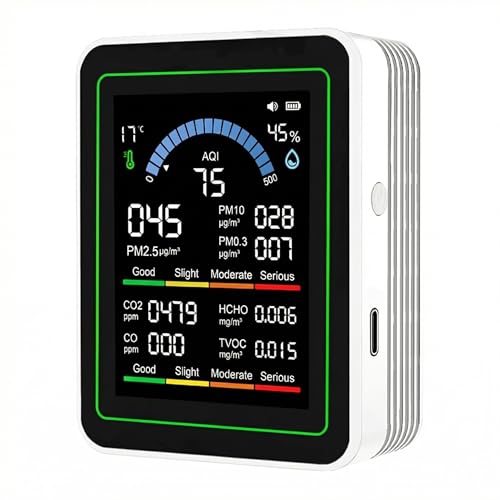
Air Quality Monitor Indoor, 10 in 1 Portable Smartair Quality Tester for CO2 | CO | TVOC | HCHO | Temp | AQI | PM0.3-1 Detection Hum for Home Cars Plants, Pets, Car, Hotel
【10-in-1 Smart Air Quality Monitor: Your All-Round Environmental Guardian】 This portable intelligent air quality tester delivers ultra-precise multi-gas…
As an affiliate, we earn on qualifying purchases.
As an affiliate, we earn on qualifying purchases.