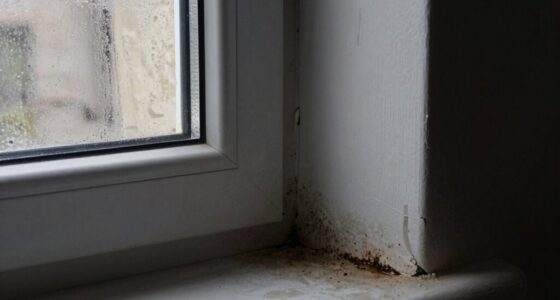
In winter, attic condensation happens when warm, moist indoor air rises and hits cold roof surfaces, causing moisture to settle. Poor ventilation, gaps, and inadequate insulation worsen this issue, leading to mold, wood damage, and a musty smell. To prevent this, you can improve airflow, seal leaks, and add insulation. If you want to understand how to effectively tackle this surprise moisture, discover more tips and solutions ahead.

Get health and wellness essentials delivered free — and shop member deals
- Fast, free delivery on millions of items
- Access to Prime Big Deal Days deals on October 6–7
- Prime Video, Amazon Music and more included
Key Takeaways
- Cold winter surfaces cause warm, moist indoor air to condense, leading to attic moisture buildup.
- Insufficient attic ventilation traps humid air, increasing condensation risks during winter.
- Activities like heating, cooking, and showering raise indoor humidity, contributing to attic moisture.
- Poor insulation and gaps allow warm air to escape and cool surfaces to attract condensation.
- Regular inspections and proper ventilation help prevent winter attic condensation and related damage.

Attic condensation occurs when warm, moist air rises into your attic and meets cooler surfaces, causing water droplets to form. During winter, this process becomes especially common because the heated interior of your home creates a humidity-rich environment that can easily seep into the attic. As the warm air escapes through gaps or poorly insulated areas, it carries moisture upward. When this moist air encounters the cold roof or attic surfaces, it cools rapidly, and the moisture condenses into tiny water droplets. You might not notice it immediately, but over time, this moisture can lead to significant problems like mold growth, wood rot, and damage to insulation.
One of the key factors contributing to attic condensation is insufficient ventilation. If your attic lacks proper airflow, the moisture-laden air has nowhere to escape, increasing the likelihood of condensation forming on cold surfaces. You might think sealing your attic tightly is beneficial, but without adequate vents or exhaust fans, moisture becomes trapped. This creates a humid environment that fuels condensation buildup. Additionally, inadequate or poorly installed insulation can exacerbate the problem by allowing temperature differentials to become more extreme. When insulation isn’t thick enough or is uneven, certain areas become colder, providing ideal spots for condensation to occur. Moreover, proper attic ventilation plays a crucial role in maintaining air circulation and reducing moisture buildup.
You can also unknowingly contribute to attic moisture issues through everyday activities in your home. Cooking, showering, and laundry produce considerable amounts of humidity, which can drift into the attic if your home isn’t well-sealed. Without proper exhaust systems or ventilation fans, this moisture circulates upward, increasing the chances of condensation. Over time, this persistent moisture can lead to the development of mold, which not only damages your property but also poses health risks for you and your family. You might notice a musty smell or see black spots on your attic’s surfaces, signs that moisture has become problematic.
To prevent attic condensation, you should focus on improving ventilation and sealing leaks. Installing or upgrading attic vents, soffit vents, and exhaust fans helps ensure moist air escapes before it condenses. Insulating properly can also help maintain a consistent temperature, reducing cold surfaces that attract condensation. Be mindful of household humidity levels, especially during winter, by using dehumidifiers or exhaust fans in bathrooms and kitchens. Regular inspections of your attic for signs of moisture, mold, or water stains can alert you to problems early. Addressing attic condensation promptly not only protects your home’s structure but also safeguards your health and comfort during the cold winter months.
As an affiliate, we earn on qualifying purchases.
Frequently Asked Questions
How Can I Prevent Attic Condensation Without Extensive Renovations?
You can prevent attic condensation by improving ventilation and reducing moisture sources. make certain your attic has proper intake and exhaust vents to allow airflow, and insulate your attic properly to keep warm air from meeting cold surfaces. Use a dehumidifier if necessary, and seal any air leaks from your living space that might introduce moisture. Regularly check for signs of condensation or mold, addressing issues promptly to keep your attic dry.
What Are the Long-Term Effects of Attic Moisture on Home Structure?
Long-term attic moisture can cause wood rot, mold growth, and structural damage, weakening your home’s integrity over time. It may lead to costly repairs and reduce your property’s value. Moisture promotes insulation degradation and can cause rust on metal components, compromising safety. If you ignore excess humidity, you risk significant damage that might force you to undertake extensive, expensive renovations later. Address moisture issues early to protect your home’s structure and longevity.
Are There Specific Insulation Types Better for Moisture Control?
Foam board and spray foam insulation are better for moisture control because they create a continuous barrier that prevents warm, moist air from reaching the attic. Rigid foam resists mold and mildew, while spray foam seals gaps effectively. You should avoid fiberglass or cellulose alone, as they can trap moisture. Using moisture-resistant insulation helps maintain a dry, healthy attic environment and protects your home’s structure long-term.
Can Attic Condensation Cause Health Issues in My Home?
You might not realize it, but attic condensation can indeed cause health issues in your home. When moisture builds up, it fosters mold and mildew growth, which can trigger allergies, asthma, and respiratory problems. Poor ventilation or insulation can worsen this. To protect your health, guarantee proper attic ventilation, fix leaks, and control indoor humidity. Addressing these issues promptly keeps your home healthier and more comfortable.
How Often Should I Inspect My Attic for Condensation Problems?
You should inspect your attic at least twice a year, ideally in spring and fall, to catch condensation issues early. Check for visible moisture, mold, or water stains, especially around vents, chimneys, and insulation. If you notice any signs of excess moisture or mold, inspect more frequently. Regular inspections help prevent mold growth, wood damage, and health problems caused by lingering moisture.
As an affiliate, we earn on qualifying purchases.
Conclusion
If you ignore attic condensation, it’s like leaving a sponge in the rain—moisture will silently seep in, causing damage over time. Staying vigilant and addressing the issue early keeps your home’s roof and insulation dry, just like a shield protecting you from winter’s chill. Remember, a well-maintained attic isn’t just storage; it’s the silent guardian of your home’s health, turning potential moisture chaos into a calm, secure sanctuary.
As an affiliate, we earn on qualifying purchases.
As an affiliate, we earn on qualifying purchases.
Fall Picks
fall essentials
As an affiliate, we earn on qualifying purchases.