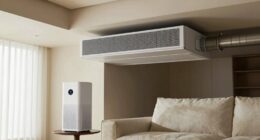
To keep dust out during nearby construction, seal gaps around windows and doors with weather stripping or caulk, and use plastic sheeting over vents and entry points. Manage air quality by running HEPA filters and changing them regularly, while turning off HVAC or switching to re-circulate mode. Regularly clean surfaces with damp cloths and vacuum with HEPA vacuums. Communicate with construction crews to stay informed and adjust precautions — you’ll find these tips helpful for protecting your home.
Key Takeaways
- Seal gaps and cracks around windows, doors, and vents with caulk or weather stripping to prevent dust entry.
- Use heavy-duty plastic sheeting or tarps over entry points and vents during construction.
- Install HEPA air purifiers and change filters regularly to capture airborne dust particles.
- Maintain a strict cleaning routine with HEPA vacuums and damp cloths to reduce dust buildup.
- Communicate with construction crews to schedule work during less disruptive times and request dust control measures.

Have you recently noticed construction activity near your home? It’s a common sight in many neighborhoods, especially during busy building seasons. While new developments can be exciting, they often bring a considerable increase in dust and debris that can easily find its way into your house. Fortunately, there are practical steps you can take to keep this dust out and maintain a cleaner, healthier living environment.
First, focus on sealing any gaps around your windows and doors. Tiny cracks can serve as entry points for dust particles. Use weather stripping or caulk to close these gaps tightly. Pay special attention to areas that don’t normally get much airflow, like basement windows or attic vents. Proper sealing creates a barrier that reduces the amount of dust that can drift inside. If you have older windows, consider installing draft stoppers or using heavy-duty plastic film over the window frames, especially during peak construction times. These simple measures can make a noticeable difference in minimizing dust infiltration.
Seal gaps around windows and doors with weather stripping or caulk to reduce dust entry.
Next, look at your ventilation system. Your HVAC system can help or hinder your efforts. Make sure your filters are high-quality, ideally HEPA filters, which are designed to trap tiny particles. Change them frequently during construction periods—every 2-4 weeks, depending on how much dust is present. If you’re not using your AC or heating, turn off the system when construction is happening nearby, or at least switch to re-circulate mode to prevent outside air from pulling in dust. Installing temporary air purifiers with HEPA filters in main living areas can also notably cut down on airborne dust particles, creating a cleaner indoor atmosphere. Additionally, regular maintenance of your HVAC system, including cleaning vents and ducts, can prevent dust buildup that might be stirred up during construction.
Another effective step is to create a barrier around your home. If possible, set up a tarp or plastic sheeting over areas where dust tends to enter, especially around doorways or vents. This can be especially useful if construction activity involves heavy equipment or cutting. Regularly cleaning and vacuuming your home is essential, but make sure to use a vacuum with a HEPA filter to avoid redistributing dust into the air. Wiping surfaces with a damp cloth also helps trap dust rather than spreading it around.
Lastly, communicate with the construction crew if you can. Let them know about your concerns, and ask if they can minimize dust spillage near your property or schedule work during times that might be less disruptive. While you can’t control everything, taking these proactive steps will help you better manage dust and protect your home during nearby construction. Proper piercing care and hygiene can also be beneficial if dust or debris accidentally comes into contact with personal items or body piercings during these times.

MOOKA Air Purifiers for Home Large Room up to 1076ft², H13 True HEPA Air Filter Cleaner, Odor Eliminator, Remove Smoke Dust Pollen Pet Dander, Night Light, B-D02L White
MOOKA B-D02L AIR PURIFIER FOR LARGE ROOM: With the high-efficiency filtration system, the air purifier covers an area…
As an affiliate, we earn on qualifying purchases.
As an affiliate, we earn on qualifying purchases.
Frequently Asked Questions
How Can I Identify if Construction Is Nearby?
You can identify if construction is nearby by listening for loud noises like drilling, hammering, or heavy machinery. Look for visible signs such as construction equipment, fencing, or workers in safety gear. Check local notices or community boards for updates on nearby projects. You might also notice increased dust, debris, or traffic disruptions around your area. Staying alert helps you prepare for potential dust and noise impacts from nearby construction.
Are There Legal Restrictions on Construction Noise?
Yes, there are legal restrictions on construction noise. Local ordinances typically set limits on noise levels and specific hours when construction can occur. You should check with your city or county regulations to understand these rules. If noise becomes excessive or occurs outside permitted hours, you can contact local authorities or your homeowners’ association to file a complaint. Staying informed helps you safeguard your peace and ensure construction respects community standards.
What Safety Precautions Should I Take During Nearby Construction?
You should wear ear protection to shield your hearing from loud noises and keep windows closed to minimize dust intrusion. Stay alert for unexpected debris or vibrations, and consider using air purifiers indoors for cleaner air. It’s also wise to communicate with nearby workers about your concerns. These simple precautions help you stay safe and comfortable while construction activities enhance your neighborhood.
How Long Does Typical Construction Contamination Last?
Typical construction contamination can last from a few days to several weeks, depending on the project’s scope and size. You should expect dust and debris to diminish gradually once the main work concludes. To protect yourself, keep windows and doors sealed, use air purifiers, and stay indoors during active construction phases. Regularly clean your home to remove settled dust, and stay informed about the project’s timeline to better plan your activities.
Can I Request Construction Schedule Adjustments?
Yes, you can request construction schedule adjustments. Reach out to your project manager or contractor, explain your concerns about dust and disruptions, and ask if work can be scheduled at different times or days. Many contractors are willing to accommodate reasonable requests to minimize inconvenience. Be clear about your needs, and communicate politely to increase the chances of a favorable adjustment that helps protect your home environment.

33 Ft Gray Self-Adhesive Soundproofing Weather Stripping for Doors and Windows, 0.35" Wide x 0.2" Thick
【Strong Adhesive, Saves Money】Weather stripping door seal prevent heat and cold from escaping, save your heating and cooling…
As an affiliate, we earn on qualifying purchases.
As an affiliate, we earn on qualifying purchases.
Conclusion
As the construction crew works like busy bees, remember that your home is your sanctuary—a sturdy shelter amidst the chaos. Think of the dust as tiny invaders trying to seep in, but with vigilant barriers, you keep them at bay. By staying proactive, you’re planting a shield of calm around your space. Just as a lighthouse guides ships safely home, your efforts protect your home’s peace, ensuring your haven remains clean and welcoming despite the nearby buzz of progress.

Plastic Sheeting (10' x 25') Long, 6 Mil – UV Protection Poly Sheeting Polyethylene Film, Heavy Duty Greenhouse Plastic Sheeting
HEAVY DUTY 6 MIL PLASTIC SHEETING – Durable 6 mil plastic sheeting designed for reliable protection in construction,…
As an affiliate, we earn on qualifying purchases.
As an affiliate, we earn on qualifying purchases.

Atrix Ergo Backpack Canister Vacuum, Portable Cleaner with Attachments for Professional and Residential Use, VACBP10 Premium Bundle
PREMIUM BUNDLE: The VACBP10 Premium Bundle includes a 6' hose, furniture nozzle, oval dust brush, crevice tool, set…
As an affiliate, we earn on qualifying purchases.
As an affiliate, we earn on qualifying purchases.